
The Cucuteni culture: the painted pottery of Moldavia's early farmers
For almost two millennia, from around 5000 BC, the farmers of the Cucuteni-Trypillia culture lived in what is now Romania, Moldova and Ukraine. They left painted pottery, clay figurines and burnt houses.
A culture shared by Romania, Moldova and Ukraine
The Cucuteni culture is the name archaeologists gave to farming communities of the Eneolithic (the age of the first copper objects). The name comes from the village of Cucuteni in Iași County, where the first traces were found. In Ukraine the same finds are named after the village of Trypillia, near Kyiv, so specialists now speak of the Cucuteni-Trypillia complex. In Romania these communities lived in Moldavia and Bukovina, in north-eastern Muntenia and in south-eastern Transylvania.
Dates differ between authors. The Cucuteni Eneolithic Art Museum in Piatra Neamț places the Cucuteni civilisation between about 5000 and 3500 BC, over roughly 150,000 km². A 2019 study gives about 4800-2950 BC for the whole complex, more than 5,000 known sites and about 250,000 km². For present-day Romania, Cucuteni matters as one of the best-researched prehistoric cultures, with more than 130 years of excavation. It is not, however, a history of Romania alone, and how the culture came to an end is still debated by specialists.
The discovery at Cucuteni
In 1884 Teodor T. Burada noticed pottery fragments in the gravel used on the road between Târgu Frumos and Iași and traced it to the stone quarry at Cucuteni. The first excavations began in 1885, with, among others, the poet Nicolae Beldiceanu and Grigore Butureanu. Work stopped in 1896 and was resumed in 1909 and 1910 by the German archaeologist Hubert Schmidt, who in 1932 proposed the division into the Cucuteni A and B phases.
The site, called Cetățuia, lies on a promontory of the Laiu plateau near the village of Băiceni, protected on three sides by steep slopes and on the west by ditches and banks. Between 1961 and 1966 the University of Iași resumed excavations under Mircea Petrescu-Dîmbovița, and since 2017 Iași archaeologists have studied the plateau with magnetometry and test trenches.
Painted pottery and figurines
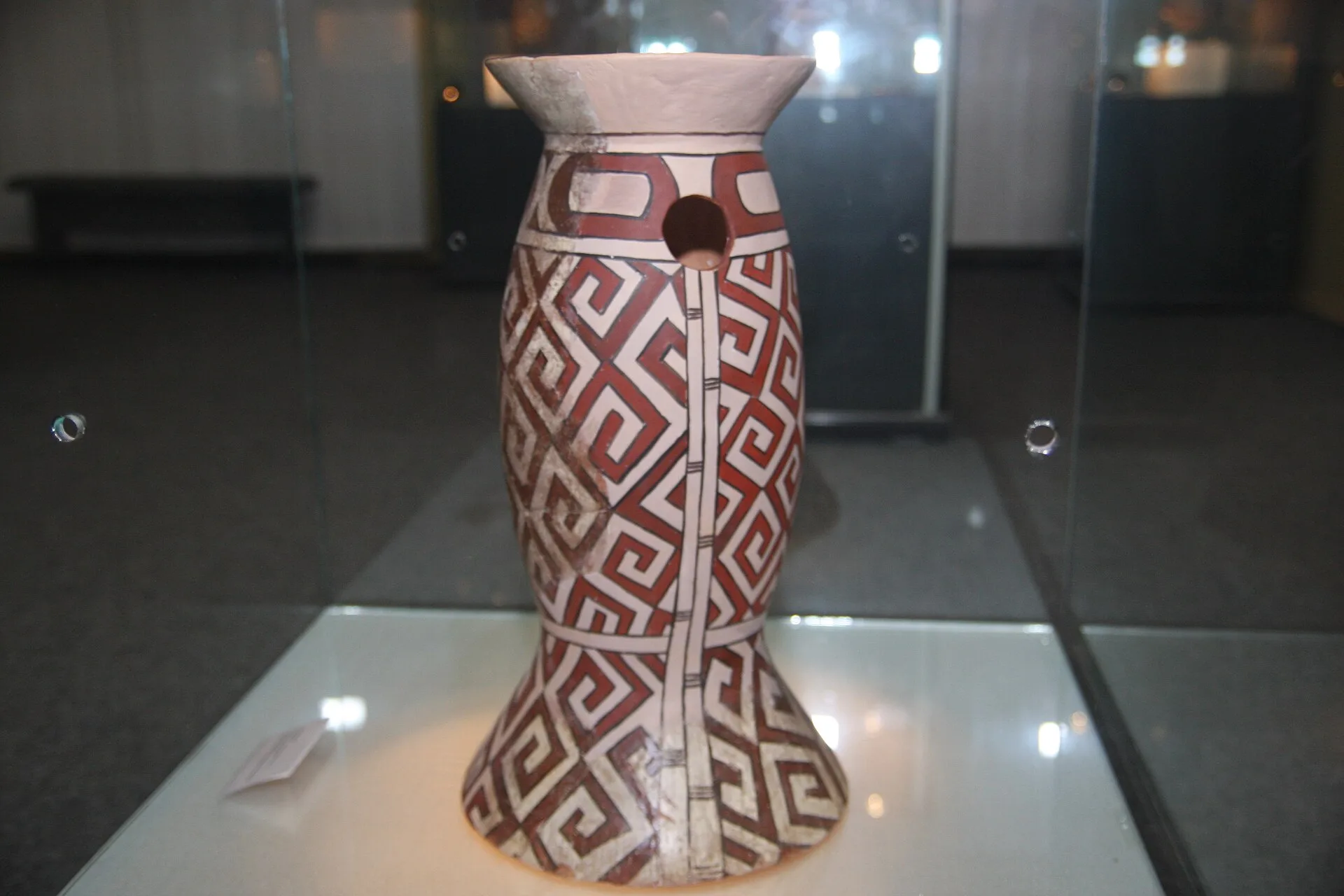
The culture is known above all for its pottery: vessels of fine clay, painted in white, red and black, with spirals and other motifs laid out symmetrically.
Alongside the vessels there are clay figurines, mostly female, but also animals. The Frumușica Hora is a vessel stand from the Cucuteni A phase, made of six stylised female figures seen from behind, with traces of white and red paint. It was found at Bodeștii de Jos, 22 km north-east of Piatra Neamț, in excavations by the priest Constantin Matasă, published in 1946, and is listed in the Treasure of Romania's national cultural heritage. At Poduri, in Bacău County, archaeologists found inside a vessel 21 female statuettes and 13 clay thrones, dated 4900-4750 BC, a group known as the "Council of the Goddesses". Reading them as goddesses is a hypothesis of specialists, not a proven fact.
Large settlements and burnt houses
In Ukraine huge settlements appeared, the largest known in 4th-millennium BC Europe: the one at Nebelivka covers 238 hectares. In Romania, the site of Poduri-Dealul Ghindaru, discovered in 1978 and excavated from 1979 under Dan Monah, has an archaeological deposit more than 4 m thick, with superimposed levels from the Precucuteni II phase to the end of the Cucuteni culture.
Archaeologists very often find burnt houses, of which the fired clay walls and floors remain. Most Ukrainian archaeologists accept that the burning was deliberate, but in European prehistory the debate continues: some consider accidental fires or attacks, others a ritual, others a firing meant to harden the building. A 2009 study of the burning of four reconstructed houses in the archaeological park at Cucuteni concluded that accidental fire does not produce the traces found in excavations. At Nebelivka, in 2014-2015, far more firewood was needed than the timber used to build the house, perhaps ten times as much. The reason remains an open question.
Where to see it
The Cucuteni Eneolithic Art Museum in Piatra Neamț is devoted entirely to Cucuteni art; its exhibits include the Frumușica Hora, statuettes from the "Council of the Goddesses" and the "Thinker of Târpești". The Museum of the History of Moldavia in the Palace of Culture in Iași has a Cucuteni collection with pieces from the settlement at Cucuteni and from other sites in Iași and Botoșani counties. At Cucuteni, the Archaeological Site Museum protects a Geto-Dacian tomb of the 4th century BC and has a local history exhibition that includes Cucuteni. Cetățuia hill and the tell at Poduri are archaeological sites, not museums: the objects found there are shown in Iași and Piatra Neamț.
Places in this story
- Cucuteni Archaeological Site MuseumCucuteni, comuna Cucuteni, Iași CountyMuzeu al Complexului Muzeal Național „Moldova” Iași, construit peste un mormânt tumular getic din sec. IV î.Hr.; expoziție de istorie locală, inclusiv descoperirile Cucuteni.
- Cucuteni Eneolithic Art MuseumPiatra Neamț, Neamț CountyMuzeu dedicat artei Cucuteni (Complexul Muzeal Național Neamț); Hora de la Frumușica, statuete din „Soborul zeițelor”, „Gânditorul de la Târpești”.
- Museum of the History of Moldavia (Palace of Culture)Iași, Iași CountyColecție Cucuteni cu piese din așezarea eponimă și de la Trușești, Scânteia, Ruginoasa, Valea Lupului.
Sources
- Complexul Muzeal Național Neamț: Muzeul de Artă Eneolitică Cucuteni „Gheorghe Dumitroaia” (istoric, areal, datare, colecție)
- Complexul Muzeal Național Neamț: Muzeul de Istorie și Arheologie Piatra-Neamț (Constantin Matasă)
- Tencariu F.A. et al., Cucuteni-Cetățuie, platoul Laiu, raport de diagnostic 2021, Cronica Cercetărilor Arheologice (RAN 96682.02)
- Cucuteni - Dealul Laiu, raport 2017, Cronica Cercetărilor Arheologice (săpăturile 1961-1966, promontoriul apărat)
- Băiceni - Dealul Laiu, raport 2020, Cronica Cercetărilor Arheologice (fig. 1 georeferențiată)
- Monah D. et al., Poduri - Dealul Ghindaru, raport 2000, Cronica Cercetărilor Arheologice (RAN 24640.01)
- Johnston S., Chapman J., Gaydarska B. et al., The Nebelivka experimental house construction and house-burning, 2014-2015, Bulgarian e-Journal of Archaeology 9 (2019)
- Munteanu R., Garvăn D., Fortificația Frumușicăi: un șanț de apărare din eneolitic la Bodești (jud. Neamț), Cercetări Arheologice 27 (2020)
- Lazarovici C.-M., Câteva vase de cult de la Scânteia-Dealul Bodeşti/La Nuci, Analele Banatului XXIX (2021) (vase de tip horă din faza Cucuteni A)
- Niculiță M. et al., Pleistocene landslides in the Moldavian Plateau (Cucuteni-Cetățuia, Cucuteni A), GeoReview 26(2) book of abstracts
- Complexul Muzeal Național „Moldova” Iași: Muzeul de Sit Arheologic de la Cucuteni
- Complexul Muzeal Național „Moldova” Iași: Muzeul de Istorie a Moldovei (colecția Cucuteni)
- Muzee de la sat: Archaeological Site Museum of Cucuteni (deschis 1984)
- Radio România Internațional: The Cucuteni-Trypillian Culture (interviu cu Dan Monah despre Poduri și „Soborul”)
- Visit Neamț: Cucuteni Neolithic Art Museum (exponate)
- Wikipedia (ro): Bunuri mobile din domeniul arheologie clasate ... județul Neamț (tezaur), fișele INP pentru Hora de la Frumușica și statuetele/tronurile de la Poduri
- Wikipedia (en): Cucuteni-Trypillia culture (Burada 1884, săpăturile din 1885, schema lui Hubert Schmidt din 1932)
- Wikipedia (ro): Situl Poduri-Dealul Ghindaru
- Wikipedia (ro): Lista monumentelor istorice din județul Iași - B (IS-I-s-A-03521, Cetățuia)