
Attraction
Cucuteni Archaeological Site
The Cucuteni archaeological site, located on Dealul Cetățuia, near the village of Băiceni, in the commune of Cucuteni, Iași County, is the place where the first remains of the Neolithic Cucuteni-Trypillia culture were discovered in 1884. This civilisation, which gave the site its name, is recognised across Europe for its trichrome painted pottery and the complexity of its social organisation. The site represents a fundamental point of reference for understanding European prehistory. Nearby, on Gosan Hill, is the Cucuteni Archaeological Site Museum.
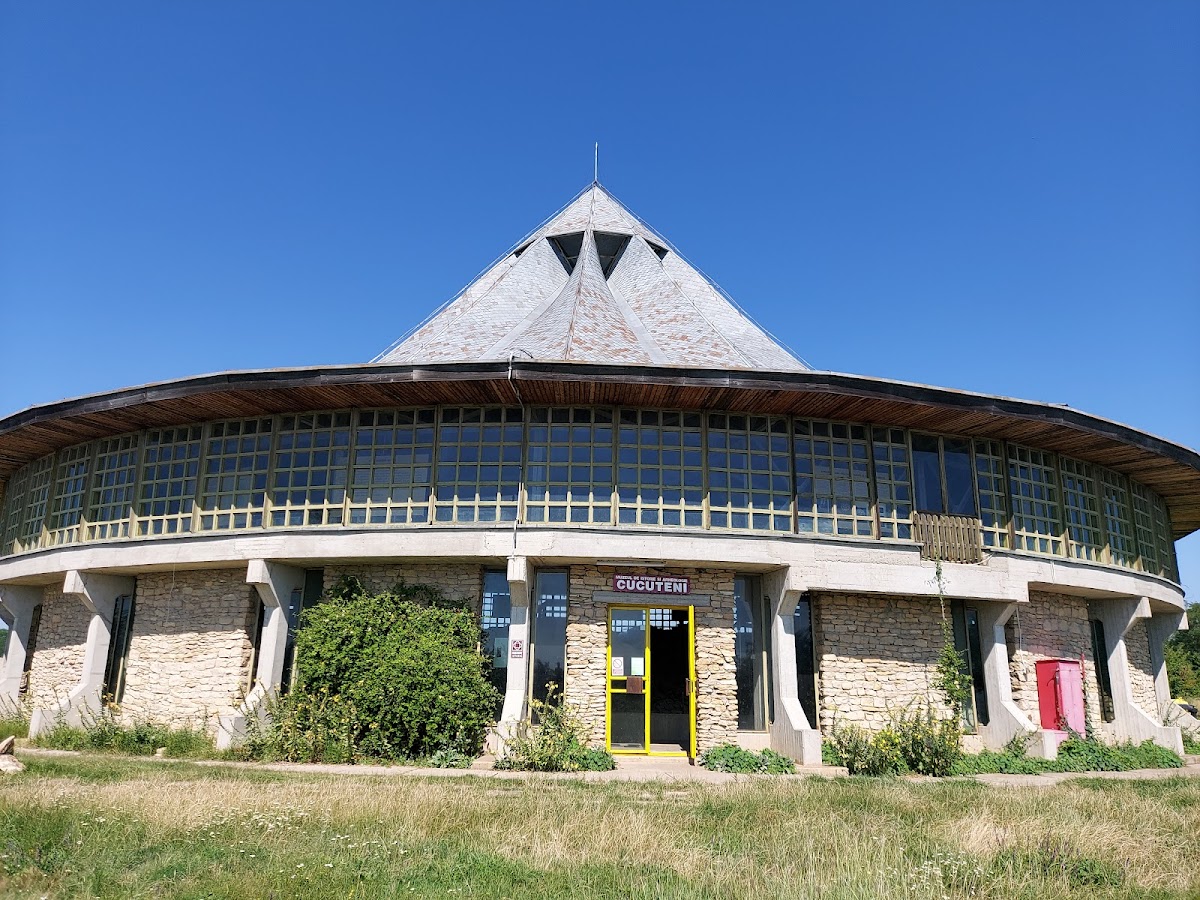
The Cucuteni archaeological site, located on Dealul Cetățuia, near the village of Băiceni in the commune of Cucuteni, Iași County, is one of the most significant discoveries in European prehistory. It was here, in 1884, that the first remains of a previously unknown Neolithic civilisation were identified, brought to light by folklorist Teodor Burada, who noticed fragments of painted pottery in stone extracted from a local quarry. The Cucuteni culture, named after this settlement, flourished during the 5th-4th millennia BC and spread across a vast territory encompassing eastern present-day Romania, the Republic of Moldova, and western Ukraine, where it is also known as the Cucuteni-Trypillia culture.
The civilisation is distinguished by its pottery painted with spirals and geometric motifs rendered in three colours (red, white and black), considered among the most refined ceramic production of the European Neolithic, as well as by anthropomorphic figurines associated with the cult of the mother goddess.
Systematic research, carried out across multiple campaigns beginning in the 19th century and continued in the second half of the 20th century, brought to light stratigraphic sequences documenting several phases of habitation, classified by specialists into the stages Cucuteni A, A-B, and B. The Cucuteni-Băiceni area is also associated with other exceptional discoveries, including the Getic burial mounds on Gosan Hill, from the 4th century BC, and the celebrated Tezaur de la Băiceni.
The Cucuteni Archaeological Site Museum, a branch of the Moldova National Museum Complex in Iași, opened in 1984, a century after the first finds. It stands on Gosan Hill near Cucuteni village, where it protects a 4th-century BC Getic princely burial mound (LMI code IS-I-s-A-03573). The Cetățuia site (LMI code IS-I-s-A-03521) lies on the Laiu plateau at the western edge of Băiceni, about 1.5 km north of the museum.
Cucuteni judetul Iasi