
UNESCO
Villages with Fortified Churches in Transylvania
Seven Transylvanian villages (Biertan, Viscri, Saschiz, Prejmer, Câlnic, Valea Viilor and Dârjiu) preserved around medieval fortified churches. Inscribed on the UNESCO World Heritage List.
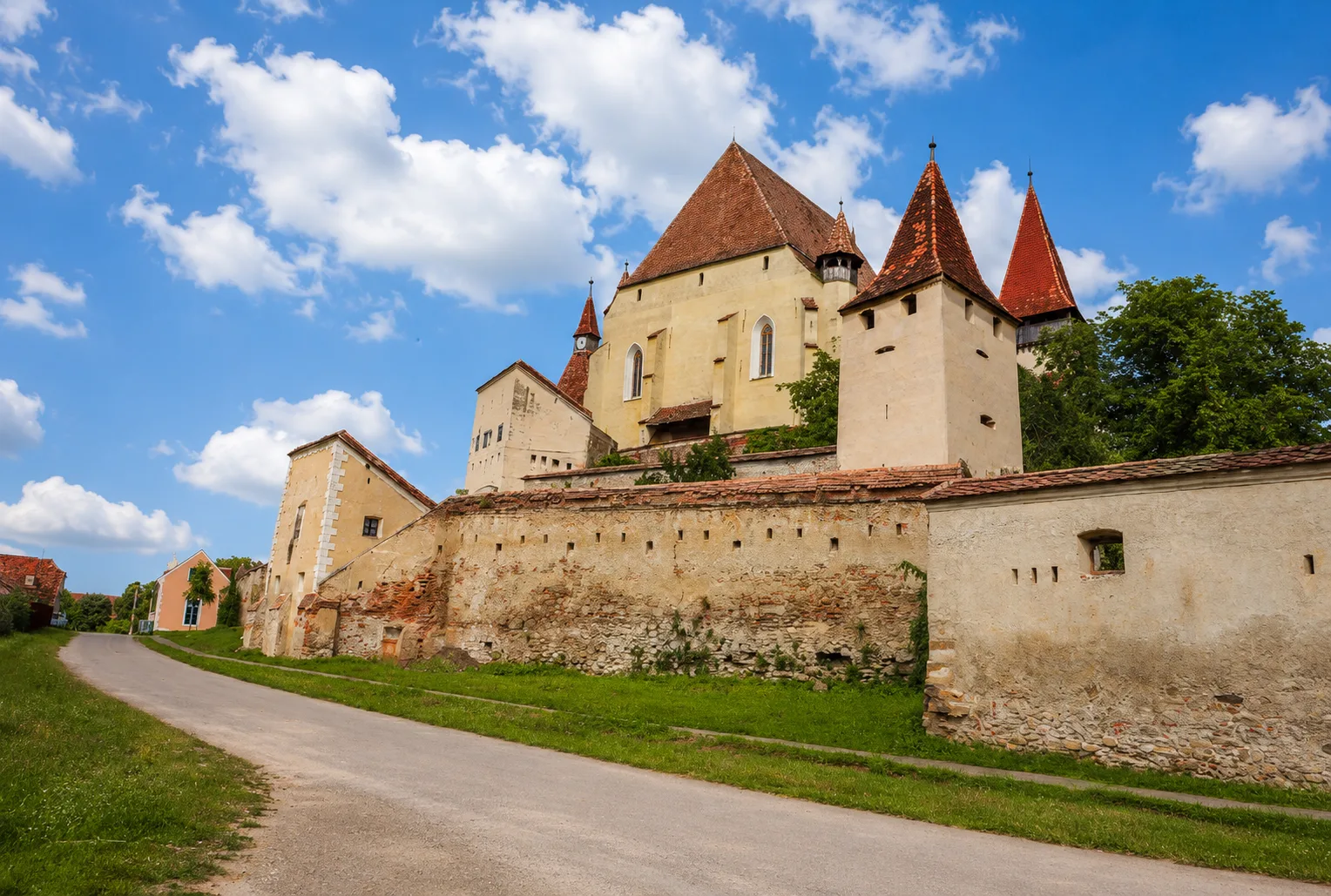
The Villages with Fortified Churches in Transylvania bring together seven settlements inscribed on the UNESCO World Heritage List, whose shared feature is the preservation of the historic village structure around a fortified church. Gradually expanded from the church at Biertan, the site includes Biertan, Câlnic, Prejmer, Saschiz, Valea Viilor and Viscri — Saxon villages — together with Dârjiu, a Székely village.
Fortified churches are a hallmark of Transylvania, settled from the 12th century onward by German colonists brought in by the kings of Hungary to defend the eastern frontiers of the realm. Of the roughly three hundred fortified churches raised throughout the Middle Ages, more than a hundred and fifty survive today, forming one of the densest ensembles of medieval fortifications in Europe.
These buildings served a religious and a military role at once. The churches were restructured for defence: fighting floors were raised above the nave, the western tower became a keep, and the whole was enclosed within fortified walls. Some held storerooms used as granaries in peacetime and as shelter for villagers under siege, as at Prejmer. Notable are the triple ring of walls at Biertan, the elaborate defences of Valea Viilor and the harmonious fortification at Viscri.
Together with the layout of the farmsteads and the village core, preserved since the Middle Ages, these settlements reflect the way of life of Transylvania's Saxon communities.