
Attraction
Prejmer Fortified Church
Prejmer Fortified Church is the largest and best-preserved fortified church in southeastern Europe, inscribed on the UNESCO World Heritage List in 1999 and the only tourist attraction in Romania awarded three stars in the Michelin Green Guide. Construction of the church began around 1218, initiated by the Teutonic Knights and completed by Cistercian monks in the Burgundian Gothic style — a Greek cross floor plan unique in Transylvania. The circular enclosure wall, 12 metres high, houses 272 rooms spread across four levels, where each village family had its own room, identified by their house number.
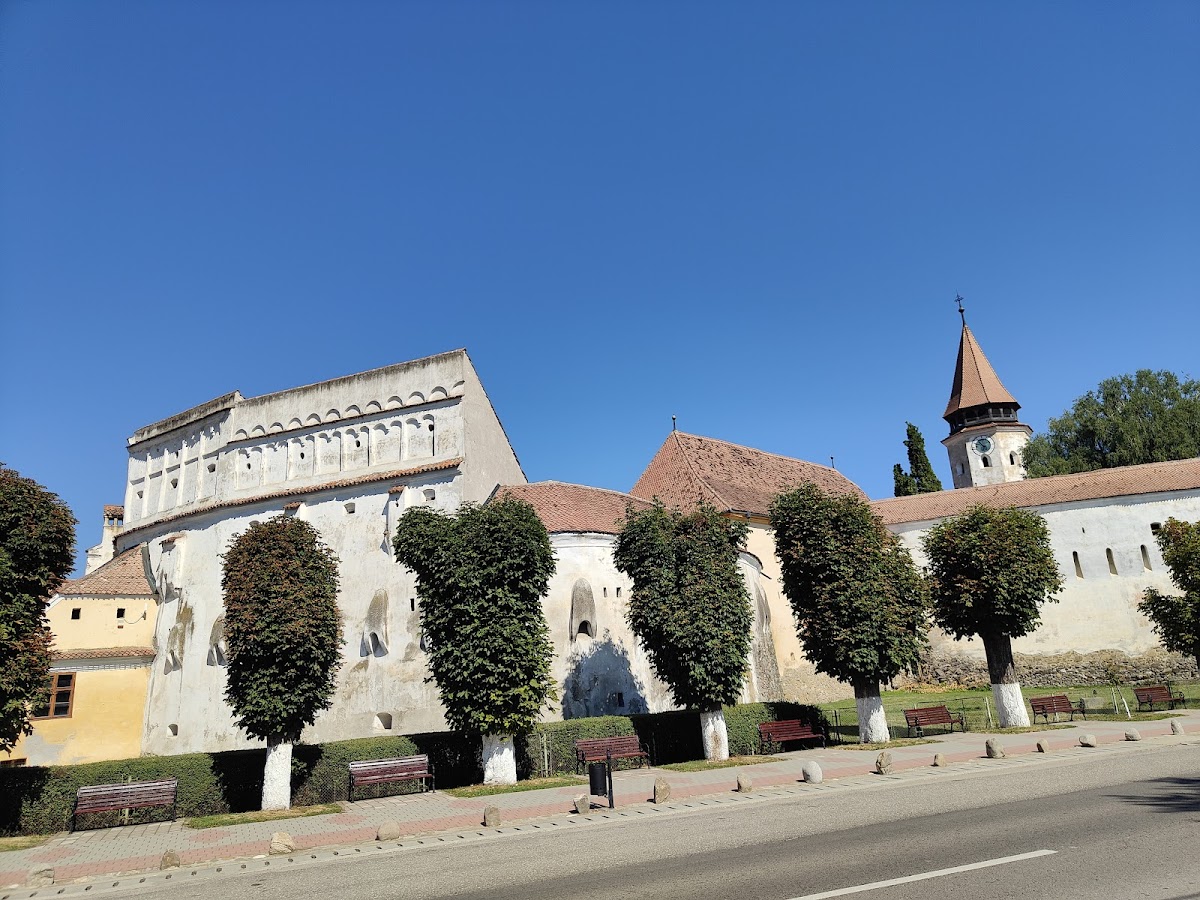
Prejmer Fortified Church (German: Tartlau) is a medieval complex located in the commune of Prejmer, Brașov County, approximately 15–18 km north-east of the city of Brașov. It is the largest and best-preserved fortified church in southeastern Europe, included on the UNESCO World Heritage List in 1999 alongside six other Saxon fortified churches in Transylvania, and the only tourist attraction in Romania to have received three stars in the prestigious Michelin Green Guide. Construction of the church was begun around 1218 by the Teutonic Knights, who had been granted the right to settle in the area. Following their expulsion from Transylvania in 1225, the church was taken over by Cistercian monks from the abbey of Cîteaux in Burgundy, who completed it in the early Burgundian Gothic style. The building is distinguished by a Greek cross floor plan — unique in Transylvania and found only in certain churches in northern Germany — featuring an octagonal tower, ogival vaults and multifoil windows. The polyptych altar, depicting the Passion of Christ, dates from around 1450 and is the oldest of its kind in all of Transylvania. Fortification began in 1427, by order of King Sigismund of Luxembourg, as Prejmer was the first settlement in the path of Turkish forces invading Transylvania through the Buzău Pass. The circular enclosure wall stands 12–14 metres high and up to 5 metres thick, with a diameter of approximately 70 metres, and is equipped with watchtowers, a wall walk and a water-filled moat. Inside the wall there are 272 rooms arranged on four levels, connected by wooden staircases and galleries. In peacetime they served as storage rooms for provisions, while during sieges they functioned as living quarters — each village family owned a room, inherited from generation to generation and numbered to match their house in the village. Thanks to the stored provisions, the Saxon villagers could withstand sieges of up to six months. The complex, which could shelter around 1,600 people, was never taken by the Ottomans. Also preserved are a schoolroom complete with a slate board and abacus, as well as the "shame stone" where those who stole or committed misdeeds were put on public display. The site is accessible from Brașov via the DN10 road, with regular public transport connections. The church is open daily, except on Sundays when services are held (it remains an active Evangelical church).
Strada Bisericii nr. 1, comuna Prejmer, județul Brașov