
Attraction
Viscri - Saxon Village UNESCO
Viscri is a Saxon village in the commune of Bunești, Brașov County, inscribed on the UNESCO World Heritage List in 1999 as part of the site "Villages with Fortified Churches in Transylvania". Known in German as Deutschweißkirch — "The German White Church" — the village preserves one of the few Romanesque hall churches from the 13th century to have survived intact in Transylvania, built on the foundations of a Székely basilica dating from around 1100. Viscri is well worth visiting both for its defensive ensemble and for its authentic Saxon rural architecture, considered a living image of the Transylvanian village of the early 19th century.
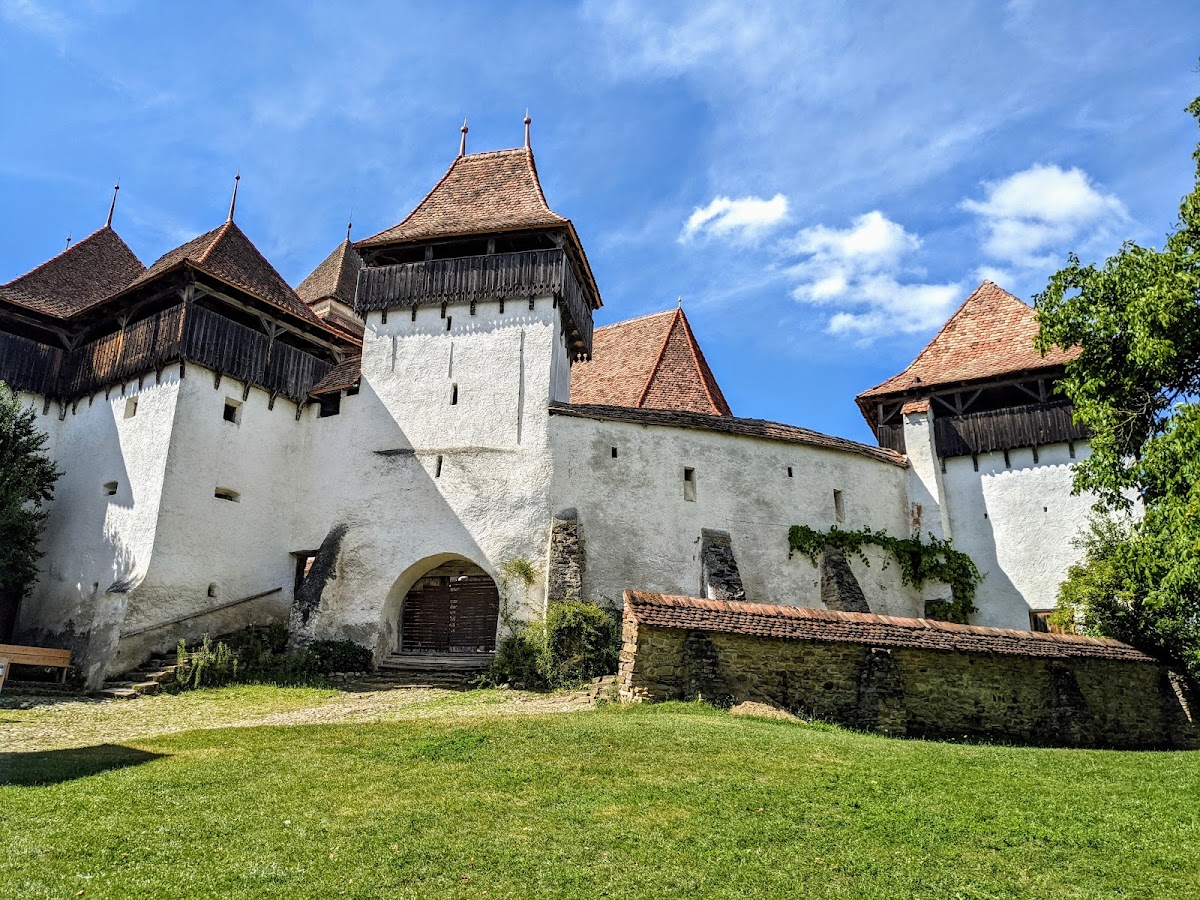
Viscri is a village in the commune of Bunești, Brașov County, inscribed in 1999 on the UNESCO World Heritage List as part of the site "Villages with Fortified Churches in Transylvania". The German name of the settlement, Deutschweißkirch — "The German White Church" — refers to a white chapel built by the Székelys who inhabited the area before the arrival of Saxon colonists between 1141 and 1162, during the reign of the Hungarian king Géza II. Around 1185, the Saxons took over from the Székelys both the defensive role of the area and the place of worship. Historical records attest that Viscri was always a free village, never forming part of a noble estate — a rare status in medieval Transylvania. The central core of the village is dominated by the fortified Evangelical church, built in the 13th century on the foundations of the Székely basilica dating from around 1100, one of the few Romanesque hall churches to have survived completely in the region. The fortification of the ensemble took place in 1500: the nave was extended and connected to the western tower, while the enclosure received two defensive towers, two bastions and a gate tower. The ensemble is a listed historic monument, LMI code BV-II-a-A-11843. The village's Saxon rural architecture — houses with characteristic gates and inner courtyards, many of them restored after 1990 — is considered an authentic image of the Transylvanian village of the early 19th century. The Saxon community, which numbered several hundred people before 1989, emigrated en masse to Germany after the fall of communism; today the village is inhabited predominantly by Romanians and Roma, but it has also gained international visibility through the involvement of King Charles III of Great Britain, who owns a property in the village and has actively promoted it in the international press. Viscri is well worth visiting for the uniqueness of its defensive ensemble and for the authenticity of its Saxon rural landscape.
Satul Viscri comuna Bunești