
Attraction
Odorheiu Secuiesc
An old town on the Târnava Mare, with a historic centre, the Haáz Rezső Museum and the row of carved Székely gates at Băile Seiche.
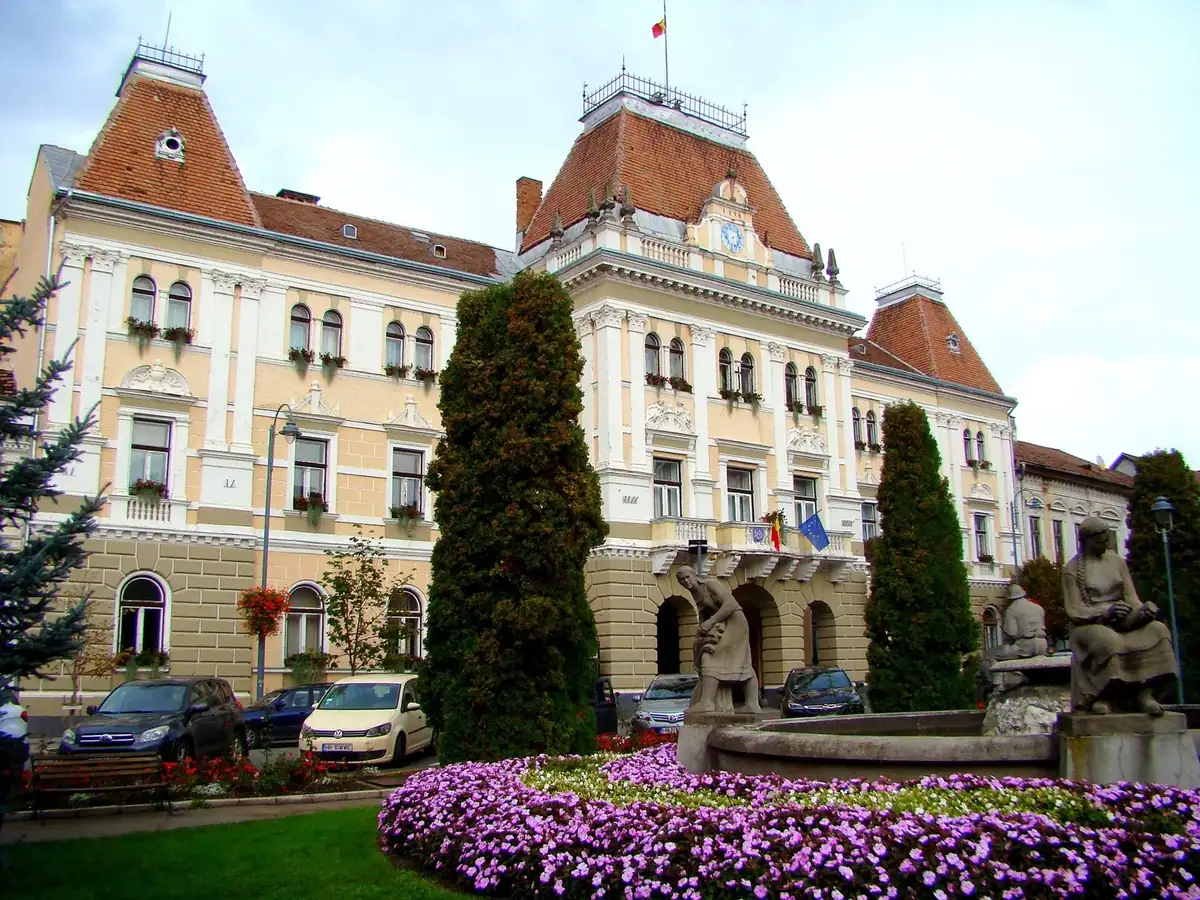
Foto: Țetcu Mircea Rareș, CC BY-SA 4.0, via Wikimedia Commons
Odorheiu Secuiesc lies in the west of the county, on the Târnava Mare. It grew out of several small settlements that merged, so the centre is not one neat square but a handful of squares and short streets running into each other, easy to see on foot.
A Roman fort stood here from the 2nd century. A document of 1301 calls the place Vduord, and in 1558 Queen Isabella made it a free town. From 1876 to 1918 it was the seat of Odorhei county, then of the interwar county of the same name.
The former county hall of 1895 and 1896, now the town hall, stands in Piața Primăriei. Next to it are the Reformed church of 1781 and the former Franciscan monastery, and higher up the Roman Catholic church of Saint Nicholas. Towards the edge of town, the Heart of Jesus chapel is held by many to be the oldest building in town, from the 13th century; others date it to the 16th. The Haáz Rezső Museum has its exhibition on Bethlenfalvi Street and an art gallery on Kossuth Lajos. The square ensemble is a listed monument, code HR-II-a-B-12891.
About 4 km away, on the road to Sovata, is Băile Seiche, with mineral springs and the grave of the writer Orbán Balázs. You reach it through a row of carved Székely gates; the one by the grave is the gate of his own household, from 1888. A cycle path leads there from the town.
Piața Primăriei, Odorheiu Secuiesc, județul Harghita