
UNESCO
The Painted Churches of Bucovina
A group of eight Orthodox churches in northern Moldavia, unique in the world for their exterior frescoes preserved over five centuries. Inscribed on the UNESCO World Heritage List.
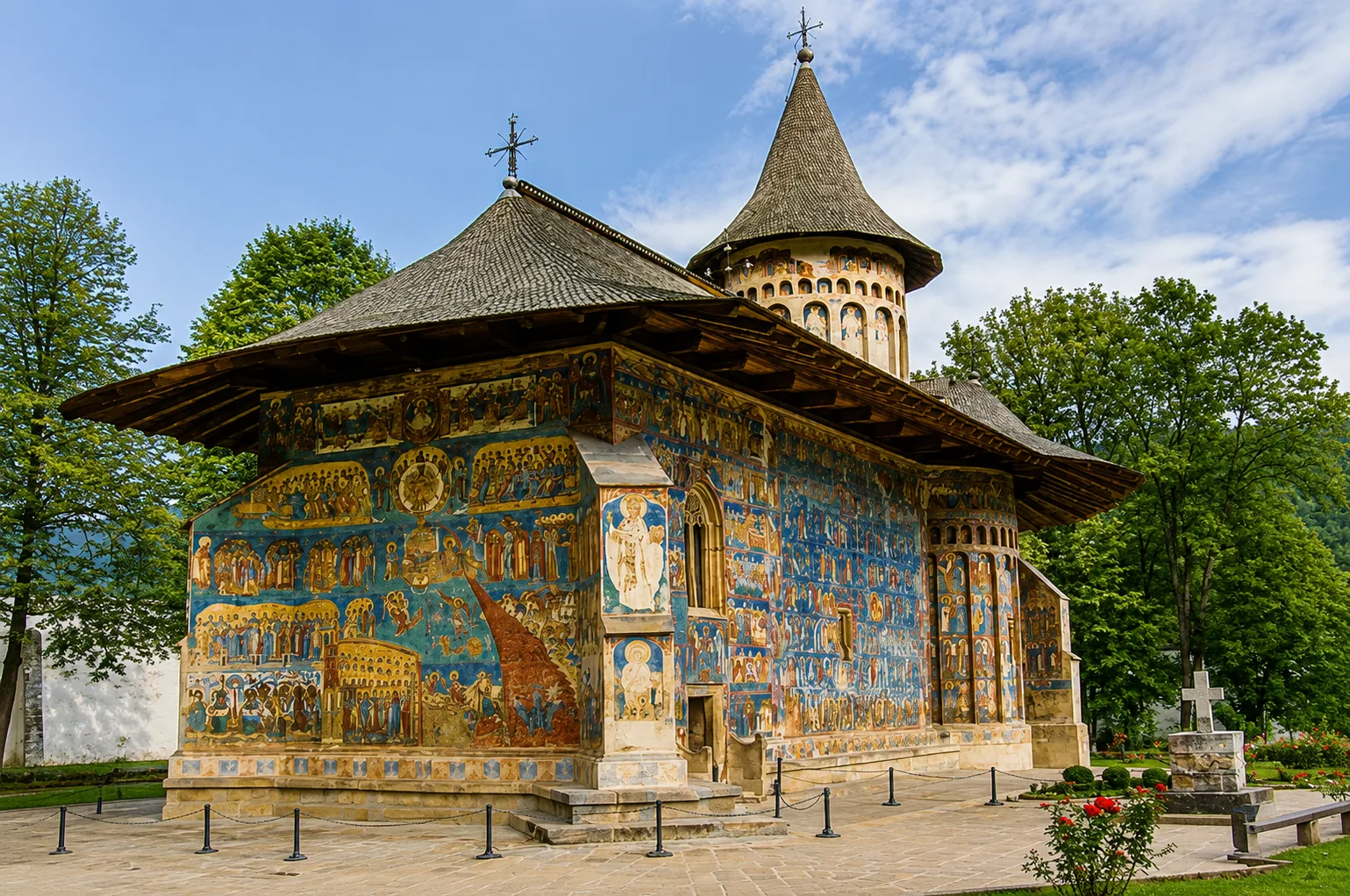
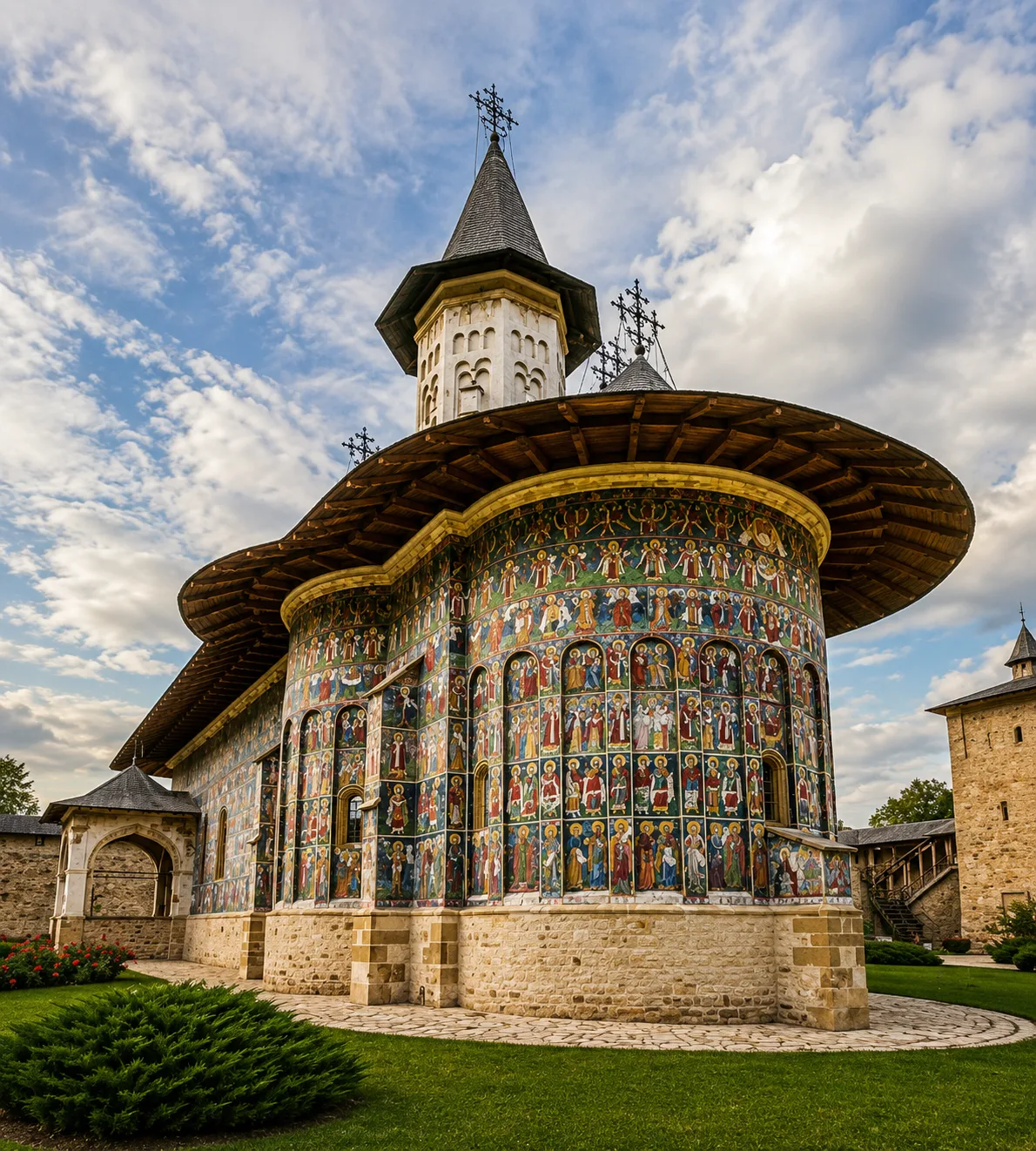
The Painted Churches of Bucovina are a group of eight Orthodox churches in northern Moldavia, inscribed on the UNESCO World Heritage List — seven in 1993 (Voroneț, Humor, Moldovița, Arbore, Pătrăuți, Probota and the Church of Saint George in Suceava), with Sucevița added in 2010. They were built between the late 15th and the mid-16th centuries, during the reigns of Stephen the Great and his son, Petru Rareș.
What makes them unique in the world is not the painting inside — common to many Orthodox churches — but the frescoes covering their exterior walls. This innovation belongs to the reign of Petru Rareș, under whom Humor was decorated in 1535, Moldovița in 1537 and Voroneț repainted in 1547. Entire biblical scenes cover the walls, turning each church into a visual sermon for the faithful of an age when few could read.
Each church carries a colour of its own, since become renowned: the blue of Voroneț, whose pigment still intrigues specialists, the red of Humor, the yellow of Moldovița and the green of Arbore. At Voroneț, the fresco of the Last Judgement spans an entire wall; at Sucevița, the "Ladder of Virtues" climbs toward heaven; and Pătrăuți holds the oldest surviving church founded by Stephen the Great.
Painted by teams of artists whose skill honoured Byzantine canons while adding personal interpretations, these frescoes have endured for over five centuries in the open air — without equal anywhere in the Orthodox art of Europe.