
Attraction
Monastery of St John the New
The Monastery of St John the New in Suceava is an Orthodox monastery on the road to the Princely Fortress, whose church of St George was built between 1514 and 1522 by Bogdan III and Ștefăniță Vodă as the new cathedral of the Metropolis of Moldavia. The church, painted in 1532-1534, has been part of the UNESCO World Heritage site since 1993 and holds the relics of St John the New.
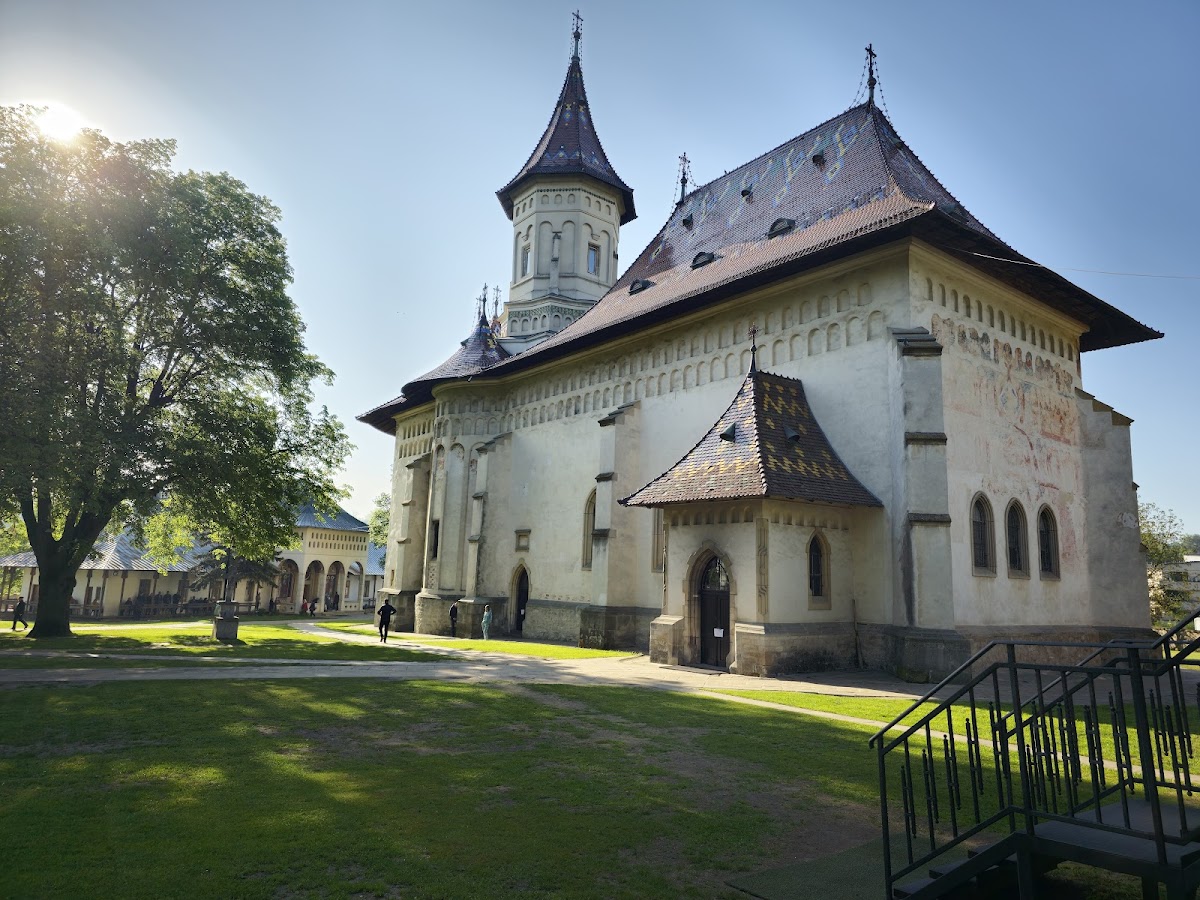
The Monastery of St John the New stands at Strada Ion Vodă Viteazul no. 2 in Suceava, on the road to the Princely Fortress. The church of St George was begun in 1514 by Bogdan III, after the old metropolitan cathedral at Mirăuți had been devastated, and was completed by his son, Ștefăniță Vodă. The Slavonic inscription above the portal records that Bogdan built it up to the windows and Ștefăniță finished it in November 1522, when it was consecrated by Metropolitan Teoctist. The church served as the cathedral of the Metropolis of Moldavia until 1677, when Metropolitan Dosoftei moved to Iași.
In 1589 Prince Petru Șchiopul moved here from Mirăuți Church the relics of St John the New, which Alexander the Good had brought to Suceava in 1402; the bell tower on the north side of the enclosure was built at the same time. In 1686 the troops of King John III Sobieski took Metropolitan Dosoftei to Poland together with the relics, which returned to Suceava only on 14 September 1783. During the First World War the relics were taken to Vienna and brought back in 1918.
The church has a trefoil plan, with round apses and an octagonal tower over the nave, and resembles the Church of the Ascension at Neamț Monastery, but it is larger and has no burial chamber. It was painted inside and out between 1532 and 1534, under Petru Rareș; the outer narthex was added in 1579. The architect Karl Romstorfer restored the complex between 1898 and 1910, when the interior painting was cleaned by the Viennese painter Johann Viertelberger. In 1993 the church of St George was inscribed on the UNESCO World Heritage List together with other painted churches of northern Moldavia.
Since 1991 the monastery has been the residence of the archbishops of Suceava and Rădăuți. The complex is a class A historic monument (LMI code SV-II-a-A-05469) and comprises the church of St George, the sacristy chapel of 1629, the bell tower of 1589 and the abbot's house and cells from the nineteenth century. Its feasts are St George (23 April) and St John the New, celebrated on 24 June, the day of the translation of his relics.
Strada Ion Vodă Viteazul nr. 2, municipiul Suceava, județul Suceava