
UNESCO
The Wooden Churches of Maramureș
Eight wooden churches in Maramureș, masterpieces of vernacular architecture, listed as UNESCO World Heritage. Known for their tall spires and timber joinery built without nails.
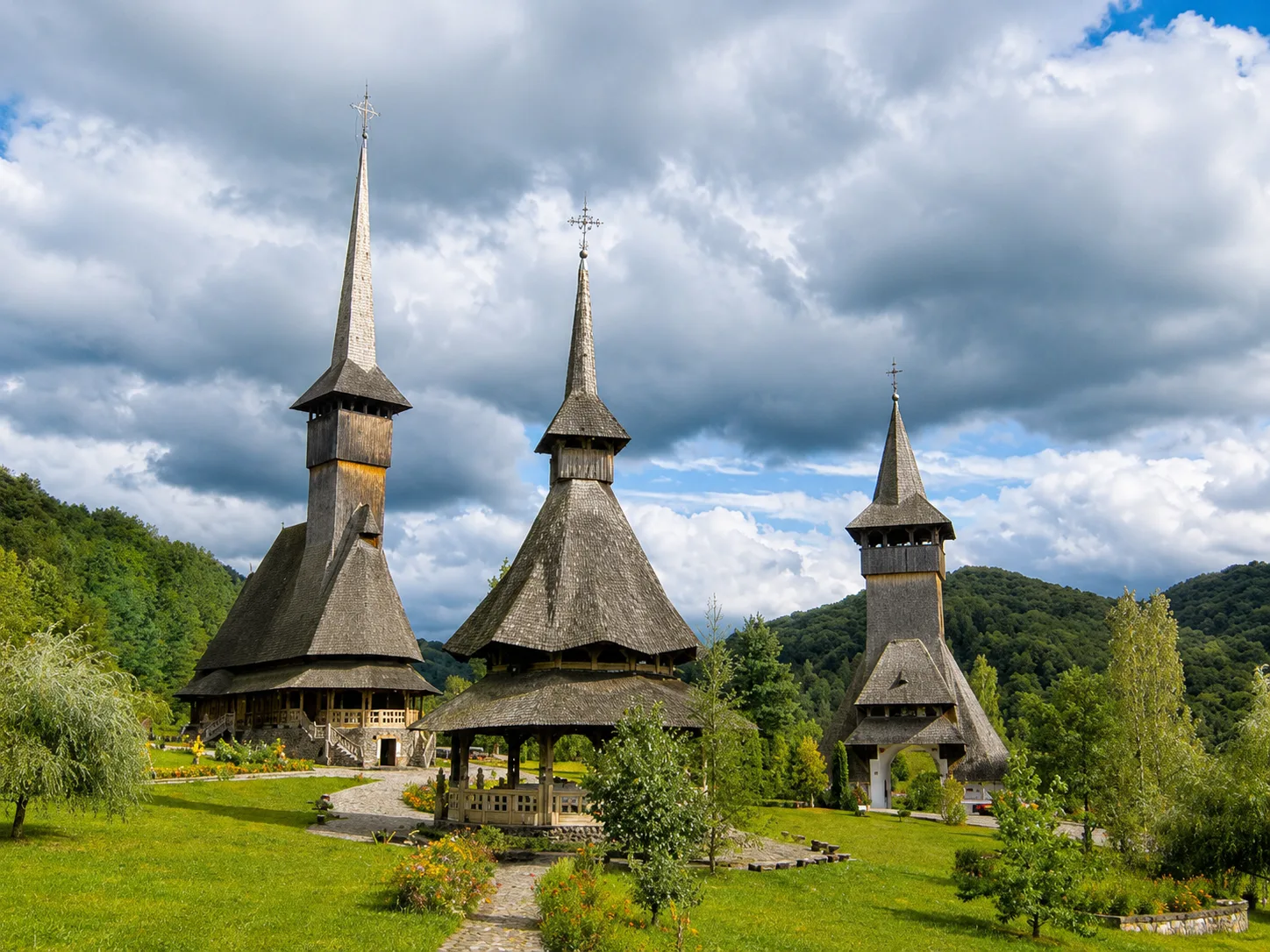
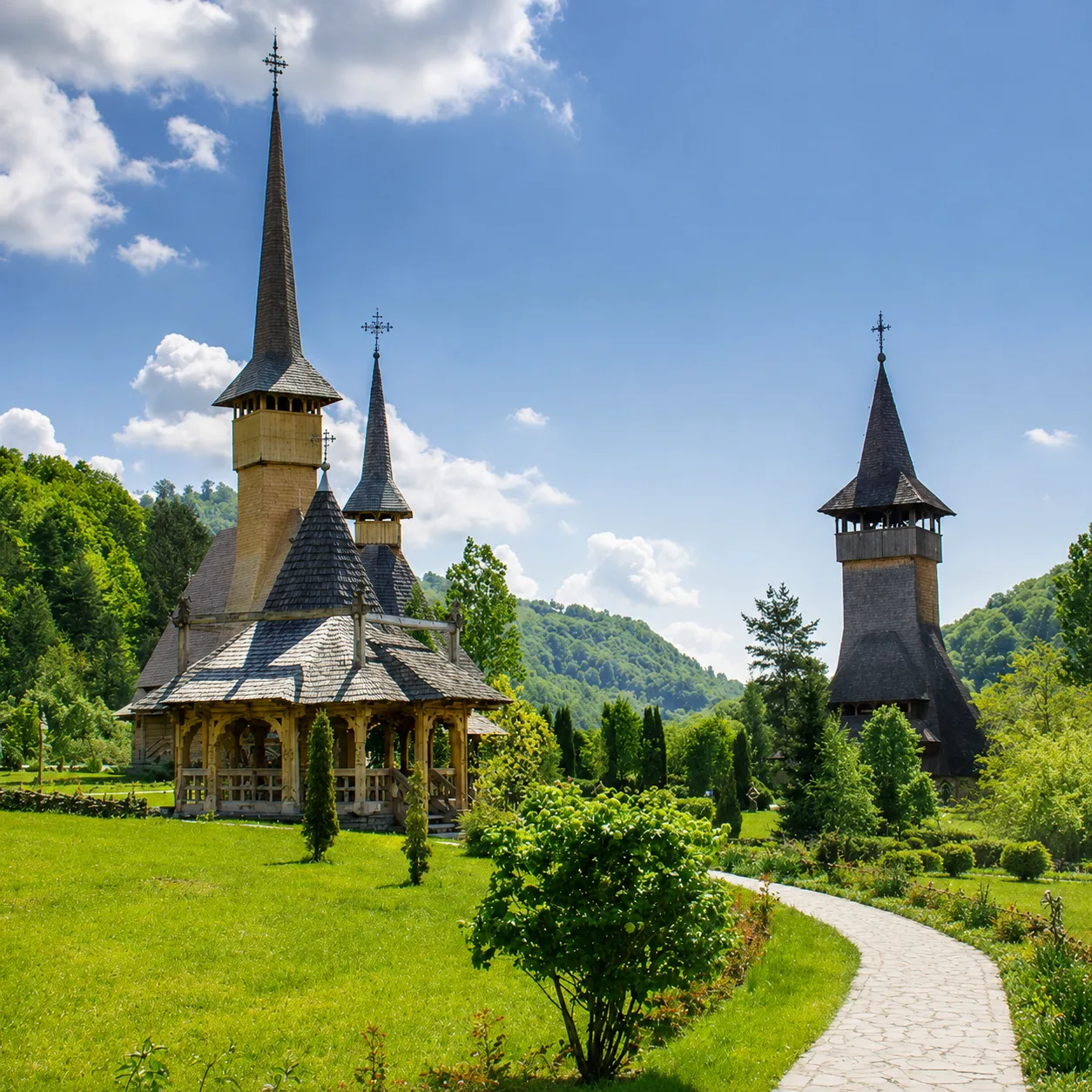
The Wooden Churches of Maramureș are a group of eight Orthodox churches inscribed on the UNESCO World Heritage List in 1999, selected from roughly a hundred wooden churches preserved across the region. The eight stand at Bârsana, Budești (Josani), Desești, Ieud (Deal), Plopiș, Poienile Izei, Rogoz and Șurdești, spanning historic Maramureș, the Land of Chioar and the Land of Lăpuș. Most were raised during the 17th and 18th centuries.
Their defining feature is the slender, soaring spire set above the narthex, at the western end of the building. The churches are narrow yet tall, with steep shingle roofs designed to withstand the heavy winters of this mountainous region. Built entirely of oak, they rely on traditional timber joinery, without nails or other metal fittings — a testament to the skill of local craftsmen.
The portals and door frames are carved with vegetal, animal and geometric motifs, resting on slender pillars. Many of the churches preserve interior paintings by local artists, blending biblical scenes with elements of folk tradition.
Together, these churches illustrate a range of architectural solutions from different periods and areas, expressing the distinctive cultural landscape of northern Romania. The spire of Bârsana Monastery, raised later in the same tradition, exceeds 50 metres, ranking among the tallest wooden structures of its kind in the world.