
Attraction
Târgu Secuiesc
An old centre with a large square from which more than 70 narrow courtyards branch off, once home to craftsmen. The Guilds Museum is right on the square.
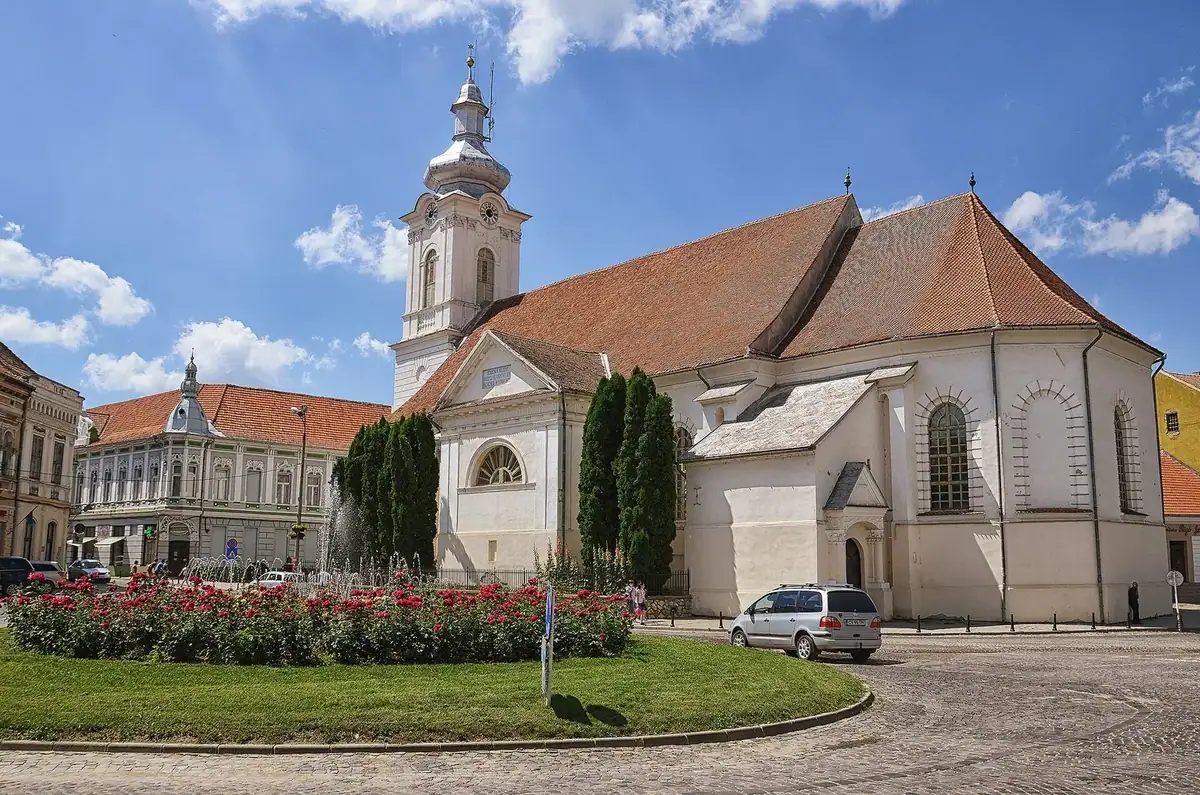
Foto: Pasztilla aka Attila Terbócs, CC BY-SA 4.0, via Wikimedia Commons
Târgu Secuiesc (Kézdivásárhely in Hungarian) is the second town of the county, about 36 km from Sfântu Gheorghe, on the DN11, the road linking Brașov to Moldavia through the Oituz Pass. King Sigismund made it a royal town in 1427, and for centuries it lived off fairs and crafts.
What makes it interesting is the way it was built. Craftsmen's families kept raising houses behind those on the square, in the gardens, until more than 70 long dead-end courtyards had formed, called “udvartér”. You enter them from the square, through gateways. A fire burned most of the town in 1834, so many façades date from the 19th century.
Start in Gábor Áron Square, at the statue of the man who cast cannons in 1848 and 1849. Nearby are the Reformed church of 1780-1782, rebuilt after the fire, and the former town hall, now the “Incze László” Guilds Museum, with tools, guild chests and a collection of dolls in folk costume. The museum is a branch of the Székely National Museum; check the opening times first. On Kanta Street stands the Minorite monastery, a run-down building you can only see from outside, with Holy Trinity Church and a Baroque gate from 1807.
The historic centre is a category A monument (CV-II-s-A-13273).
Did you know that some of the cannons used by the Székelys in the 1848-1849 revolution were cast right here, in Mózes Turóczi's workshop?
Piața Gábor Áron, Târgu Secuiesc, județul Covasna