
UNESCO
Ținutul Buzăului — UNESCO Global Geopark
A UNESCO Global Geopark in the bend of the Carpathians (the Land of Luana), renowned for its mud volcanoes, amber, living fires and rock-cut hermitages.
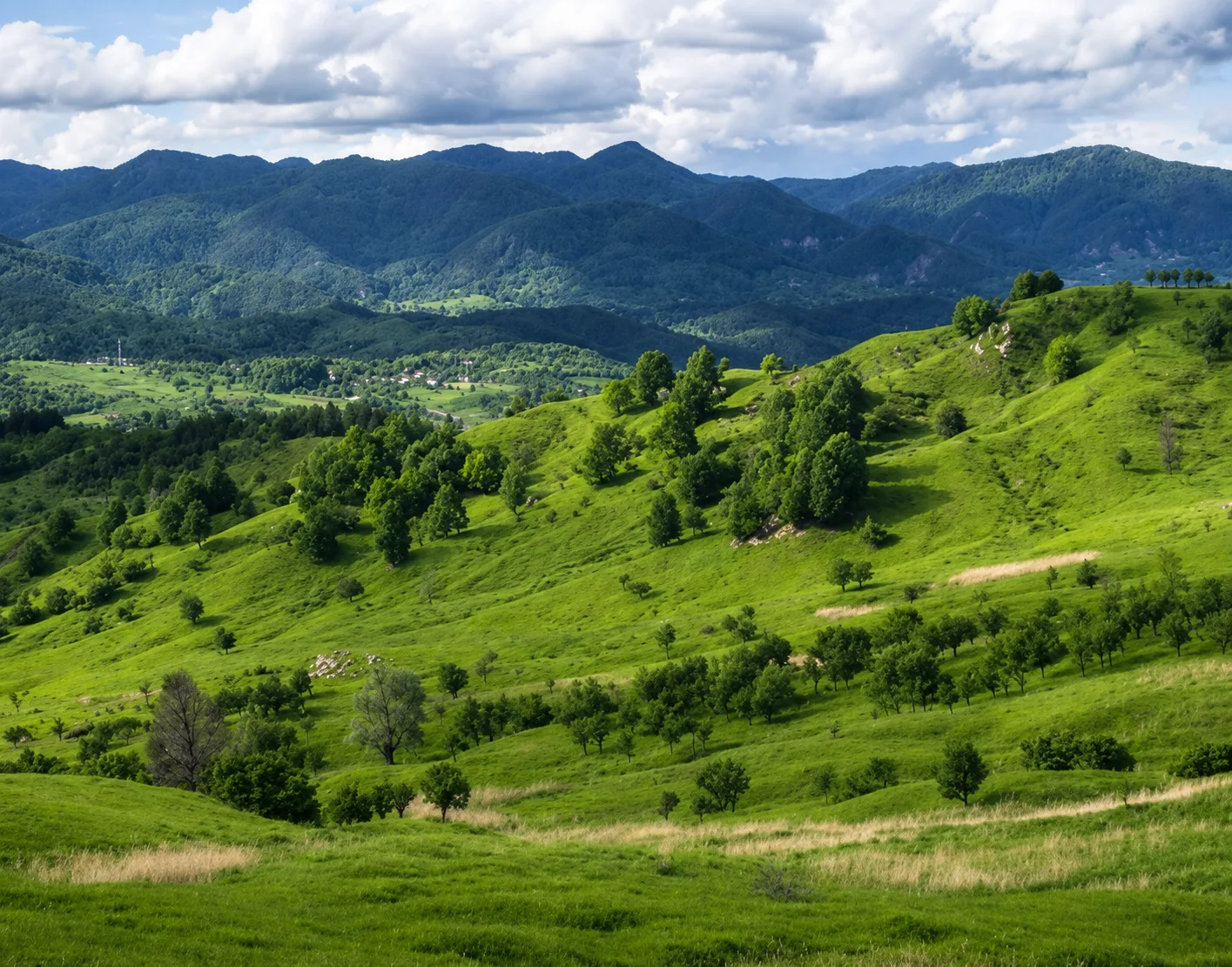
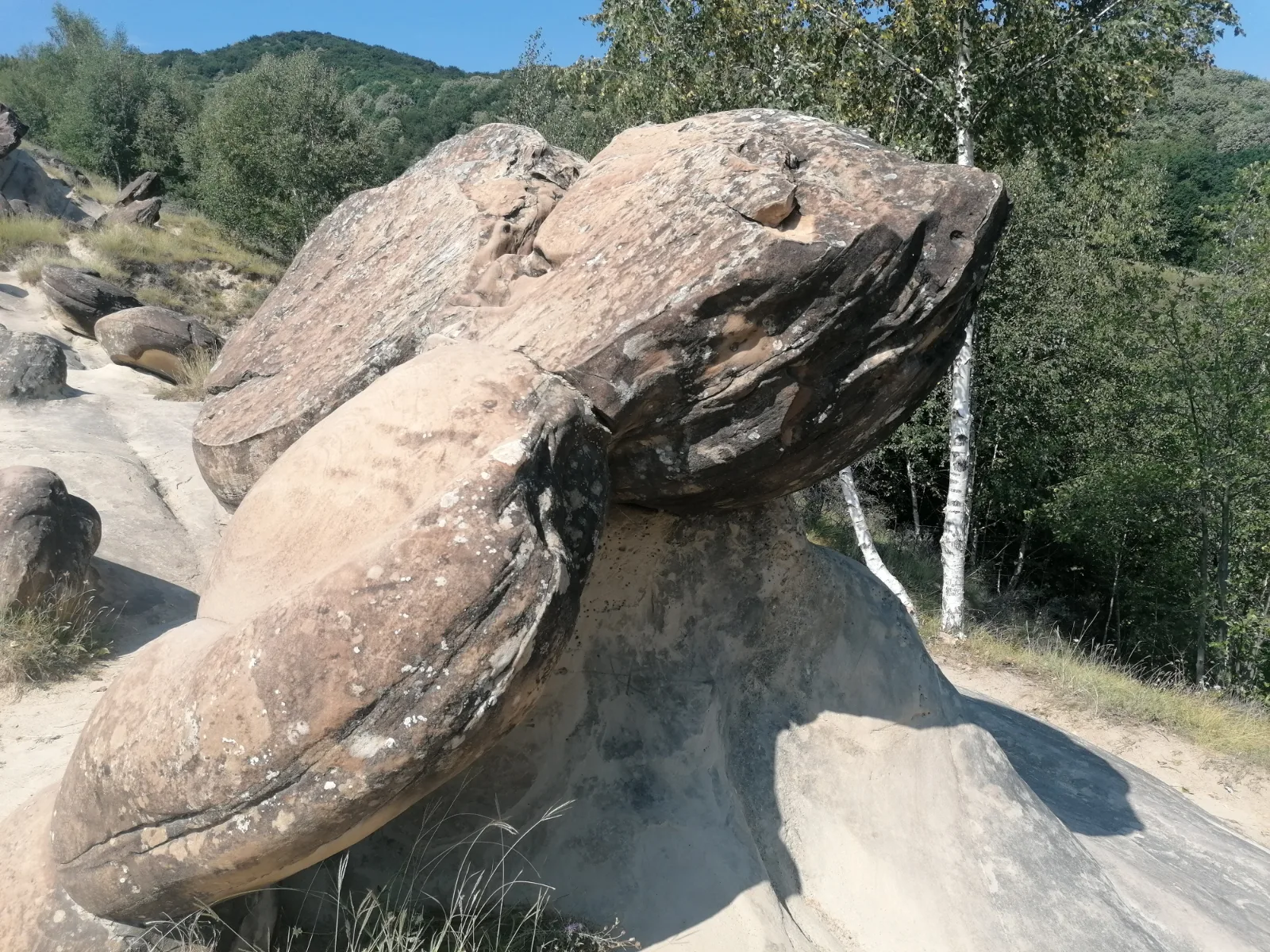
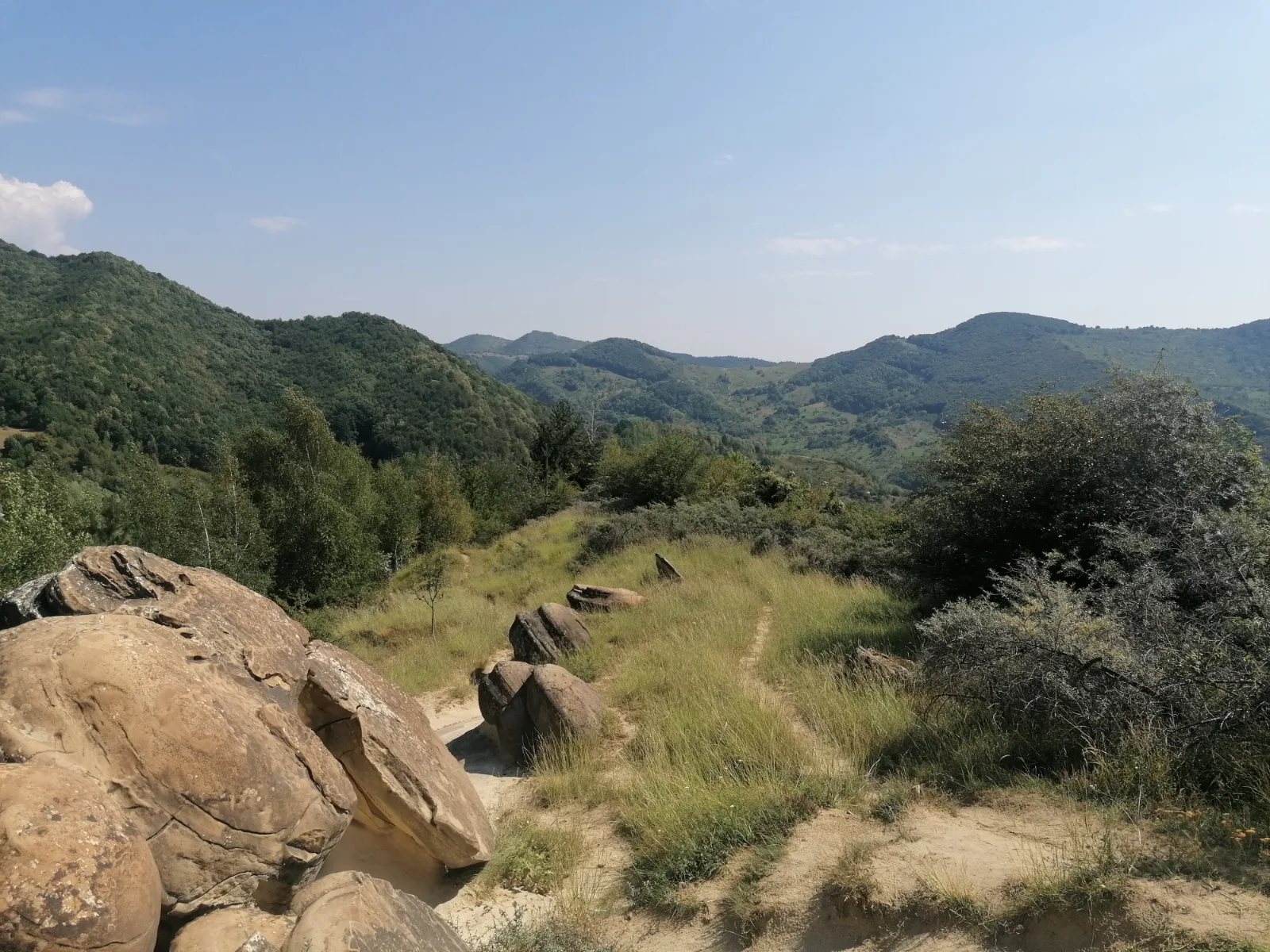
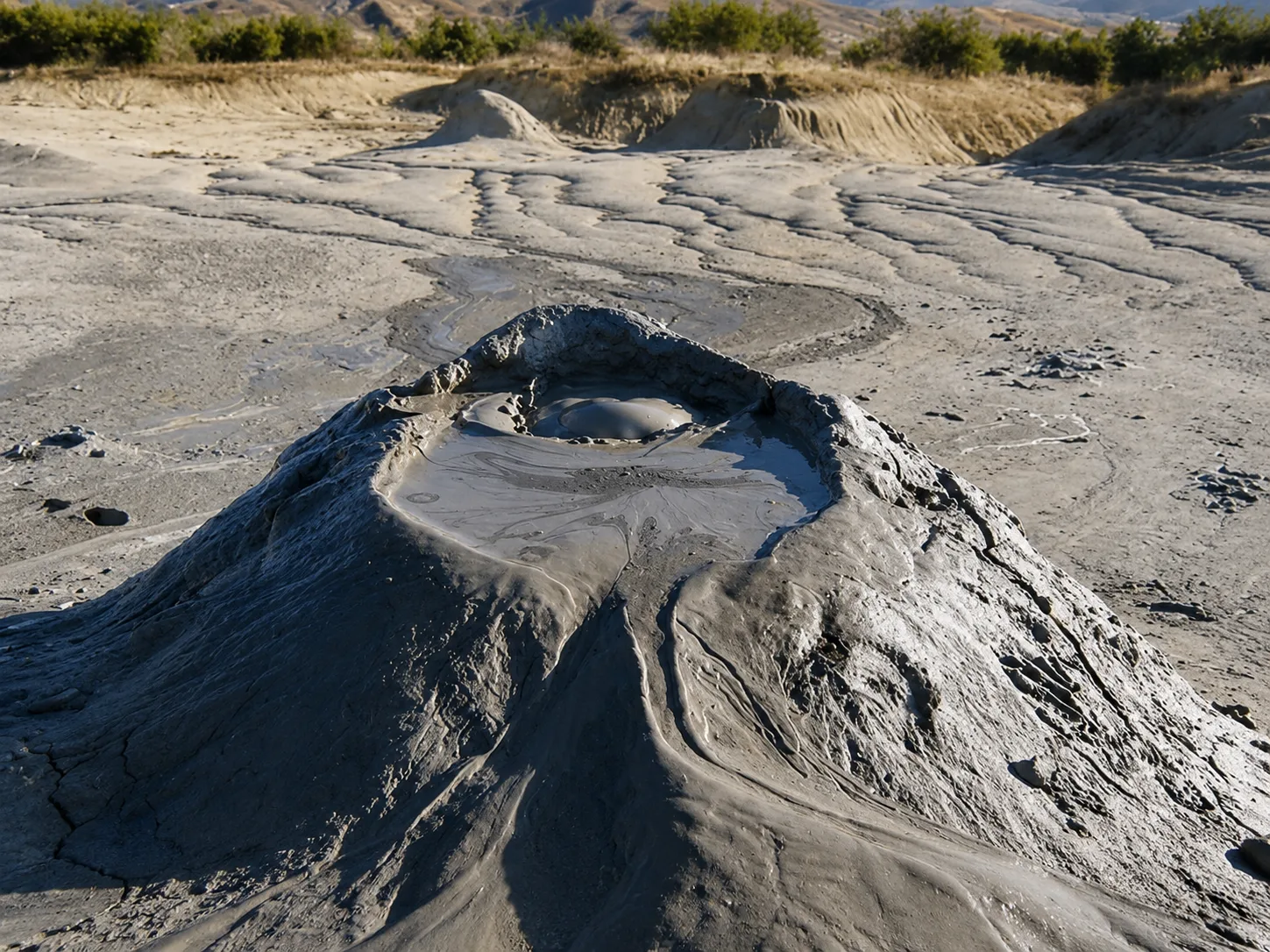
The Ținutul Buzăului UNESCO Global Geopark covers a region in the bend of the Carpathians, recognised as a UNESCO Global Geopark in April 2022. Unlike classic World Heritage sites, a geopark embraces an entire territory, where geological heritage of international importance is interwoven with ecological, archaeological, historical and cultural values.
Its best-known attraction is the Mud Volcanoes of Pâclele Mari and Pâclele Mici, a striking, almost lunar landscape shaped by gases pushing cold mud to the surface. Alongside them, the geopark includes the Living Fire of Lopătari — flames fed by natural gas seeping from the ground —, the salt complex and caves of Meledic, the concretions of Ulmet and the dramatic rock formations known locally as "stone fangs" or "walls of the giants".
Its cultural heritage is equally significant: the amber of Colți, a rare variety prized for its hues and displayed in the Amber Museum, and the rock-cut settlements of Aluniș, Colți and Bozioru, hermitages and small churches carved into the stone, sometimes called the "Romanian Athos". The region, known by the metaphorical name of the Land of Luana, preserves a rich body of legends about giants and dragons, passed down orally since ancient times.
This rare blend of geological phenomena, biodiversity and spiritual heritage underpins the geopark's international recognition.