
UNESCO
Ancient and Virgin Beech Forests
The Romanian components of the transnational Carpathian beech forest site, eight reserves holding some of the best-preserved virgin beech forests in Europe. Inscribed on the UNESCO World Heritage List.
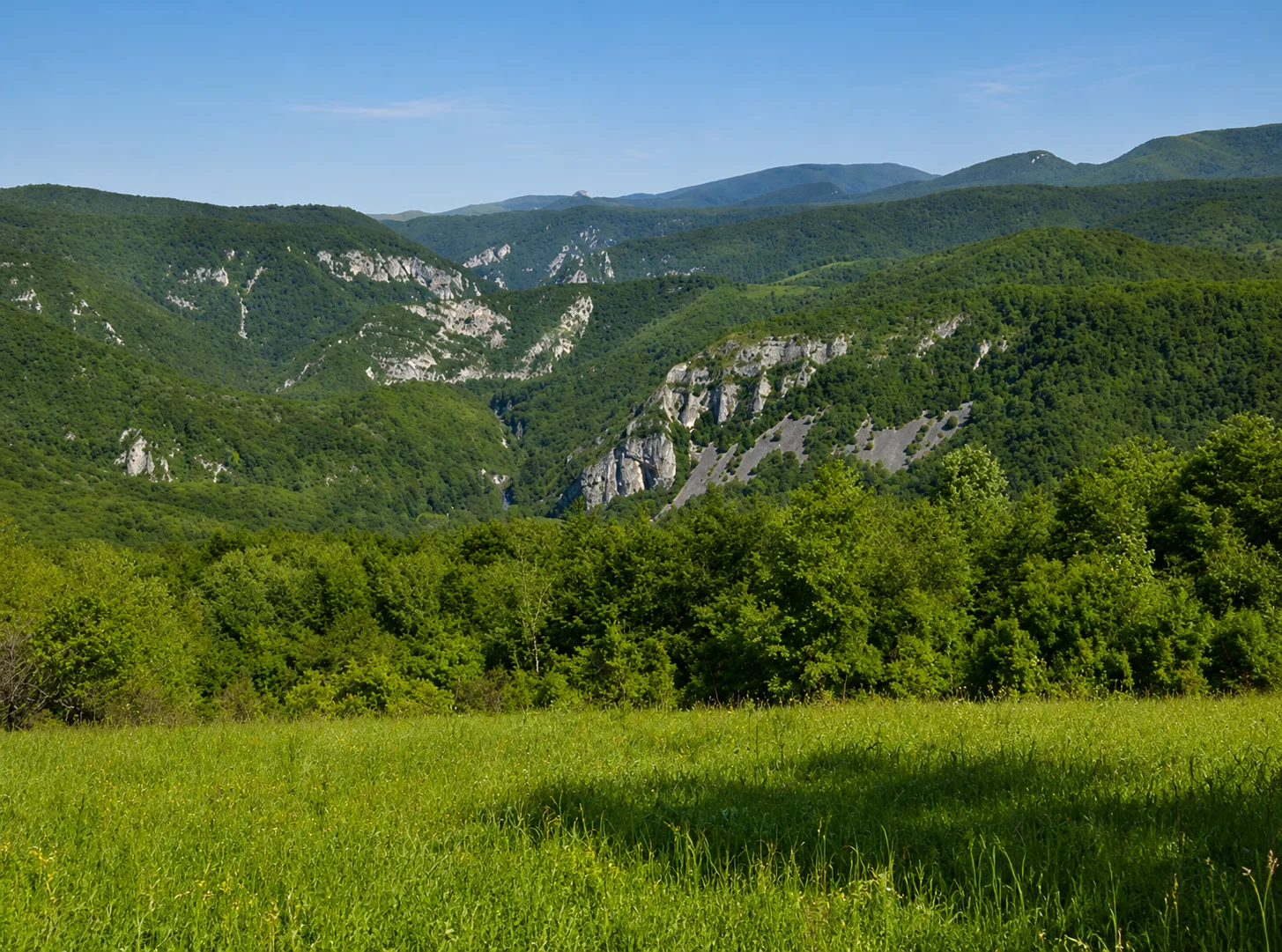
The Ancient and Virgin Beech Forests are the Romanian components of a transnational natural site inscribed on the UNESCO World Heritage List, which brings together the most representative ancient and primeval beech forests in Europe, spread across more than ten countries. The extension of the site to include the Romanian areas was adopted in 2017, adding roughly 24,000 hectares, most of them in public state ownership.
The Romanian components lie in eight protected areas: Izvoarele Nerei, Cheile Nerei-Beușnița and Domogled–Valea Cernei in the Banat, Cozia in Vâlcea, the Șinca old-growth forest in Brașov, the Slătioara old-growth forest in Suceava, together with Groșii Țibleșului and Strâmbu-Băiuț in Maramureș. The Izvoarele Nerei reserve contains one of the largest continuous expanses of virgin beech forest in the European Union.
Virgin forests are ecosystems left almost untouched by human intervention, where nature follows its own cycles of growth and regeneration. The Romanian Carpathians shelter the most extensive such forests on the continent, where ancient trees can exceed 50 metres in height.
These woodlands host a remarkable biodiversity, home to large carnivores such as the wolf, the lynx and the bear, and they illustrate how beech, after the last Ice Age, came to dominate much of Europe's forests.