
UNESCO
Horezu Monastery
The foremost foundation of Prince Constantin Brâncoveanu, begun in 1690. The most representative ensemble of the Brâncovenesc style, inscribed on the UNESCO World Heritage List.
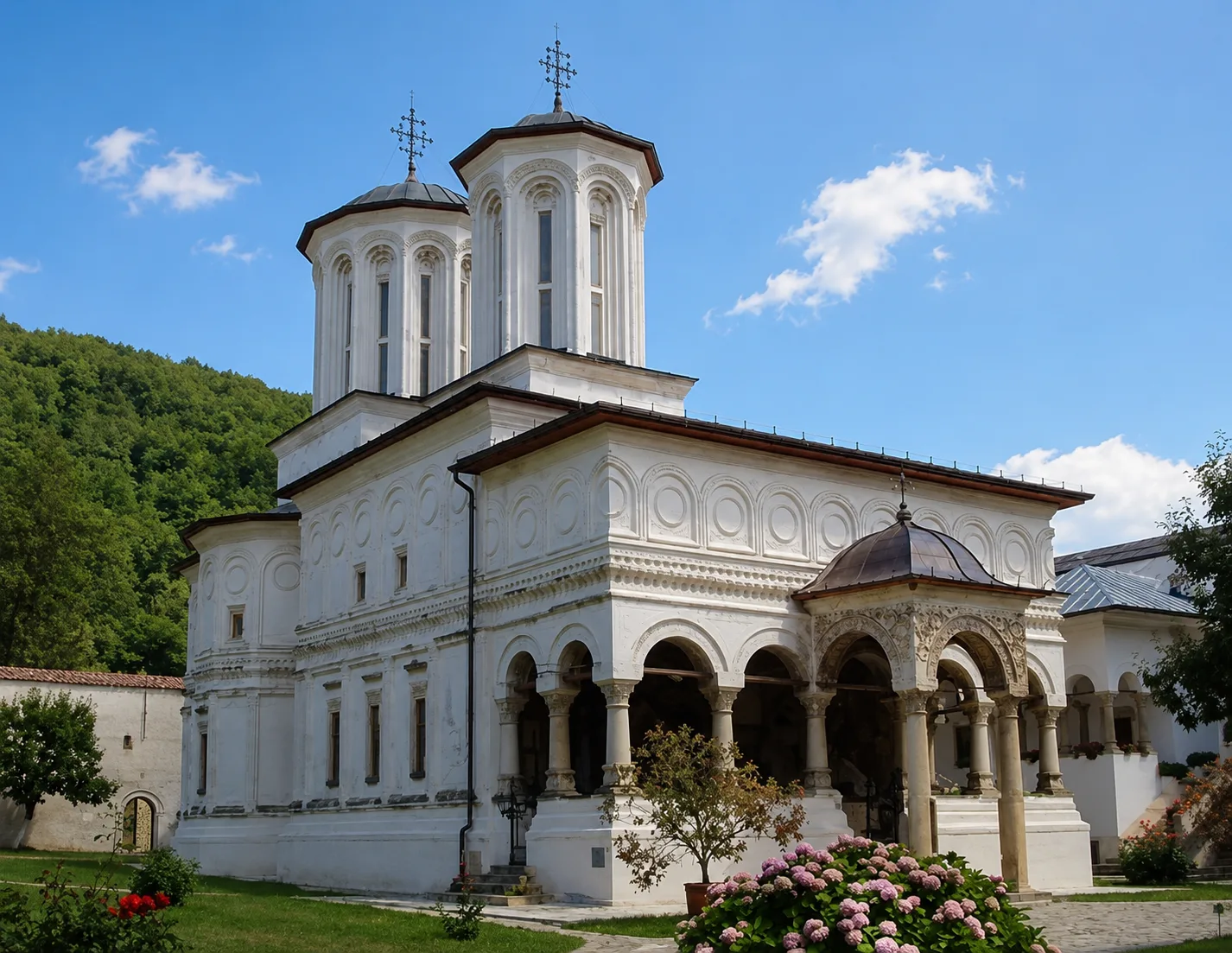
Horezu Monastery (also Hurezi) is the foremost foundation of Prince Constantin Brâncoveanu, raised in northern Vâlcea County at the foot of the Căpățânii Mountains. Work began in 1690, the main church being consecrated on 8 September 1693, with the ensemble extended over the following decades. Inscribed on the UNESCO World Heritage List in 1993, it is regarded as the largest medieval architectural complex in Wallachia and the most representative monument of the Brâncovenesc style.
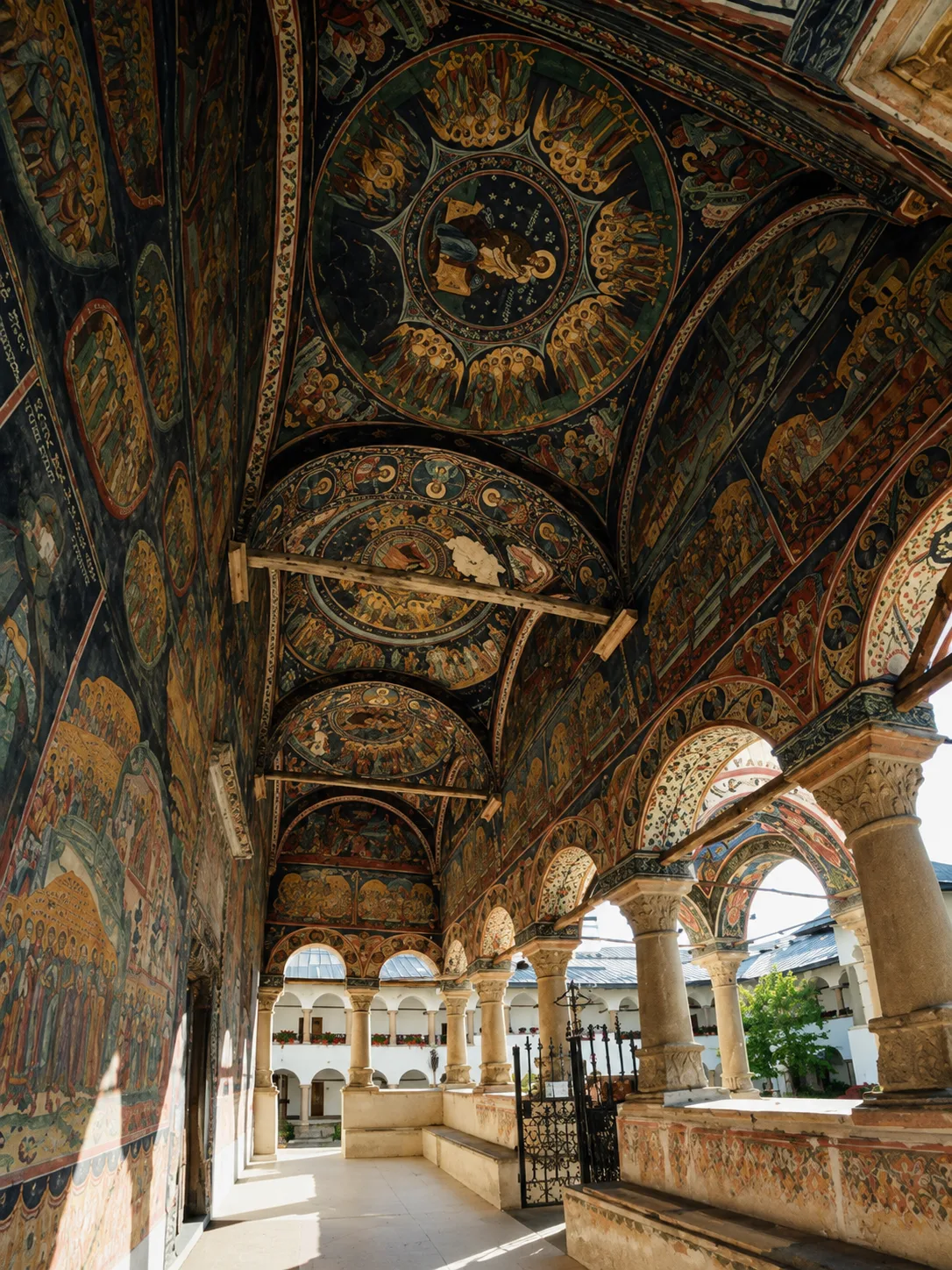
This style, which developed during Brâncoveanu's reign, blends local tradition with Byzantine, Oriental and late-Renaissance influences. The main church, dedicated to the Holy Emperors Constantine and Helena, is built on a trefoil plan and stands out through its open porch, supported by ten richly carved stone columns, and the sculpted marble frame of its entrance door.
Beyond the main church, the ensemble includes the infirmary church, founded by Lady Maria, the prince's wife, in 1696, the Holy Apostles hermitage, the Saint Stephen hermitage, the chapel, the princely palace, the bell tower and the monks' cells. The interior painting, carried out by artists of the Brâncovenesc school, depicts the portraits of the founders from the Brâncoveanu and Cantacuzino families.
During Brâncoveanu's reign, the monastery became an important cultural centre, home to the renowned princely library, which still preserves thousands of volumes today.
,