
UNESCO
Danube Delta
The second-largest and best-preserved delta in Europe, the first Romanian natural site inscribed on the UNESCO World Heritage List. A biosphere reserve and haven for hundreds of bird species.
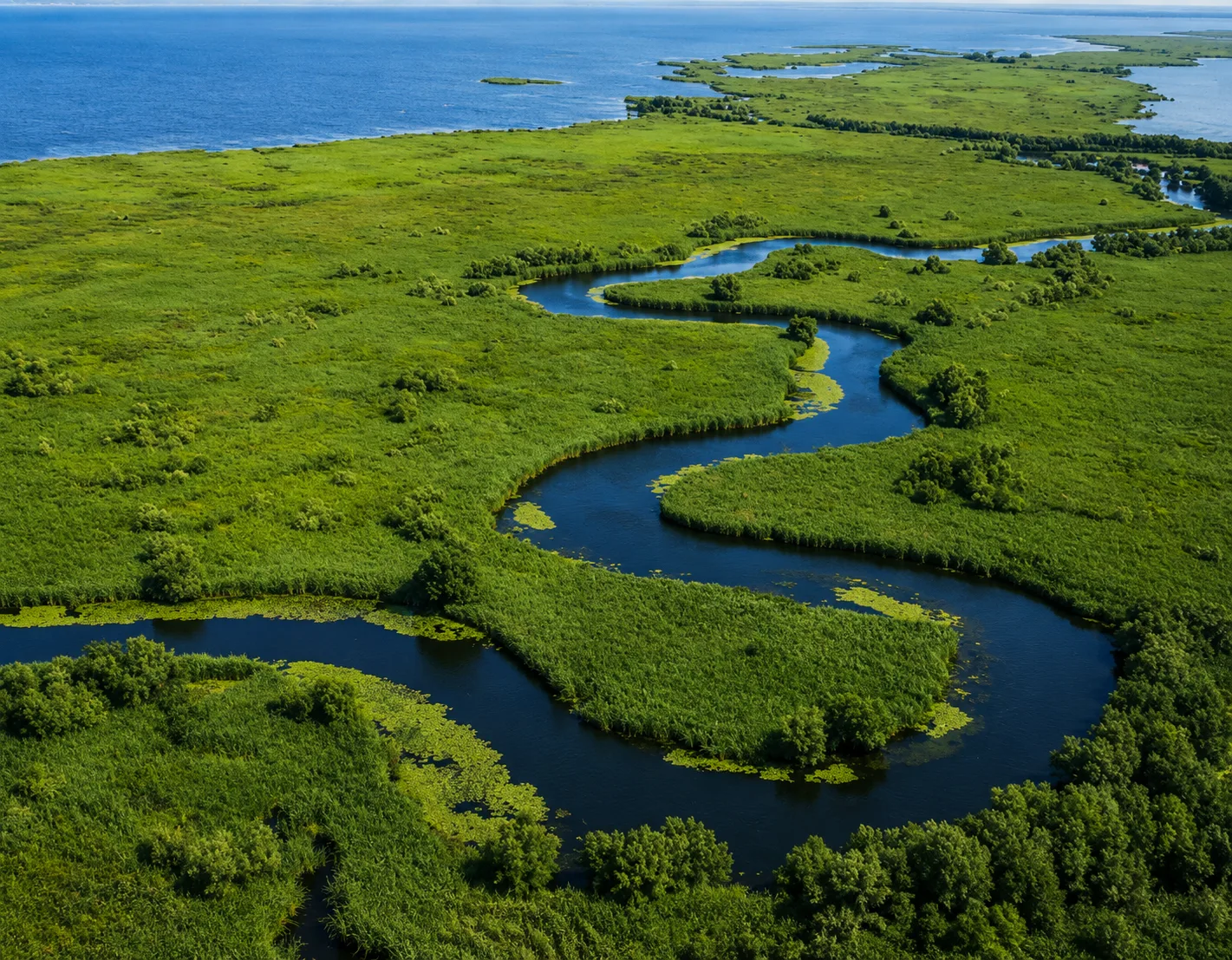
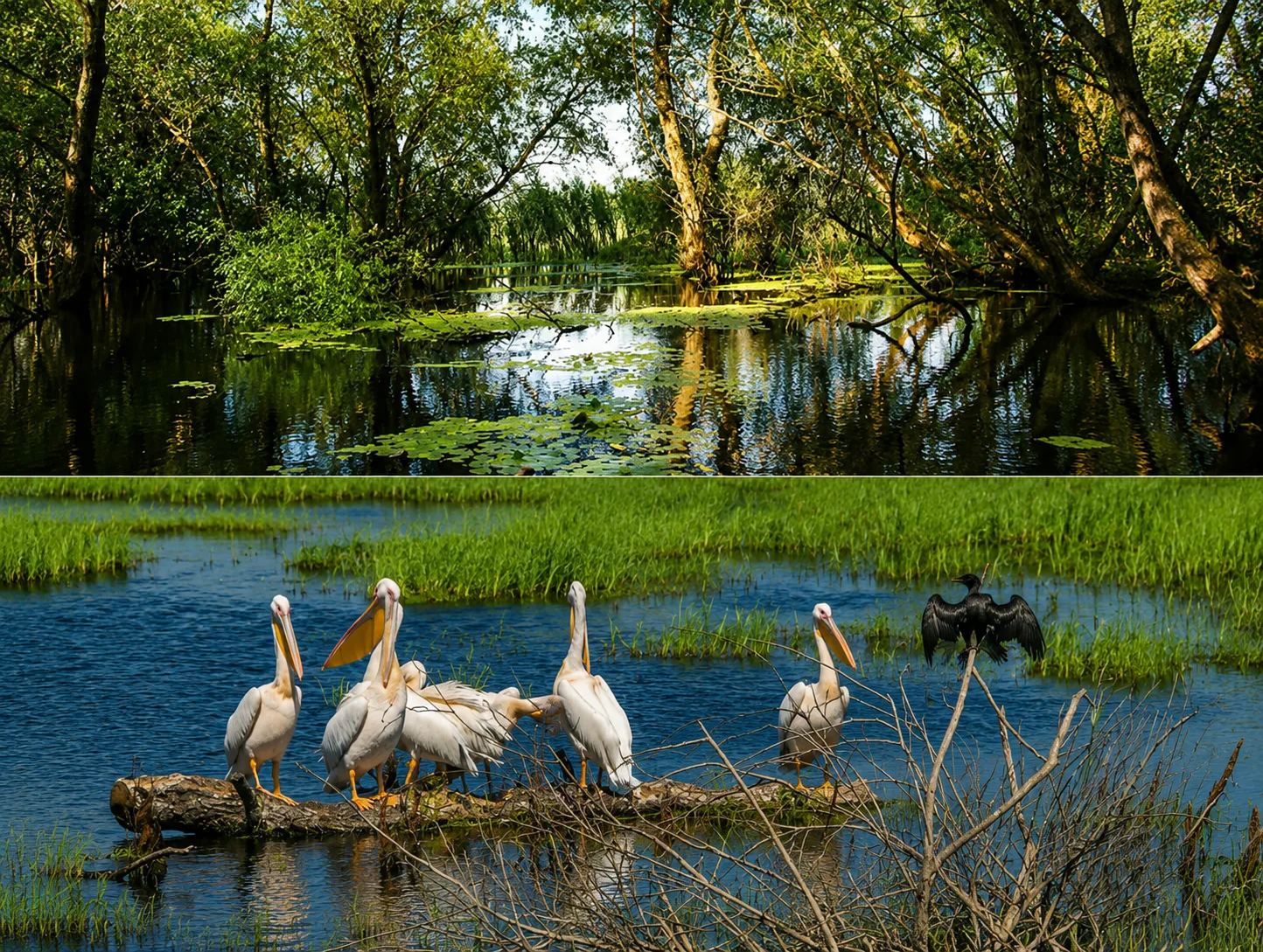
The Danube Delta is where the Danube River meets the Black Sea, forming the second-largest and best-preserved delta on the European continent. Inscribed on the UNESCO World Heritage List in 1991, it was the first natural site in Romania to be recognised in this way, and it is also protected as a biosphere reserve and, under the Ramsar Convention, as a wetland of international importance.
The delta took shape over thousands of years through the deposition of sediment carried by the Danube, which transformed a former sea bay into a labyrinth of branches, channels, lakes and sandbanks. Continuously fed by the river, it is still growing today and is regarded as the youngest land in Romania.
Most of its surface is covered by reed beds — home to the largest continuous expanse of reeds in the world — alongside floodplain forests, dunes and sandy banks. On the Letea and Caraorman sandbanks grow forests of ancient oaks entwined with climbing plants, landscapes rare for the region.
The delta's biodiversity is exceptional: over five thousand species, including hundreds of bird species, many of them migratory and some globally threatened, making this region one of the most important bird habitats in Europe and a leading destination for ecotourism.