
UNESCO
Sighișoara Historic Centre
One of the best-preserved inhabited medieval citadels in Europe, founded by Saxon settlers. Dominated by the Clock Tower, it is inscribed on the UNESCO World Heritage List.
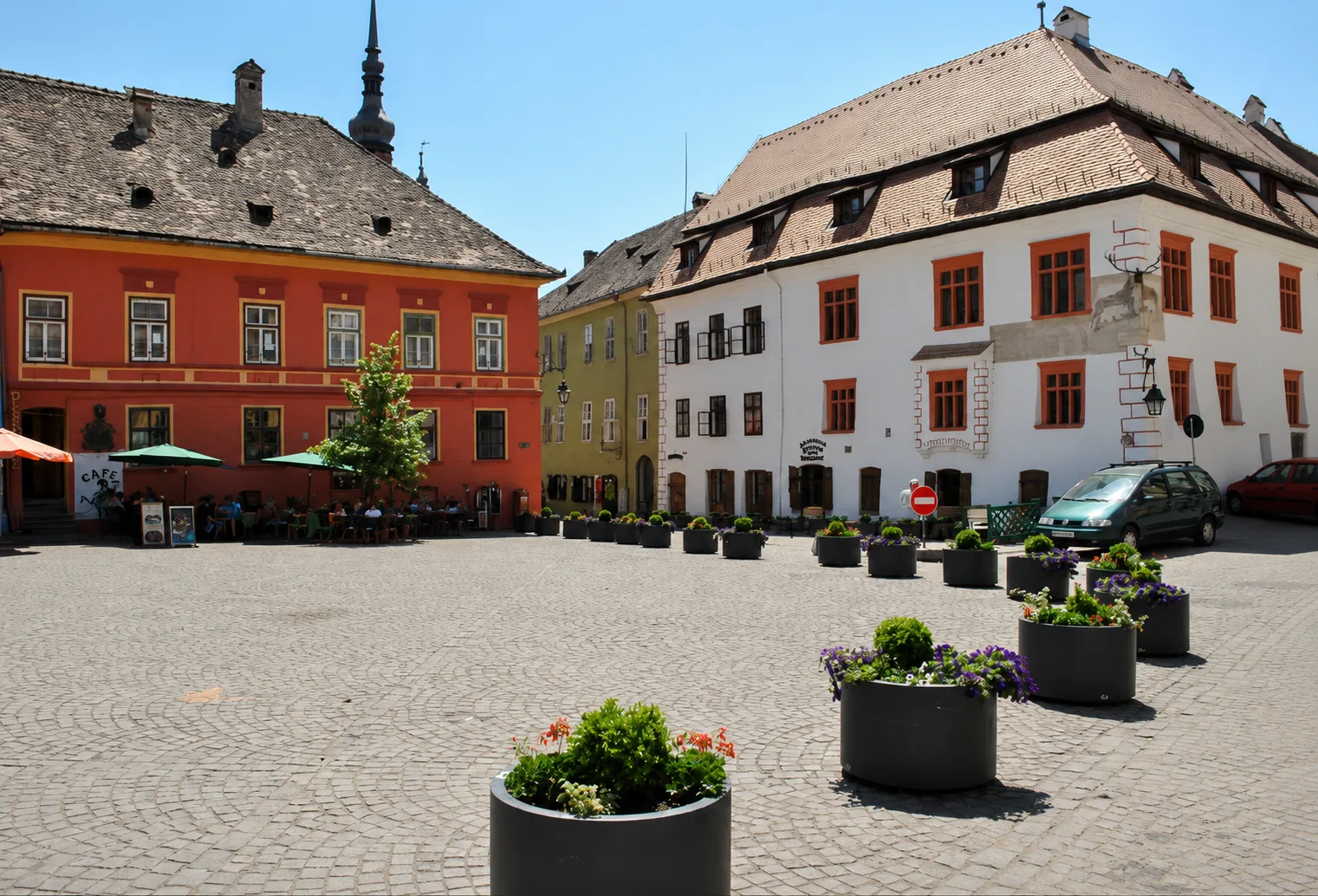
The Historic Centre of Sighișoara is a medieval citadel founded in the 12th century by Saxon settlers brought to Transylvania to defend the eastern borders of the Kingdom of Hungary. Inscribed on the UNESCO World Heritage List in 1999, it is one of the best-preserved fortified medieval towns in Europe and one of the few such citadels still continuously inhabited today.
The settlement rises on the Citadel Hill, on the southern bank of the Târnava Mare River, growing from the 14th century around a community of craftsmen and merchants organised into powerful guilds. They enclosed the town within a defensive wall nearly a kilometre long, reinforced with fourteen towers, each built and maintained by a particular guild.
The emblem of the citadel is the Clock Tower, about 64 metres tall, which originally served as the main gate and the seat of the town's authority. Nearby stand the Church on the Hill, the Scholars' Stairway — a covered passage climbing toward the medieval school — and numerous burgher houses with colourful façades lining the cobbled streets.
The value of Sighișoara lies in the rare combination of a medieval architectural heritage preserved almost unchanged and a continuous urban life, with its historic houses still inhabited to this day.