
Attraction
Vulcanii Noroiosi Paclele Mici
Vulcanii Noroioși Pâclele Mici is a geological nature reserve located on a plateau in the commune of Berca, Buzău County, covering an area of approximately 16.5 hectares — larger than that of Pâclele Mari, despite the name. The plateau is covered by a multitude of active and inactive cones from which mud oozes, including a prominent central cone with two large active craters. The gas driving the phenomenon originates from a depth of approximately 3 km, from an oil reservoir. It is part of the UNESCO Geopark Ținutul Buzăului.
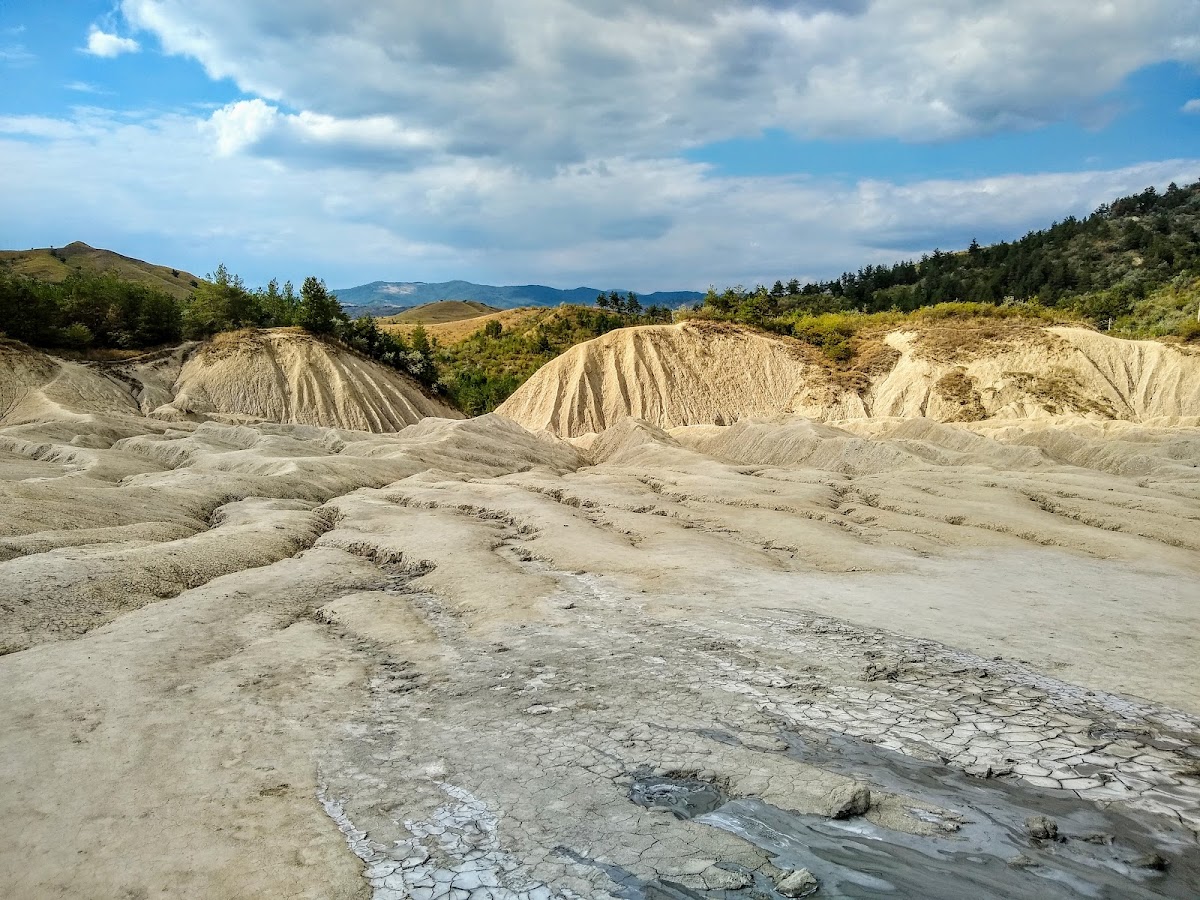
Vulcanii Noroioși Pâclele Mici is a geological and botanical nature reserve, declared a natural monument in 1924, located within the commune of Berca, Buzău County, a few kilometres from Pâclele Mari. Covering approximately 16.5 hectares, Pâclele Mici is — despite its name — larger in area than Pâclele Mari: the difference in name refers to the size of the cones, not to the size of the reserve. The phenomenon is generated by natural gas emissions originating from a depth of approximately 3 km, from an oil reservoir. The gases mix with groundwater, dissolving salt and clay to form the characteristic mud, which is then pushed to the surface. Unlike Pâclele Mari — where viscous mud cones with traces of oil predominate — at Pâclele Mici the plateau is covered by a multitude of smaller active and inactive cones, among which a prominent central cone with two large active craters stands out. Visitors can walk among the cones and mud pools, with many volcanoes active simultaneously. The landscape is lunar: cracked soil, devoid of vegetation, with dust lifted by the wind and small pointed clay cones. A unique botanical feature of Pâclele Mici is the presence of two halophytic plant species native to Central Asia — Nitraria schoberi and Obione verrucifera — which do not exist anywhere else in Romania and are protected by law. Both reserves — Pâclele Mari and Pâclele Mici — are part of the UNESCO Geopark Ținutul Buzăului, recognised in 2022, and were discovered in 1867 by French geologist H. Cognand during oil prospecting surveys. Both sites are worth visiting on the same day, with the combined itinerary taking approximately 3–4 hours.
Paclele Mici comuna Berca judetul Buzau