
Attraction
Piatra Secuiului Peak, Rimetea
Piatra Secuiului is a limestone massif reaching 1,128 m in altitude, located east of the village of Rimetea, Alba County, in the Munții Trascăului. It is known for a unique phenomenon — the sun appears to rise twice, due to the steep ravine that separates the massif's two peaks.
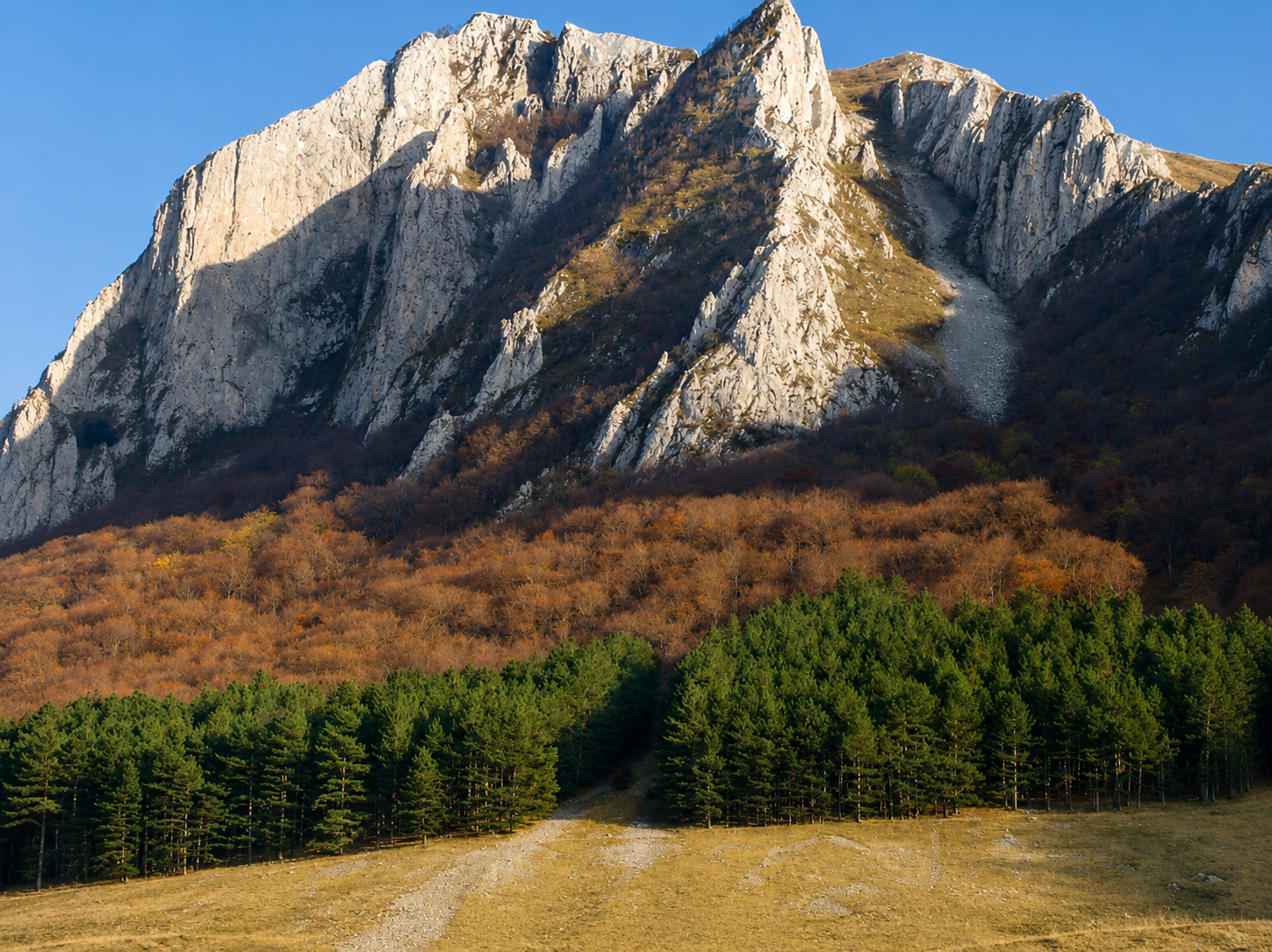
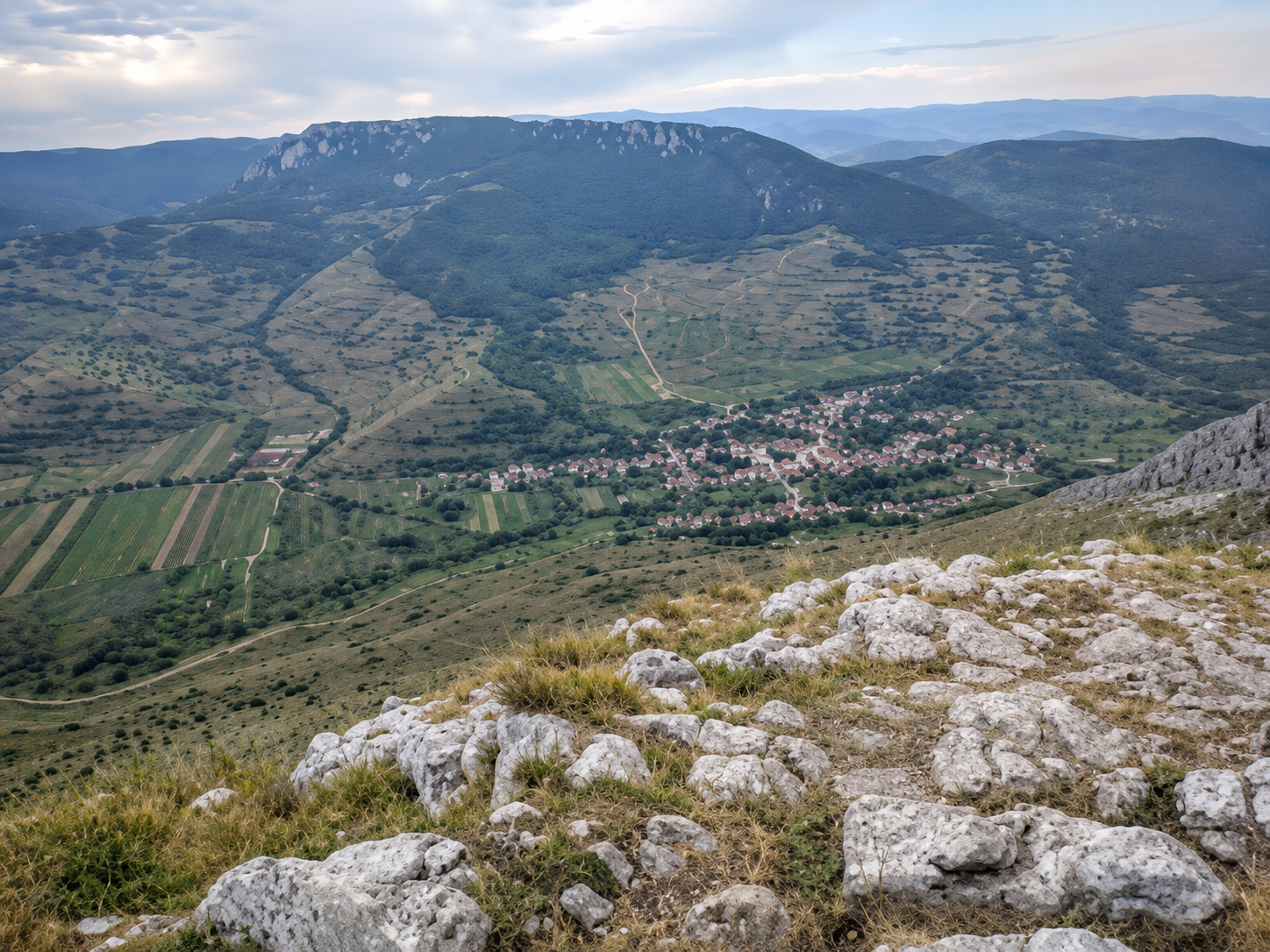
Piatra Secuiului (in Hungarian: Székelykő) is a barren limestone massif with nearly vertical slopes on its southern side, situated between the villages of Rimetea and Pietroasa, on the border of Alba and Cluj counties. Its maximum altitude is 1,128 m, with an elevation difference of approximately 620 m relative to the village, rising spectacularly above the depression in which Rimetea lies. The phenomenon that makes it unique: the massif's two peaks are separated by a steep ravine, causing the sun to appear to rise twice for an observer standing to the west of the formation — after rising in the east, it disappears behind the first peak and reappears a few minutes later. The Hungarian writer Mór Jókai mentioned this phenomenon in one of his novels. The name dates back to the 13th century, when the Székelys took refuge on the mountain to escape the Tatar invasion. On one of the peaks stand the ruins of Cetatea Trascăului (Colțești), a fortress built from the 13th century onwards by the noble Thoroczkay family. The massif is divided into two sections: Piatra Secuiului proper (south) and Colții Trascăului (north, 1,113 m). It is accessible from the centre of Rimetea village, following the blue cross trail marker. The climb is well worth it for the 360° panorama over Câmpia Transilvaniei, the Munții Apuseni, and the Arieș valley. The area is also popular with climbers, as the vertical rock faces provide a serious challenge for experienced mountaineers.
Rimetea judetul Alba