
Attraction
Ținutul Pădurenilor
Ținutul Pădurenilor is one of the most authentic and best-preserved ethnographic areas in Romania, located on the plateau of the Munții Poiana Ruscă, in Hunedoara County, less than 20 kilometres from Castelul Corvinilor. A true "ethnographic island", the region has retained an archaic folk culture — spectacular traditional costume, wooden peasant architecture, a distinctive dialect and age-old customs — owing to its isolation on forested ridges where villages sit at altitudes of over 700 metres.
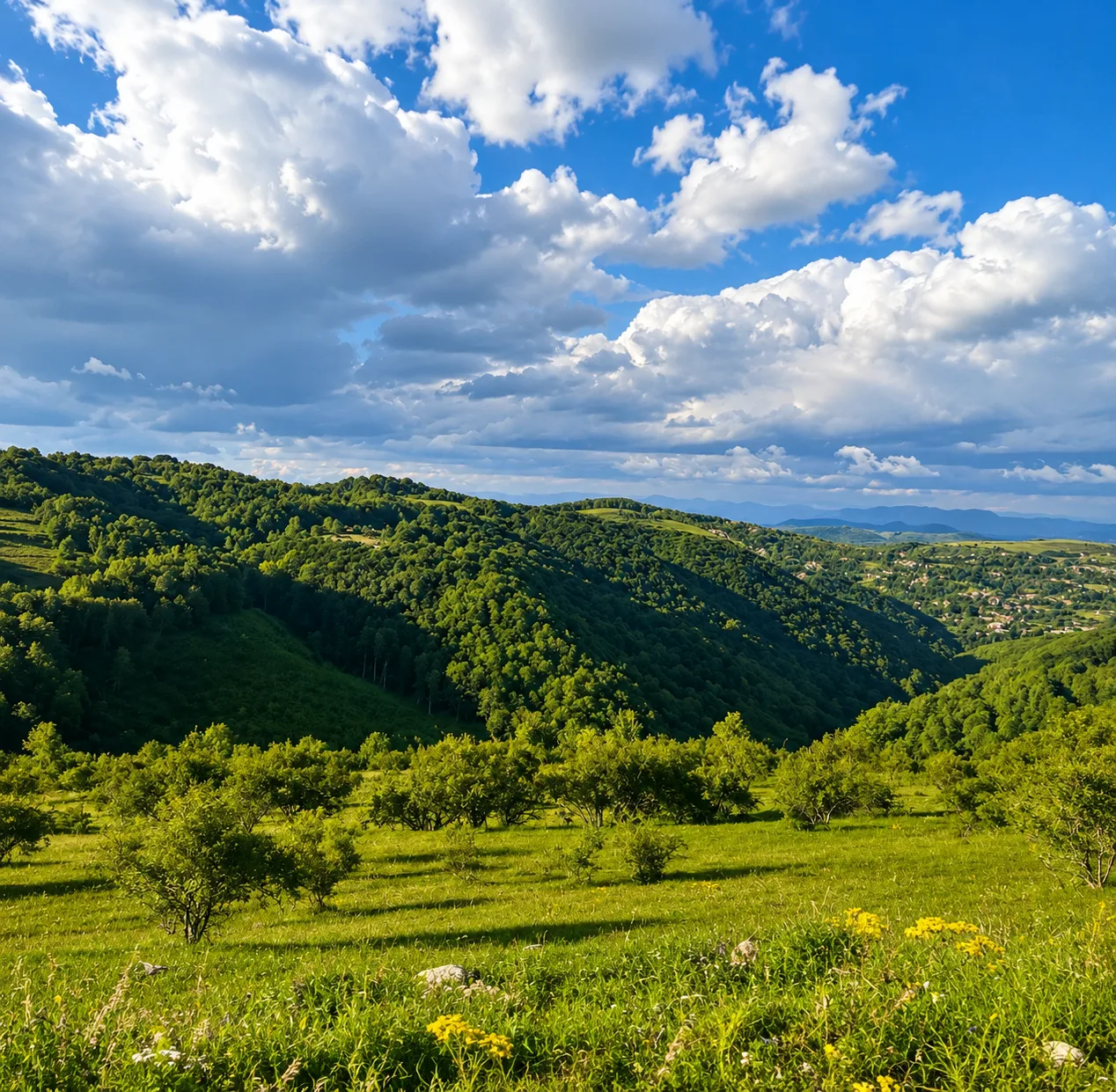
Ținutul Pădurenilor is a distinct ethnographic area in Hunedoara County, situated on the high plateau of the Munții Poiana Ruscă, between the Valea Mureșului to the north and Țara Hațegului to the south. It encompasses approximately 40 mountain villages belonging to the communes of Ghelari, Bătrâna, Bunila, Cerbăl, Lelese, Lunca Cernii and Toplița, whose inhabitants are known simply as "pădureni" — after the vast forests that surrounded and isolated their settlements for centuries. An old saying has it that to reach the pădureni, one must always pass through a forest. Regarded as one of the richest and most original ethno-folkloric areas in Romania, Ținutul Pădurenilor represents a genuine "ethnographic island", in which an archaic folk culture has been preserved that is profoundly different from that of neighbouring regions. Its defining characteristics include villages perched on ridges at altitudes of 700–800 metres, crops grown on terraced hillsides, the absence of pottery-making, a distinctive dialect that retains expressions of Latin origin, and above all a folk costume of exceptional beauty — the women's costume, with its elaborate system of adornments, being regarded as the "gold" of the pădureni. Traditional architecture, with wooden houses over a century old, and customs with ancient roots complete this picture. The history of the area stretches back to Antiquity: at the beginning of the 2nd century AD, the eastern part of the Munții Poiana Ruscă lay within the sphere of the main Dacian and Roman centres, near the capital of Dacia, Ulpia Traiana Sarmizegetusa, with tradition holding that some of the Dacians who withdrew into the mountains took refuge here. Alongside woodworking and shepherding, one of the area's defining occupations from earliest times was the extraction and processing of iron ore — the village of Ghelari, considered the heart of the region, being renowned for iron mining, for the blast furnace at Govăjdia, and for the Orthodox church known as the "Cathedral of the Pădureni". The area was extensively studied by ethnologists such as Romulus Vuia and has given Romanian folklore notable figures, among them the rhapsodist Drăgan Muntean.
337184 Poiana Răchițelii