
Attraction
Măgura Sculpture Camp
The Măgura Sculpture Camp, held between 1970 and 1985 on the initiative of sculptor Gheorghe Coman, stands near Ciolanu Monastery, in Tisău commune, Buzău County, about 33 km from the city of Buzău. The project marked 16 centuries since Buzău's first documentary attestation: over 16 years, 16 sculptors a year created works in shell limestone, quarried at Ciuta, Năeni, and Pietroasele. The ensemble today holds 256 sculptures, spread across 21 hectares, making it Romania's largest open-air sculpture museum. Admission is free.
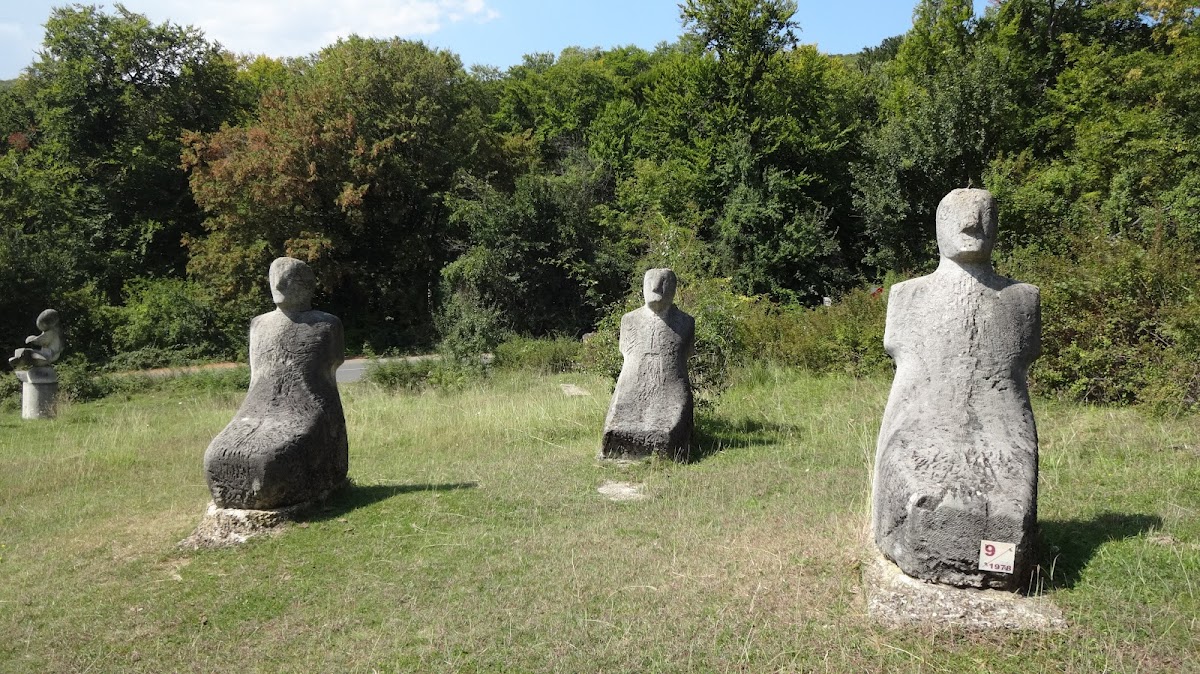
The Măgura Sculpture Camp is an open-air art ensemble located in the meadows near Ciolanu Monastery, within Tisău commune, Buzău County, about 33 km from the city of Buzău. It is considered the second most popular tourist attraction in the county, after the Mud Volcanoes.
The project was launched in 1970 by sculptor Gheorghe Coman, with support from the Union of Visual Artists of Romania, after Nicolae Ceaușescu visited an obelisk in Buzău's Crâng Park, also raised on the proposal of Coman and Gheorghe Apostol. The camp's goal was to mark 16 centuries since Buzău's first documentary attestation, through a unique symbolic formula: for 16 years, 16 sculptors — mostly art high-school students or recent graduates of Bucharest's Academy of Architecture — came each year, for two months (August-September), to turn a stone block, assigned by drawing lots, into a work of art conceived on the spot.
The raw material used was shell limestone, quarried at Ciuta, Năeni, and Pietroasele. Work at the Măgura camp began in 1970 and ended in 1985 (some sources cite 1986 for the last edition). Over 16 years, 163 sculptors took part, including major names in modern Romanian sculpture — George Apostu, Napoleon Tiron, Mihai Buculei, Aurel Vlad — who created 256 stone works, donated to the county at the end of each edition. The ensemble is Romania's largest national open-air sculpture group and a museum unique in Europe for its scale.
The works are spread across 21 hectares of land belonging to Ciolanu Monastery, but managed by Buzău County's cultural authorities, who pay rent to the monastery. The styles represented range from abstract to figurative, reflecting the evolution of artistic trends in the second half of the 20th century. Each sculpture now bears an identification plaque with its work number.
The Măgura-Tisău area is reached from the city of Buzău, about 33 km away. Admission is free, with no visiting fee. Worth visiting for the density and diversity of contemporary sculpture works permanently on display outdoors, forming a de facto museum of postwar Romanian sculpture, unique in scale within Europe.
Magura judetul Buzau