
Attraction
Sulina
Sulina, at the mouth of the Sulina Branch, is Romania's easternmost town and can only be reached by water. It grew in the second half of the 19th century as the technical base of the European Commission of the Danube, which left behind the Commission palace, the Old Lighthouse (now a museum), churches of several faiths and a listed historic urban area.
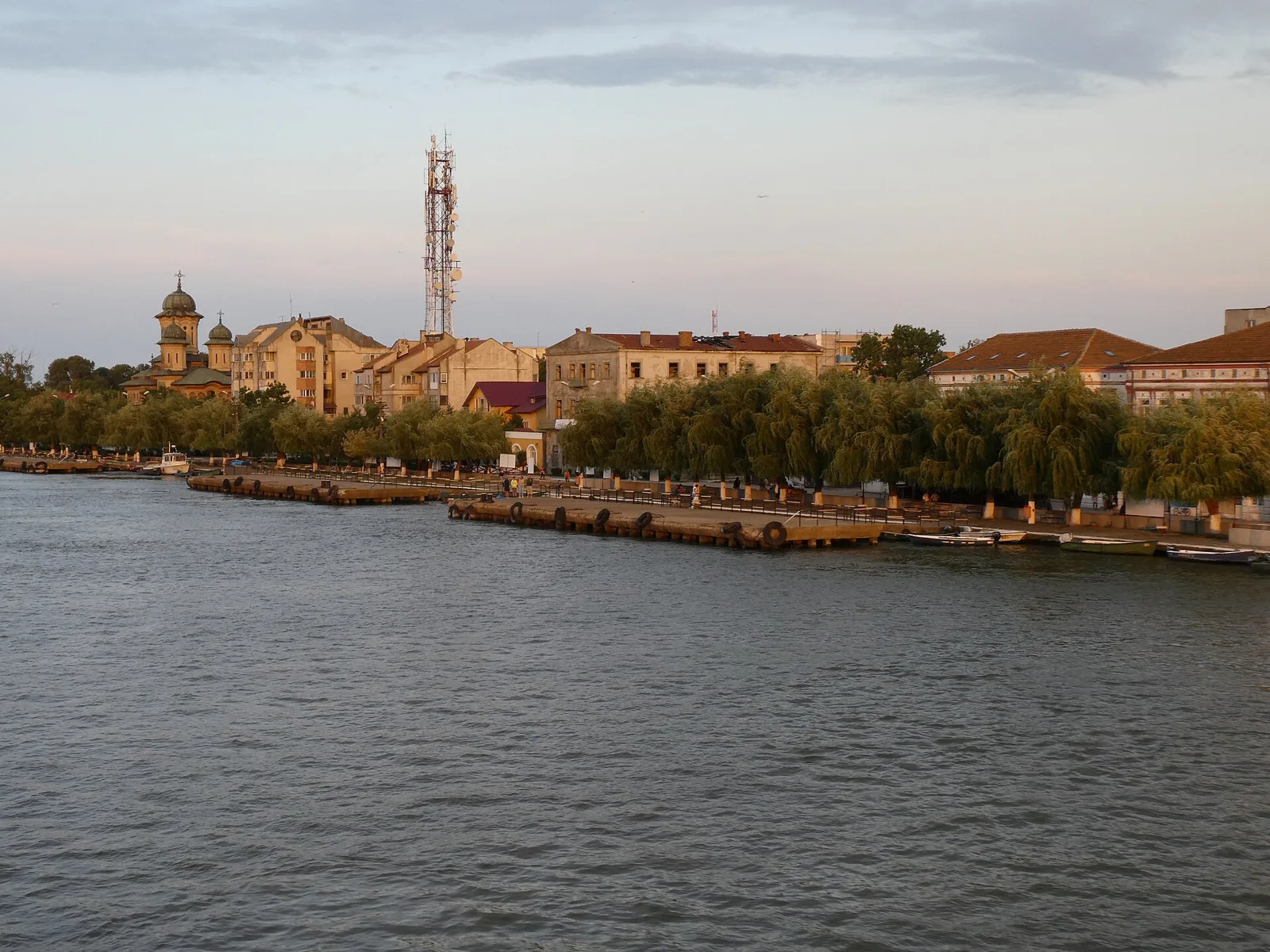
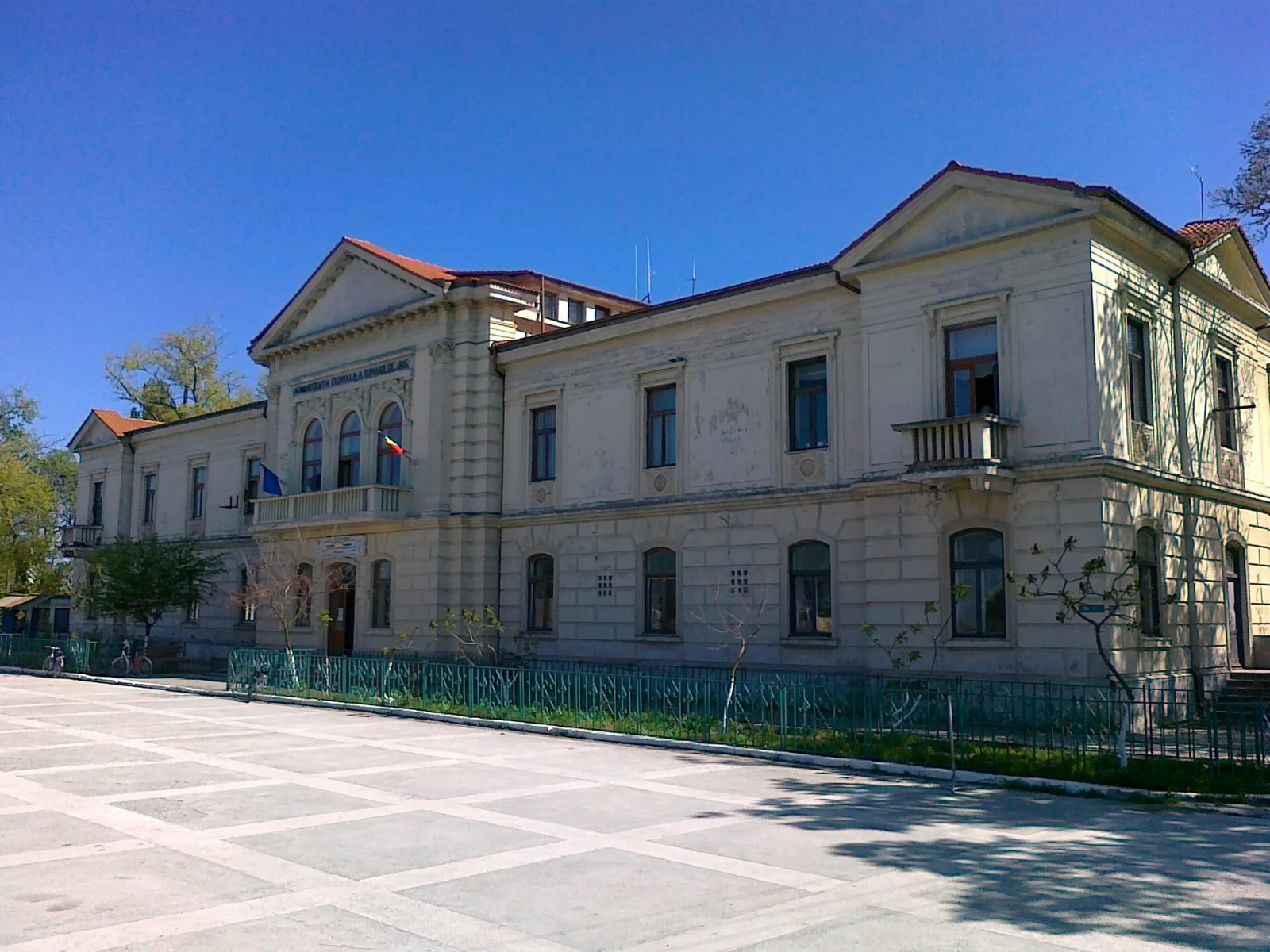
Foto: Analogo, CC BY-SA 4.0, via Wikimedia Commons Galerie: Trygve W Nodeland, CC BY-SA 3.0, via Wikimedia Commons
Sulina is the town where the Sulina Branch flows into the Black Sea, the easternmost settlement in Romania and the town with the country's lowest average altitude, 4 m. It had 3,118 inhabitants at the 2021 census. It is not connected to the road network: it can only be reached by water, on classic and fast passenger ships from Tulcea. The town stretches along the right bank of the Danube, with six streets parallel to the river and 13 perpendicular to it.
It is first mentioned, as Solina, by the Byzantine emperor Constantine Porphyrogenitus in "De Administrando Imperio" (10th century), and it appears on Pietro Visconti's map of 1327. A lighthouse already stood here in Ottoman times, guiding ships into the Sulina Branch. After the 1856 Treaty of Paris, Sulina became the technical base of the European Commission of the Danube (CED), which made the branch navigable for seagoing ships and turned the fishing village into a port town with quays, a waterworks, electric lighting and a hospital. The CED general secretariat was also based here from 1856 to 1878. The Ottomans declared Sulina a free port in 1870, and since 1878 the town has belonged to Romania. The writer Jean Bart (Eugeniu P. Botez), a captain of the port, called it "Europolis". The CED was dissolved by the 1938 Sinaia Arrangement, and in the Second World War the town was largely destroyed by bombing.
On the waterfront stand the Palace of the European Commission of the Danube (dated 1860 to 1868 in the List of Historic Monuments, now the seat of the Lower Danube River Administration, seen from outside) and the CED Old Lighthouse, a historic monument that became in 2003 a museum of the Institute of Eco-Museum Research Tulcea (Strada a II-a no. 43), with an exhibition on the CED, on Jean Bart and on the conductor George Georgescu, who was born in Sulina. Also in the historic centre are the Orthodox Cathedral of St Nicholas and St Alexander, whose foundation stone was laid in 1910, the Roman Catholic Church of St Nicholas, consecrated in 1863 and built by the Italian community, the Greek Church of St Nicholas (1868), the Jean Bart House, the CED School and the tower of the waterworks, built in 1897 with funding from the Queen of the Netherlands (the works cannot be visited, the tower is seen from the street). The ARBDD access permit can also be bought at the information centre in Sulina, on ARBDD water routes 9, 11, 13 and 14 (routes 13 and 14 start in Sulina, 9 and 11 in Crișan).
The old centre is listed in the List of Historic Monuments as two 19th-century urban sites (TL-II-s-B-06020 and TL-II-s-B-06038); the CED palace (TL-II-m-A-06019), the CED lighthouse (TL-II-m-A-06023) and the Jean Bart House (TL-II-m-A-06017) are category A monuments. The town lies within the Danube Delta Biosphere Reserve (UNESCO, Ramsar) and the Natura 2000 site ROSPA0031, and under Law no. 345/2001 Sulina and its surroundings were declared an objective of national interest.
Did you know that Sulina's streets parallel to the Danube have numbers instead of names? They are called Street I, Street II and so on up to Street VI, "as in New York", as the town hall puts it, while the perpendicular streets bear the names of famous people or ordinary names.
Orașul Sulina, județul Tulcea