
Attraction
Sărata Monteoru Spa Resort
Sărata Monteoru Spa Resort, in Merei commune, about 14-18 km from Buzău, draws on chlorine-sodium, iodine, and bromine mineral waters, with a therapeutic tradition documented since the 19th century. Officially opened on 1 July 1895 by businessman Grigore Monteoru, known in its heyday as "The Pearl of Buzău," the area also holds archaeological significance, home to the Bronze Age Monteoru culture necropolis. It is reached via national road DN10 from Buzău, turning off toward Merei.
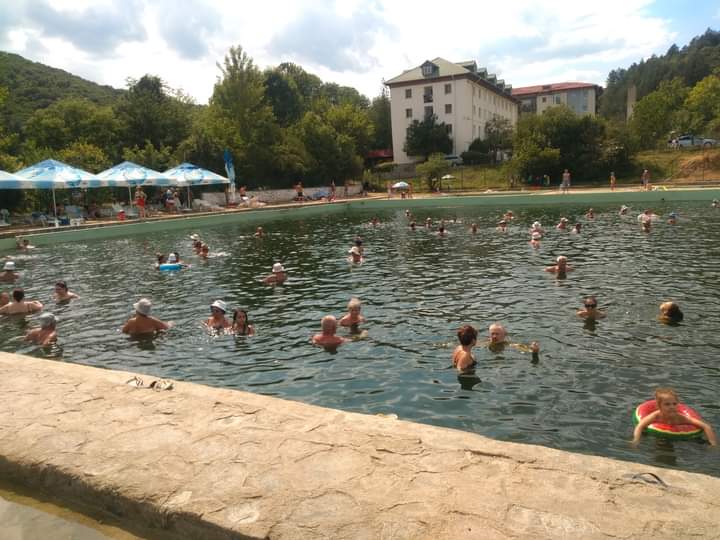
Sărata Monteoru Spa Resort is located in Merei commune, Buzău County, about 14-18 km northwest of the city of Buzău, at an altitude of roughly 200 m. The area has been known since the 19th century for its chlorine-sodium, iodine, and bromine mineral water sources, whose therapeutic properties were first noted in 1837 and confirmed by chemical analysis in 1884.
The resort was founded by businessman Grigore Stavri (later Constantinescu-Monteoru), of Greek origin, who had grown wealthy exploiting local oil deposits. On the advice of his personal physician, Dr. Guyenot, a consultant at Aix-les-Bains in France, Monteoru decided to invest in spa tourism, hiring German architect Eduard Honzik — who had already built the Monteoru family villa in 1888 — to design the resort. It officially opened on 1 July 1895 and included hotels, a treatment facility, a casino (completed in 1900, at a cost of half a million francs), and an English-style park. During the interwar period, the resort was known as "The Pearl of Buzău," "Little Paradise," or "The Little Switzerland of the Buzău Subcarpathians."
The spa infrastructure developed significantly during the interwar years, but the 1940 earthquake, World War II, and the nationalization imposed by the communist regime led to the resort's gradual abandonment and decline, with many historic buildings demolished. Only in the 1970s were two hotels reopened (today Ceres and Monteoru), along with a pool and treatment facility, a role the resort still fulfills today, with its waters recommended for treating rheumatic, gynecological, and peripheral nervous system conditions.
Beyond its spa function, the Merei-Monteoru area holds notable archaeological interest: architect Eduard Honzik himself accidentally discovered, in 1895, the Bronze Age necropolis on Cetățuia Hill and in Poiana Scorușului, later studied by professor Ion Nestor, who in 1933 gave his name to the Monteoru archaeological culture — one of the representative Bronze Age cultures of Wallachia and Moldavia. The same area also holds an oil mine unique in Europe at the time, worked through galleries and wells, still active today under OMV Petrom's management, with exterior visits possible but no underground access, for safety reasons.
It is reached from Buzău via national road DN10 toward Brașov, turning off toward Merei, or by public transport on the Buzău-Merei route. The resort is worth visiting both for its spa treatments using mineral water of proven therapeutic composition and for the area's archaeological context, offering insight into the prehistoric civilizations of the southeastern Carpathians.
Merei judetul Buzau