
Attraction
Eforie Sud Resort
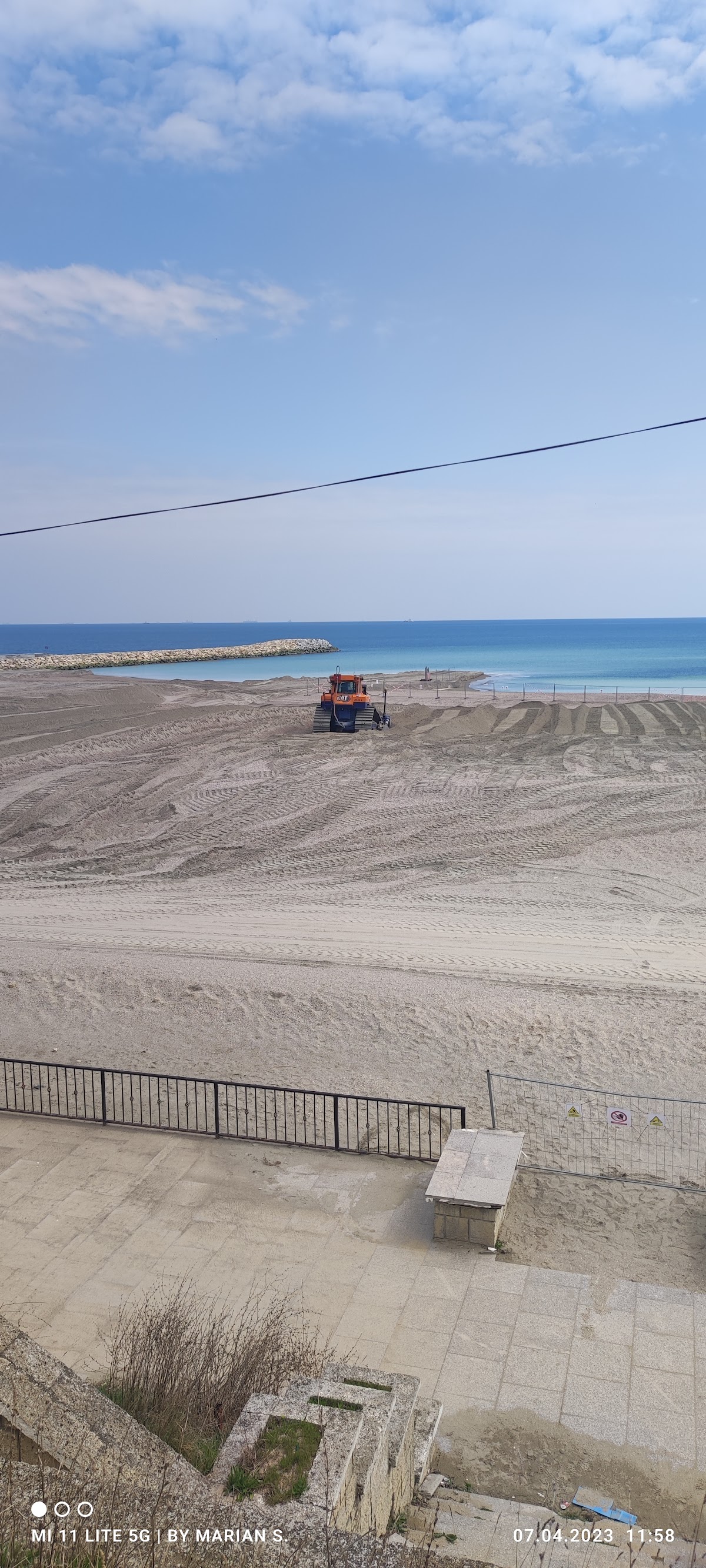
Eforie Sud is the oldest resort on Romania's coast, founded on 20 September 1899 by the Moldavian nobleman Ioan Movilă, on land bought from the heirs of Mihail Kogălniceanu. It lies about 18 km south of Constanța, on the strip of land between the Black Sea and Lake Techirghiol, whose sapropelic mud has been used therapeutically for over a century. Between the wars it was called Carmen Sylva and was considered the most luxurious resort on the coast. Its beach, eroded to seven metres wide, has been rebuilt by sand replenishment and now reaches roughly a hundred metres.
Eforie Sud is the seat of the town of Eforie, Constanța County, about 18 kilometres south of the city of Constanța, between Eforie Nord and Tuzla. It occupies the strip of land between the Black Sea to the east and Lake Techirghiol to the west. It is the oldest resort on the Romanian coast.
The story begins with a piece of land. Mihail Kogălniceanu had received property in Dobruja as a reward for the patriotism he showed in the Revolution of 1848 and in the War of Independence. In 1899, his heirs sold what remained of that inheritance to Ioan I. Movilă, a descendant of the old Moldavian boyar family of the Movileşti. Movilă had studied in Western Europe, knew its spa resorts, and valued the therapeutic properties of Techirghiol mud, already confirmed from 1894 by the results of army doctors treating soldiers of the Dobrujan Division here.
On 20 September 1899, Movilă laid the foundation stone of the Movilă Hotel, today the Parc Hotel. He invested everything he had, supplemented by bank loans, and brought doctors and chemists from Vienna to analyse the water and the mud. To the designs of the architect Ivanovici and the engineer Zissu, two hotels were raised, along with a sanatorium for warm mud baths with fifty cabins. Construction was finished in the spring of 1902, and the baths opened between 15 July and 15 August that year. At first the resort was called the Techirghiol-Movilă Baths.
Movilă died on 15 January 1904, and his family, led by Elena Movilă, carried the project forward, selling building plots. Between 1903 and 1906 some fifty villas and hotels went up, among them the Cleopatra villa, today the Cupidon. The resort had been planned to a layout drawn in 1906 by the architect Arta Florescu, a member of the Movilă family, yet it had no streets until 1920: paths and lanes led to the villas from the Constanța-Mangalia road.
In 1909, the Eforia of Civil Hospitals of Bucharest founded a sanatorium on the seashore for treating bone tuberculosis in children. From 1925, Dr Victor Climescu worked here, going on to found a Romanian school of osteoarticular surgery. More than fifty thousand patients passed through the sanatorium up to 1968.
In September 1916 the population was evacuated, and the hotels, villas, and baths were left to the German-Bulgarian army. The interwar years, however, were the resort's peak: by 1938 some five hundred villas, hotels, and houses had been built, and the resort could host twenty thousand visitors a season. It was considered the most luxurious on the coast. In 1928 it became a rural commune, and in 1929 an urban one, taking the name Carmen Sylva, the pen name of Queen Elisabeth. Under communism it bore the name of Vasile Roaită, and since 1962 it has been called Eforie Sud. Since 1966 it has shared a town hall with Eforie Nord.
Lake Techirghiol is Romania's largest saltwater lake, some 7,500 metres long with a maximum depth of about nine metres. Its salinity exceeds 85 g/l, nearly five times that of the Black Sea. The lake's sapropelic mud forms from the bacterial decomposition of the brine shrimp Artemia salina together with the alga Cladophora crispata, in a saline, oxygen-poor environment. It is used to treat rheumatic, dermatological, and gynaecological conditions.
The resort's beach runs over two kilometres and has a history of its own. Erosion had cut it to a width of just seven metres; sand replenishment works in recent years have brought it to roughly a hundred metres, making it in effect the newest beach on the coast. The sand is fine and the water takes on turquoise tones.
In the Central Park stands the statue of Ioan Movilă, raised by the townspeople. In 1924, twenty-five years after the resort's founding, a commemorative medal was struck in silver and bronze, bearing the founder's likeness.
Eforie Sud is worth visiting for its layers of architecture: villas from 1905 on the streets climbing to the seafront, a hotel from 1899 still in operation, a sanatorium through which fifty thousand children passed, and, a few hundred metres away, a hypersaline lake whose mud is the reason all of it exists.
Eforie Sud judetul Constanta