
Attraction
Eforie Nord Resort
Eforie Nord is the second largest resort on Romania's coast, after Mamaia, lying about 14 km south of Constanța on a cliff over 30 metres high. It occupies the strip of land between the Black Sea and Lake Techirghiol, Romania's largest saltwater lake, with a salinity above 85 g/l. The lake's sapropelic mud, formed from the decomposition of the brine shrimp Artemia salina and the alga Cladophora, has been used therapeutically for over a century. The resort's name comes from the Eforia of Civil Hospitals of Bucharest, which built a sanatorium here in 1894.
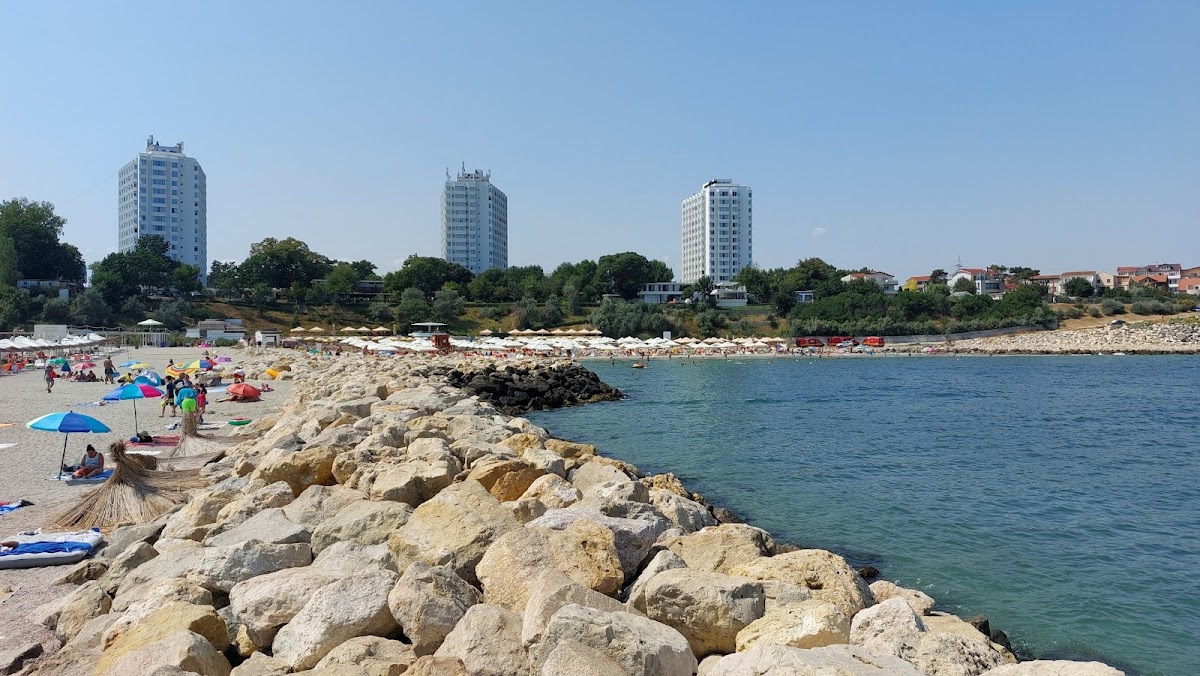
Eforie Nord is part of the town of Eforie, Constanța County, roughly 14 kilometres south of the city of Constanța. It occupies the strip of land between the Black Sea to the east and Lake Techirghiol to the southwest. It is the second largest resort on the Romanian coast, after Mamaia, combining leisure tourism with spa treatment.
The resort sits atop a cliff more than thirty metres high, with a broad opening toward the sea. The beach runs over three kilometres, and in many places exceeds a hundred metres in width. The sand is fine and quartzose, characteristic of the Romanian coast. At the southern end, beside the Aqua Park complex, lies the small Lake Belona. Some thirty hectares of woodland, within the resort and around it, keep the air clean. Accommodation in hotels, villas, and guesthouses reaches 19,000 to 20,000 beds.
Lake Techirghiol is Romania's largest saltwater lake, about 7,500 metres long with a maximum depth of nine metres. In its central section, which takes in the resorts of Techirghiol, Eforie Nord, and Eforie Sud, mineralization and salinity are practically uniform, both horizontally and vertically down to three metres, at around 85.5 g per thousand. Some measurements give figures above 90 g/l, considerably higher than the Black Sea.
The lake's fame, however, rests on its mud. It is a sapropelic liman mud, belonging to the group of organogenic subaqueous therapeutic sediments, the product of extremely complex and long-running biochemical and chemical processes. It forms from the remains of the brine shrimp Artemia salina, which lives in highly saline water, decomposed by bacteria together with the alga Cladophora crispata. The salt water and mud are used in treating rheumatic and dermatological conditions, and psoriasis.
The first written record of the lake's therapeutic qualities dates from 1854, when an Ottoman commander is said to have healed an ailing arm here. Local tradition preserves an older legend: an old Tatar named Tekir, lame and blind, came to the lakeshore with his injured donkey, which waded into the water. The old man struggled for hours to pull it out of the foul-smelling mud, and both emerged healed.
The resort's history begins in 1894, when the Eforia of Civil Hospitals of Bucharest, a charitable organization from the capital, bought a hundred hectares of land on the shore of Lake Techirghiol and built a spa sanatorium there. The future town takes its name from that institution. Until 1933, Eforie belonged administratively to Techirghiol.
The southern part of the town, Eforie Sud, has a separate origin. On 20 September 1899, the businessman Ion Movilă laid the foundation stone of the Movilă Hotel, on the seashore, and of the Movilă Baths, on the lakeshore, giving rise to the Movila-Techirghiol spa resort, the first tourist resort in Dobruja. From 1928 it bore the name Carmen Sylva, the pen name of Queen Elisabeth of Romania. In 1966, Eforie Nord and Eforie Sud were administratively united to form the town of Eforie.
The climate is Mediterranean in character, with warm summers tempered by the sea and mild winters, and low annual rainfall of around 400 mm. The treatment facilities operate year-round, making Eforie Nord a permanent rather than merely a summer resort.
Eforie Nord is worth visiting for something no other Romanian resort offers: within a few hundred metres of each other, a sea shore with a beach a hundred metres wide and a hypersaline liman whose mud is formed, quite literally, from dead algae and crustaceans, used therapeutically without interruption for over a hundred and thirty years.
Eforie Nord judetul Constanta