
Attraction
Costinești Resort
Costinești, known as the Youth Resort, lies on the Black Sea coast some 30 km south of Constanța. It became a resort officially in 1949, with its first summer camp for schoolchildren, and bears the name of Emil Costinescu, a founder of the National Bank of Romania, who bought an estate here in the late 19th century. The resort's symbol is the wreck of the Evanghelia, run aground on 14 October 1968, now broken in two and disintegrating. Facing east, the beach receives ten to twelve hours of sun a day.
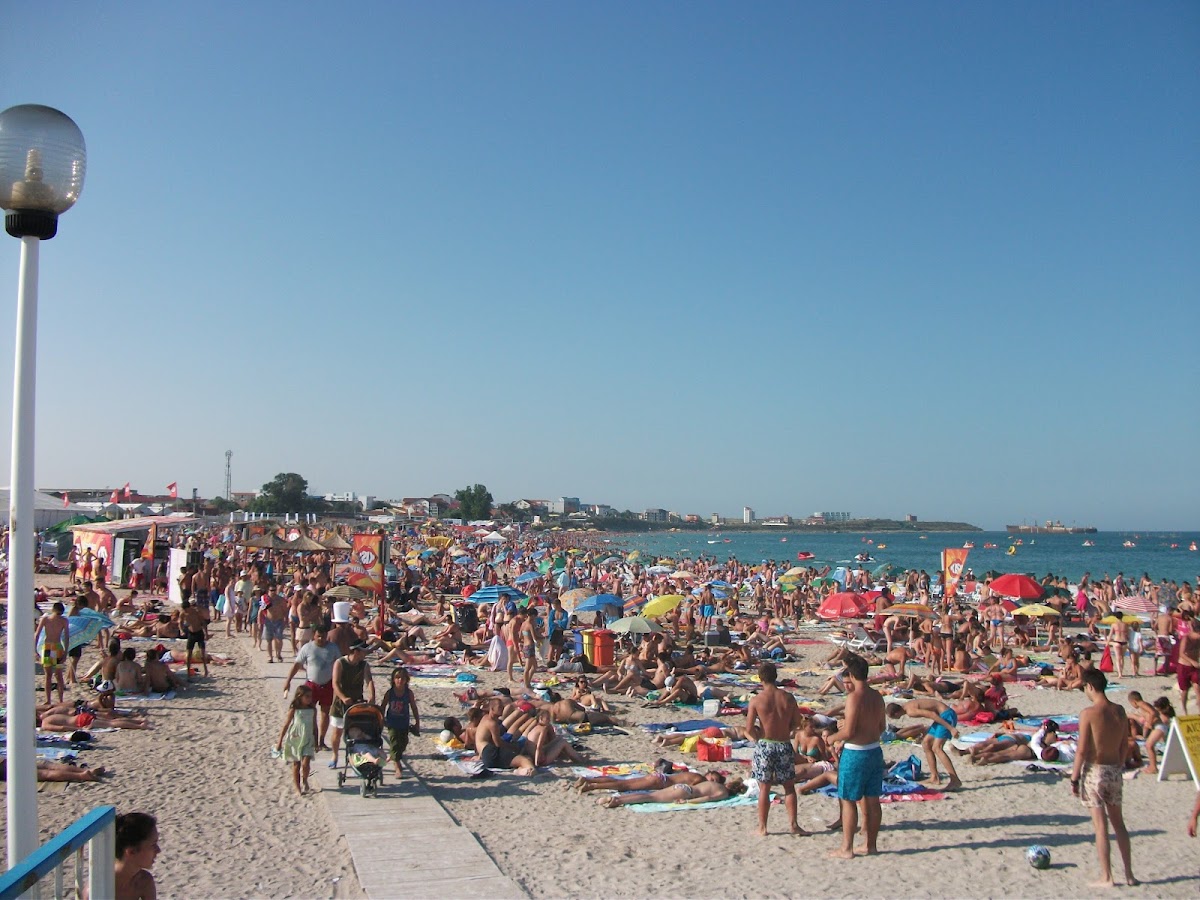
Costinești is the seat of the commune of the same name, in Constanța County, on the Black Sea coast, roughly 30 kilometres south of the city of Constanța. In summer the commune becomes Costinești Resort, also known as the Youth Resort.
The place has a longer history than its reputation suggests. The settlement arose on the site of a Greek colony called Parthenopolis. In the Middle Ages it was known as Stratoni under the Byzantines, then Mangeapunar under the Turks, with a modest population of Greek fishermen, later Lipovans, and of Mocan and Tatar shepherds. Excavations have brought to light vessels with fluting and spirals of the Hamangia culture, fine and everyday pottery of the Gumelnița culture, and ceramics with a metallic sheen, red within and black without, from the early Iron Age.
The present name comes from Emil Costinescu, financier, journalist, mayor of Bucharest, and three times Minister of Finance, who in 1880 was among the founders of the National Bank of Romania. Costinescu bought an estate on the shore from Vasile Kogălniceanu, son of Mihail Kogălniceanu, and settled it with Dobrujan Germans. They received land on lease and established, in a first phase, 48 households. They called the village Büffelbrunnen, the Buffalo Well. In 1940 the German settlers left for Germany, and Romanians took their place. In the 1960s the village still appeared on maps under the name Dezrobirea.
The first camp for schoolchildren was founded in 1949, the year that also marks the resort's official birth. The rising influx of young people brought rapid growth in the 1960s, with hotels, campsites, sports facilities, and open-air performance halls. After the international student camp opened, the resort began drawing foreign visitors too. Today Costinești has three distinct zones: the village of Schitu, west of the railway; the village of Costinești, east of it and north of the lake; and the Camp, originally laid out as a youth tourism resort, around the lake.
The beach runs for about a kilometre, with varying width. Near the obelisk it is broader, while to the north, toward the wreck, it narrows, covered in fine sand and bounded by a low cliff. Facing east, it receives ten to twelve hours of sun a day. Inside the resort lies a leisure lake, around which accommodation has grown up.
The place's symbol remains the wreck of the Evanghelia. The ship, under Greek flag, had been built in 1942 and renamed several times over its life: Empire Strength, Saxon Star, Redbrook, finally Evanghelia. It ran aground on 14 October 1968, very close to shore. According to the Romanian investigation, the grounding was staged by the crew to collect insurance; on the strength of the authorities' report, the insurer refused to pay, and the ship stayed where it was. Curiously, the resort's rise coincided with the wreck: in 1968 the area held only a fishing village and a schoolchildren's camp.
The wreck is now deteriorating fast. Storms have broken it in two and torn away large sheets of steel, which sank. Its legal status is unsettled: it does not fall under the Romanian Naval Authority, the National Water Administration, or the Ministry of Transport, and the town hall cannot intervene. Within a few years it will likely disintegrate entirely.
Beyond the beach and the wreck, Costinești offers cave diving at Peștera Rapanelor and at formations carved in the underwater Sarmatian limestone, along with a wide range of water sports. Nearby stand the Saint Helen of the Sea Monastery and the Youth Cathedral.
Costinești is worth visiting for something no other Romanian resort offers: a ship run aground through a failed fraud more than half a century ago, since become the emblem of the place, and now vanishing slowly before its visitors' eyes. Anyone who wants to see it whole would do well not to postpone.
Costinesti judetul Constanta