
Attraction
Câmpina
Câmpina is a city in Prahova County at 435 m above sea level, on a terrace bounded by the Prahova, Doftana and Câmpinița rivers, crossed by the DN1 road and the Bucharest-Brașov railway. A former customs post on the road between Wallachia and Transylvania, it grew in the late nineteenth century as a centre of the oil industry and preserves the memorial houses of Nicolae Grigorescu and B. P. Hasdeu.
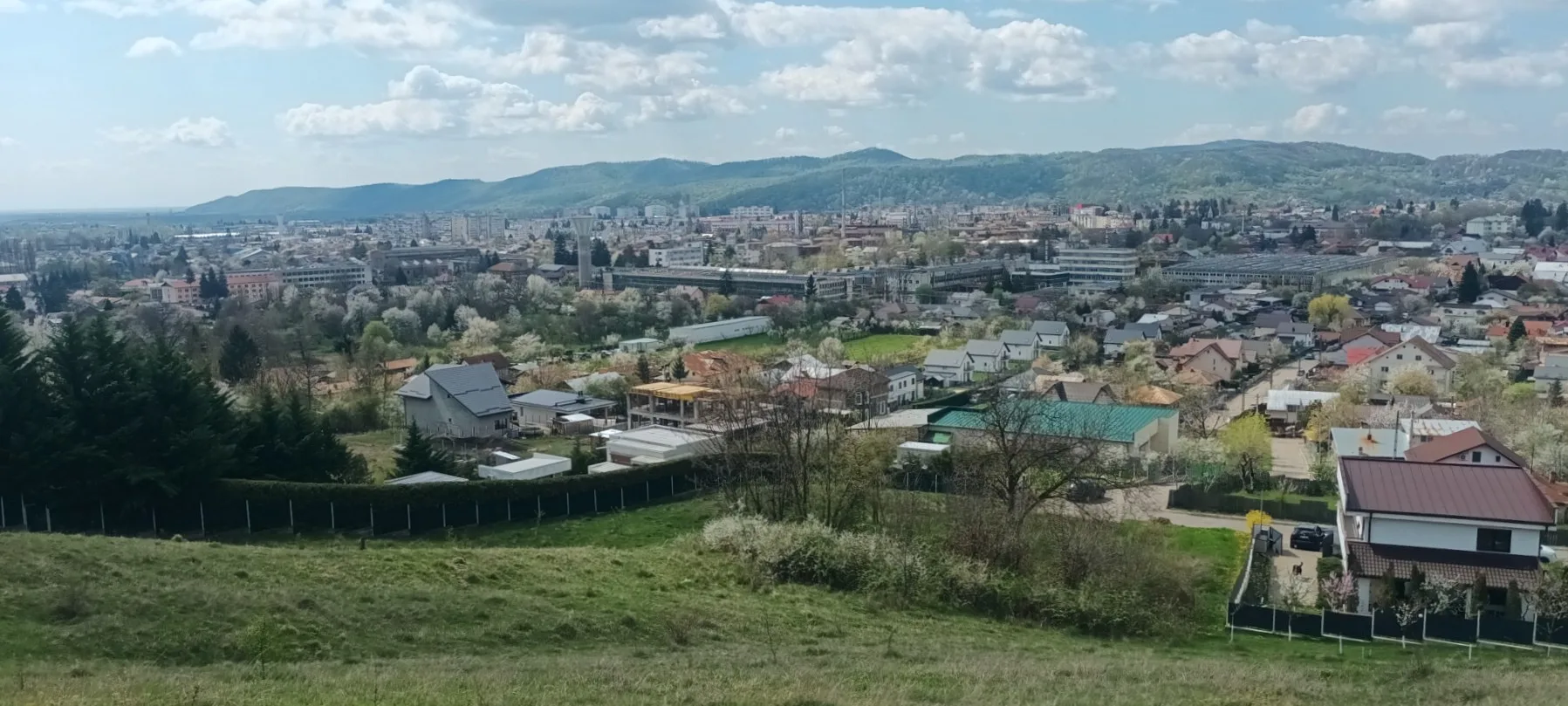
Foto: Dahn, CC BY-SA 4.0, via Wikimedia Commons
Câmpina is a city in the west of Prahova County, set in the Prahova Valley on the terrace shaped by the Câmpinița, Doftana and Prahova rivers, at 435 m above sea level. It is first recorded in 1503, in the customs registers of Brașov merchants travelling through the Prahova Valley, and served as a customs post until 1840. The Ploiești-Predeal railway, which passes through the town, opened on 1 December 1879. At the 2021 census the city had 28,993 inhabitants.
The presence of crude oil is recorded here as early as 1697. A first refinery was built in 1886, and in 1887 the first oil well in Câmpina was drilled on the bank of the Doftana. In 1895 the Steaua Română company was founded with its headquarters in the town; its refinery, opened in October 1897, was considered at the time the largest in Europe. In 1904 a school for drilling and refinery foremen opened here. The mineral baths laid out from 1857 around the salt and sulphur springs on the southern plateau were one of the town's attractions in the second half of the nineteenth century.
The main sights are Iulia Hasdeu Castle (199 Carol I Boulevard), built in 1893-1896 by B. P. Hasdeu, and the Nicolae Grigorescu Memorial Museum, in the house where the painter died in 1907; both have separate pages. Nicolae Grigorescu's grave, in the cemetery on Bobâlna Street, is a listed monument. Also on Carol I Boulevard stands the church of the Dormition „de la Han”, also called „de la Brazi”, founded in 1833 by St Calinic of Cernica, a class A historic monument.
Other landmarks include the Baroque chapel built in 1886 in memory of the oil pioneer Dumitru Hernia (Parcului Street, a class A historic monument), the Baroque Roman Catholic church of St Anthony of Padua, completed in 1909 to a project backed by the engineer Anton Raky, and the „House with Griffins” of 1902, built for the oilman Gheorghe Ștefănescu and the first house in town lit by electricity, now the city hall. The town also has the „Lacul Bisericii” lake, renovated by the city hall in 2011 as a leisure area with pedal boats and rowing boats.
Câmpina, județul Prahova