
Attraction
Coțatcu-Cetățuia Archaeological Site
The Coțatcu-Cetățuia archaeological site, in Podgoria commune, is a prehistoric tell settlement with a cultural deposit roughly 3.5 metres thick, formed by successive habitation over millennia. Discovered in 1971 after landslides exposed it, the site has been systematically excavated since 1973 and has yielded vessels, tools, and anthropomorphic and zoomorphic figurines. It is listed as a historic monument of local interest and remains an active excavation site, heavily affected by erosion.
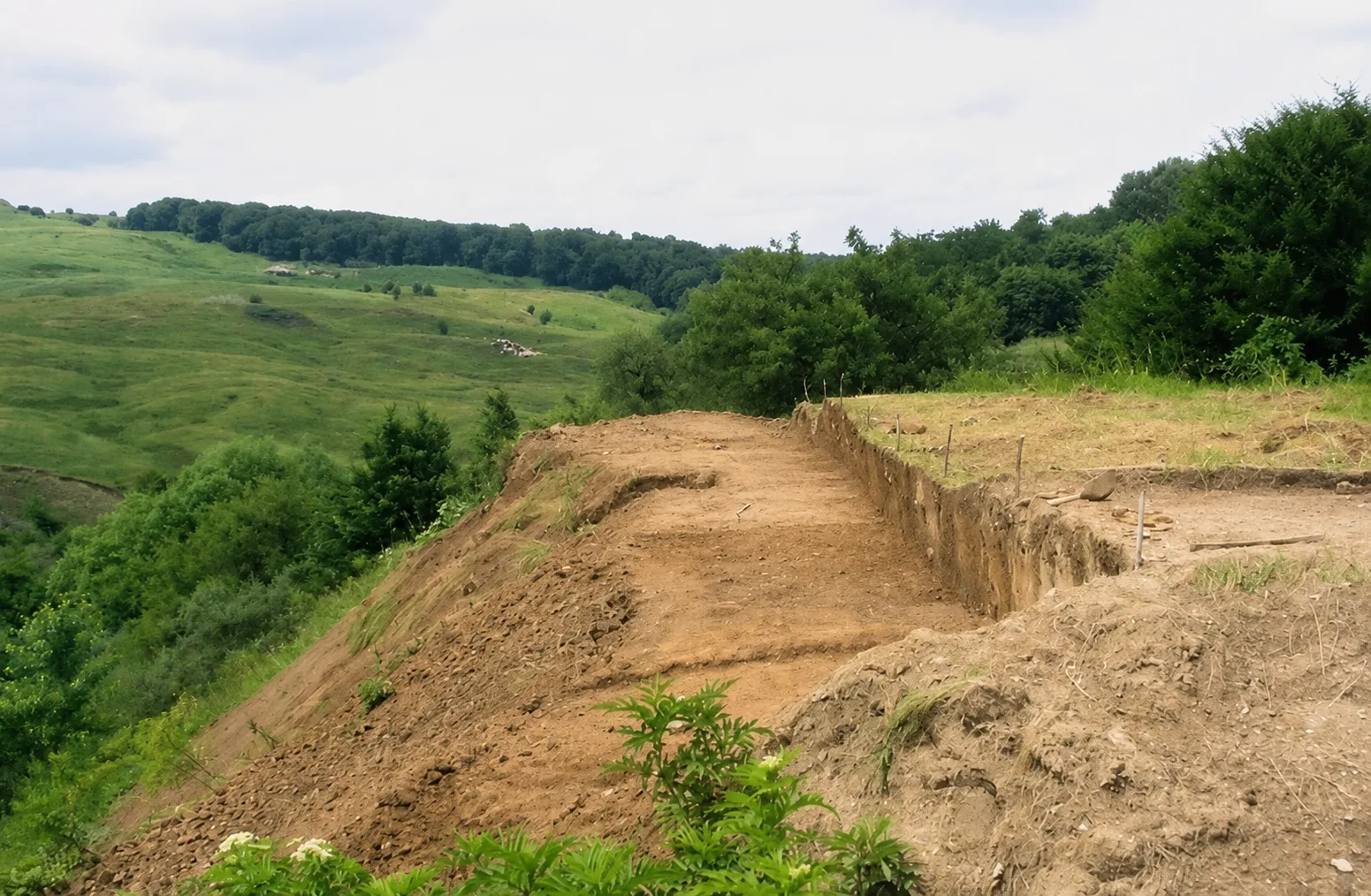
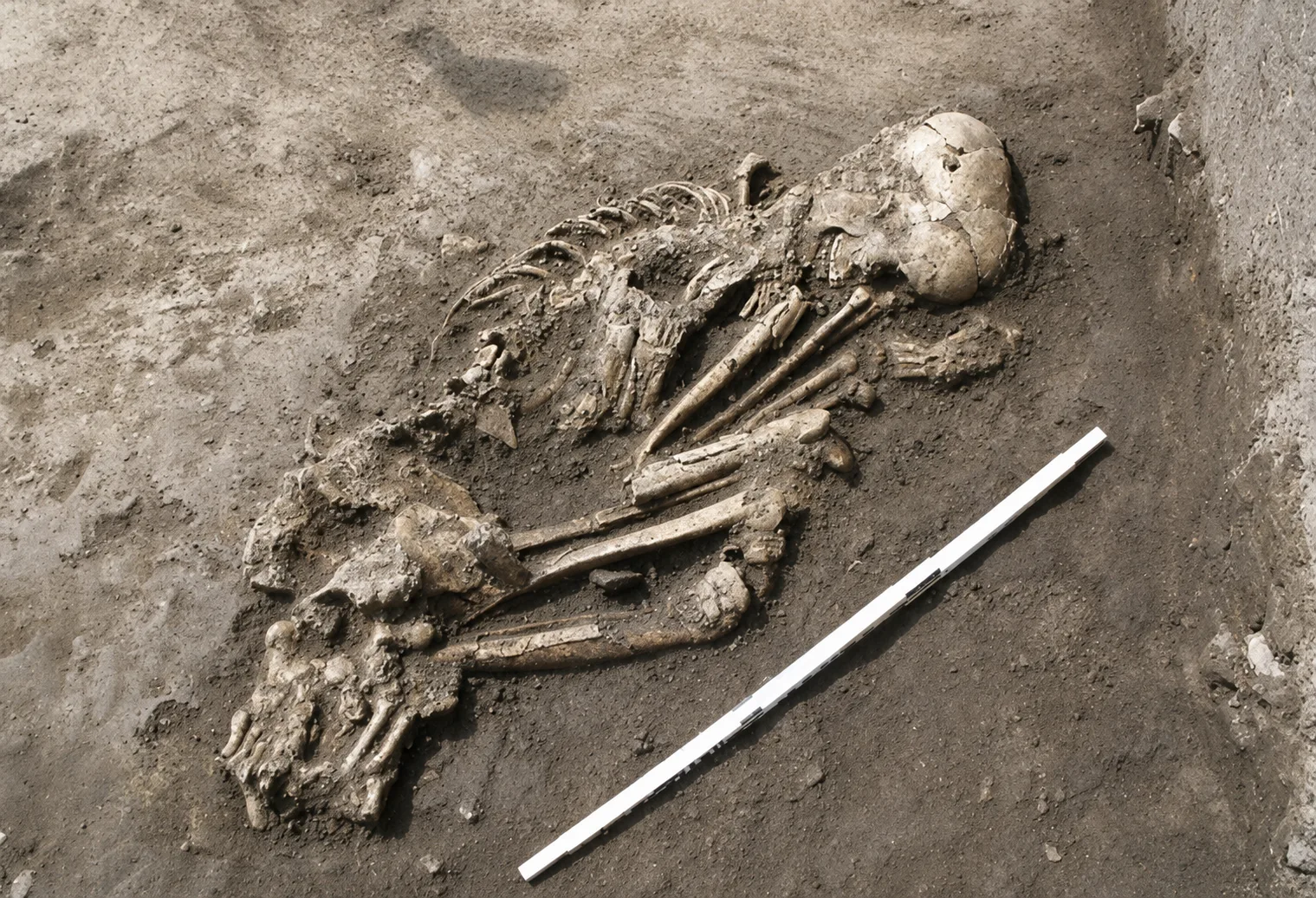
The Coțatcu-Cetățuia archaeological site lies about 2 km northwest of Coțatcu village, in Podgoria commune, in the hilly northeastern part of Buzău County, on the right side of the middle terrace of the Coțatcu stream. It is a tell settlement: an artificial mound built up over thousands of years as prehistoric communities raised their dwellings on the ruins of earlier ones.
The site was discovered in 1971 by Vasile Motoașcă, the village school's headmaster, when the first landslides began cutting into the hill. The earliest systematic excavations, in 1973-1974, were led by archaeologist Vasile Drâmbocianu of the Buzău County Museum, who recorded a total area of roughly 775 square metres, about a third of which had already been destroyed by landslides. Surface surveys in 2005 found that the area still available for excavation had shrunk to under 500 square metres.
Research resumed between 2006 and 2010 under the project "Cultural Interferences in Northeastern Wallachia during the Neo-Eneolithic." The stratigraphic profile revealed a cultural layer about 3.5 m thick, made up of six major sequences: the first belongs to the Starčevo-Criș culture, and the remaining five to the Stoicani-Aldeni cultural group, positioned at the boundary between the great Eneolithic civilizations of Precucuteni-Cucuteni and Gumelnița. The official Historic Monuments List describes the site as an Eneolithic Gumelnița settlement together with a Bronze Age Monteoru settlement.
Eight dwellings have been excavated. One of them, a burnt house designated L8, preserved across a span of just two metres the remains of a wall, a floor, a hearth, and several ceramic vessels, offering rare insight into prehistoric building materials and techniques. The recovered inventory includes pottery, tools, anthropomorphic and zoomorphic figurines, and pendants. Among the more striking finds are a shallow dish and a jug belonging to two different cultures, Cucuteni and Gumelnița, direct evidence of contact between the northeastern and southern worlds of prehistoric Romania.
Sitting precisely on the contact line between two major Eneolithic cultural spheres, the site is a key point for understanding exchange and interference across southeastern Europe in the 5th and 4th millennia BC. Coțatcu-Cetățuia is listed as a historic monument of local interest and remains an active summer excavation site, with no tourist facilities and no permanent on-site display; the finds are held in the collections of the Buzău County Museum. It is worth visiting for anyone interested in prehistoric archaeology, offering the chance to see a genuine tell in the Subcarpathian landscape and to grasp, on the ground, how eight millennia of stratigraphy accumulate.
Ramnicu Sarat judetul Buzau