
Attraction
Sic Village (Szék)
Sic (Szék in Hungarian) is a village on the Transylvanian Plain, about 15 km from Gherla, known for its black-and-red folk dress, music and dances. The village has a 13th-century Gothic Reformed church, a Franciscan church, a wooden church and the Sic Reed Beds nature reserve, and Lake Știucilor lies on the road to Gherla.
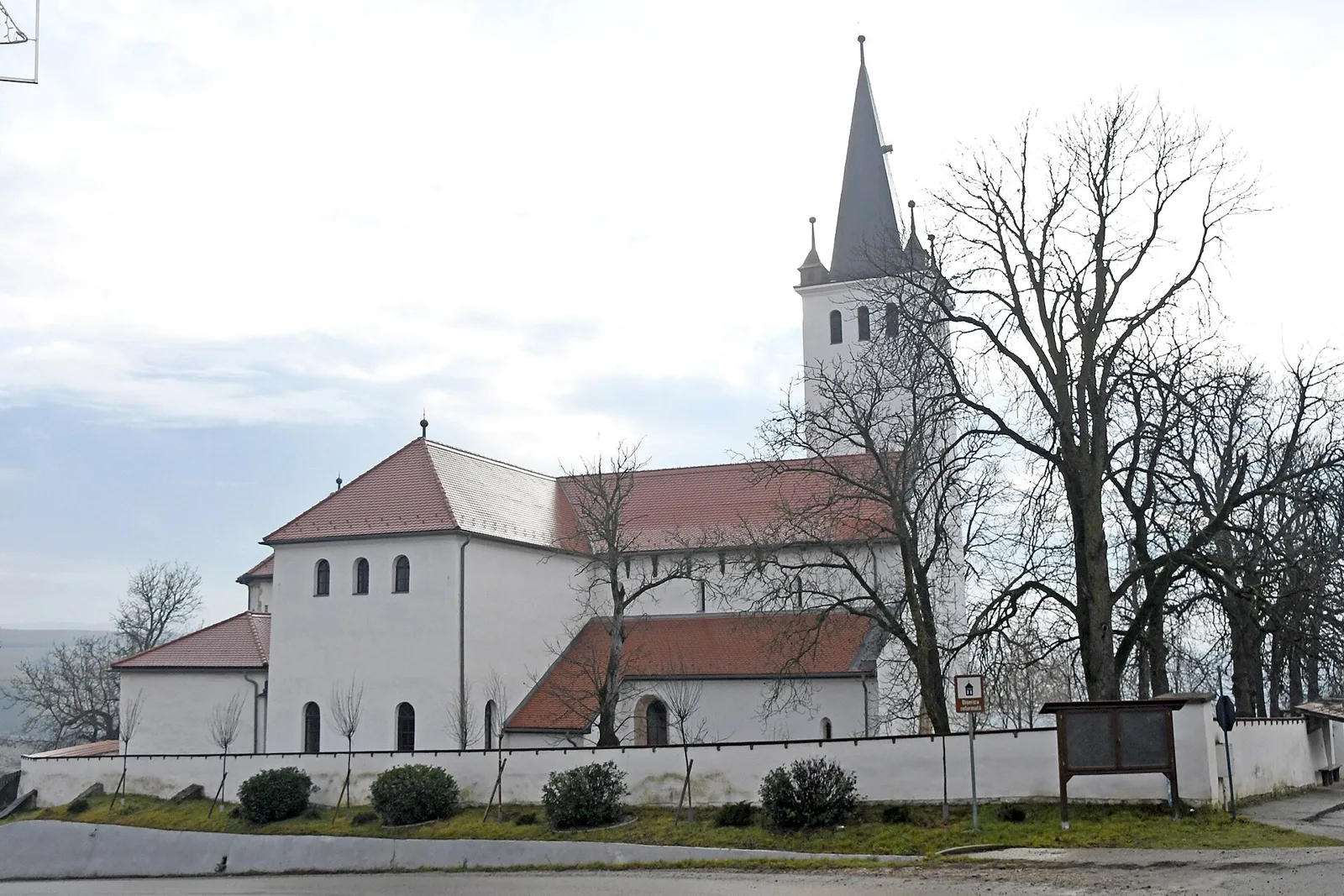
Foto: Pasztilla aka Attila Terbócs, CC BY-SA 4.0, via Wikimedia Commons
Sic (Szék in Hungarian) is the seat of Sic commune, in north-eastern Cluj County, on the Transylvanian Plain, about 60 km from Cluj-Napoca and 15 km from Gherla. The village lies on hills where several valleys meet and has three distinct parts (Felszeg, Csipkeszeg and Forrószeg) that start from the centre with the Reformed church. Most of its inhabitants are Hungarian.
The settlement grew around a salt mine: in 1291 King Andrew III granted Turda the same privileges that Dej, Sic and Cluj already had. Salt mining was finally abandoned in 1812. From around 1905, the research of Béla Bartók and Zoltán Kodály drew attention to the music of Sic, and later collections made the village's music and dances a model for the Hungarian dance-house (táncház) movement that began in the 1970s.
In the centre stands the walled Gothic Reformed church, built in the mid-13th century and rebuilt after a fire in the 1770s. The village also has the church of the Franciscan friary (1758-1795) and the wooden Church of the Holy Archangels Michael and Gabriel (1731), now Orthodox. On the south-eastern edge of the village, by county road DJ109D, lies the Sic Reed Beds nature reserve, a 2 ha wetland of reeds, bulrushes and ponds where marsh birds such as the Eurasian bittern and the grey heron nest. On the road to Gherla lies Lake Știucilor, a 26 ha bird reserve in Fizeșu Gherlii commune.
The Reformed church is a category A historic monument (LMI code CJ-II-m-A-07759); the Franciscan church (CJ-II-m-B-07761) and the wooden Church of the Holy Archangels (CJ-II-m-B-07760) are category B monuments. The Sic Reed Beds (RONPA0351) and Lake Știucilor (RONPA0349) are part of the Natura 2000 site ROSCI0099 Lacul Știucilor - Sic - Puini - Bonțida.
Did you know that, according to local tradition, the black and red colours of the Sic folk dress are linked to the Tatar raid of 1717, which almost wiped out the village? The villagers commemorate the tragedy every year on 24 August, Saint Bartholomew's Day.
Sat Sic, comuna Sic, județul Cluj