
Attraction
Sarmizegetusa Regia
Sarmizegetusa Regia, on Grădiștii Hill near the village of Grădiștea de Munte at about 1,200 m, was the capital and main political, military and religious centre of the Dacian state before the Roman conquest of AD 106. It comprises the fortress with its murus dacicus wall, the sacred area with its sanctuaries and a terraced civilian settlement. It is one of the six Dacian Fortresses of the Orăștie Mountains inscribed as a UNESCO World Heritage Site in 1999.
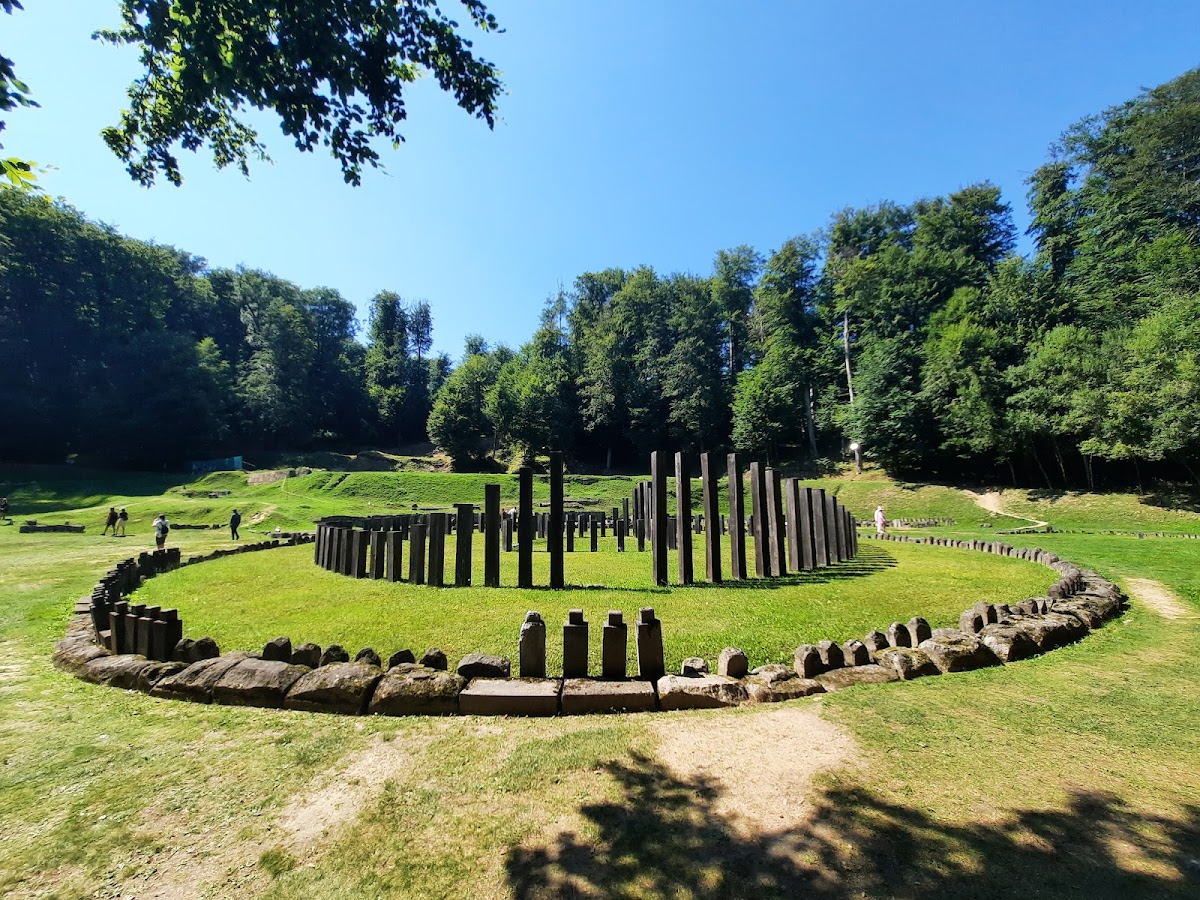
Sarmizegetusa Regia lies on Grădiștii Hill, in the village of Grădiștea de Munte, Orăștioara de Sus commune, Hunedoara County, at about 1,200 m above sea level. It was the capital of the Dacian state and the core of the defensive system formed by the fortresses of the Orăștie Mountains. In 1999 it was inscribed on the UNESCO World Heritage List together with Costești-Cetățuie, Costești-Blidaru, Piatra Roșie, Bănița and Căpâlna, and the site is a class A historic monument (code HD-I-s-A-03190).
The fortress is an irregular quadrilateral, almost a hexagon with unequal sides, following the edges of the summit and enclosing about 3 ha. Its murus dacicus wall of large stone blocks was 3 m thick and 4-5 m high. About 100 m east of the fortress gate lies the sacred area, linked to the fortress by a paved road, with two circular sanctuaries, seven or eight rectangular sanctuaries and an andesite pavement in the shape of a sun. The civilian settlement spread to the west, with houses, workshops, storehouses and water tanks, and the dwellings were supplied with water through ceramic pipes.
The capital reached its peak under Decebalus. Finds include a vessel stamped "DECEBALVS PER SCORILO", limestone blocks bearing Greek letters and gold coins inscribed "KOSON". After Trajan's conquest of Dacia in 106, the Romans stationed a garrison here and began dismantling the fortress, and the provincial capital was founded at Ulpia Traiana Sarmizegetusa, about 40 km away.
In 2011 part of the site was destroyed while a visitor car park was being built without archaeological supervision. The site is laid out for visitors, and the Dacian settlement of Fețele Albe lies nearby.
Dealul Grădiștii, satul Grădiștea de Munte, comuna Orăștioara de Sus, județul Hunedoara