
Attraction
Săpânța Village
Săpânța is a village in northern Maramureș County, the seat of the commune of the same name, first recorded in 1373 as "Zapancha". Besides the Merry Cemetery, the village has a nineteenth-century complex of whirlpool washing basins (vâltori) used to wash woollen blankets and cloth, an eighteenth-century Jewish cemetery and the memorial house of the craftsman Stan Ioan Pătraș.
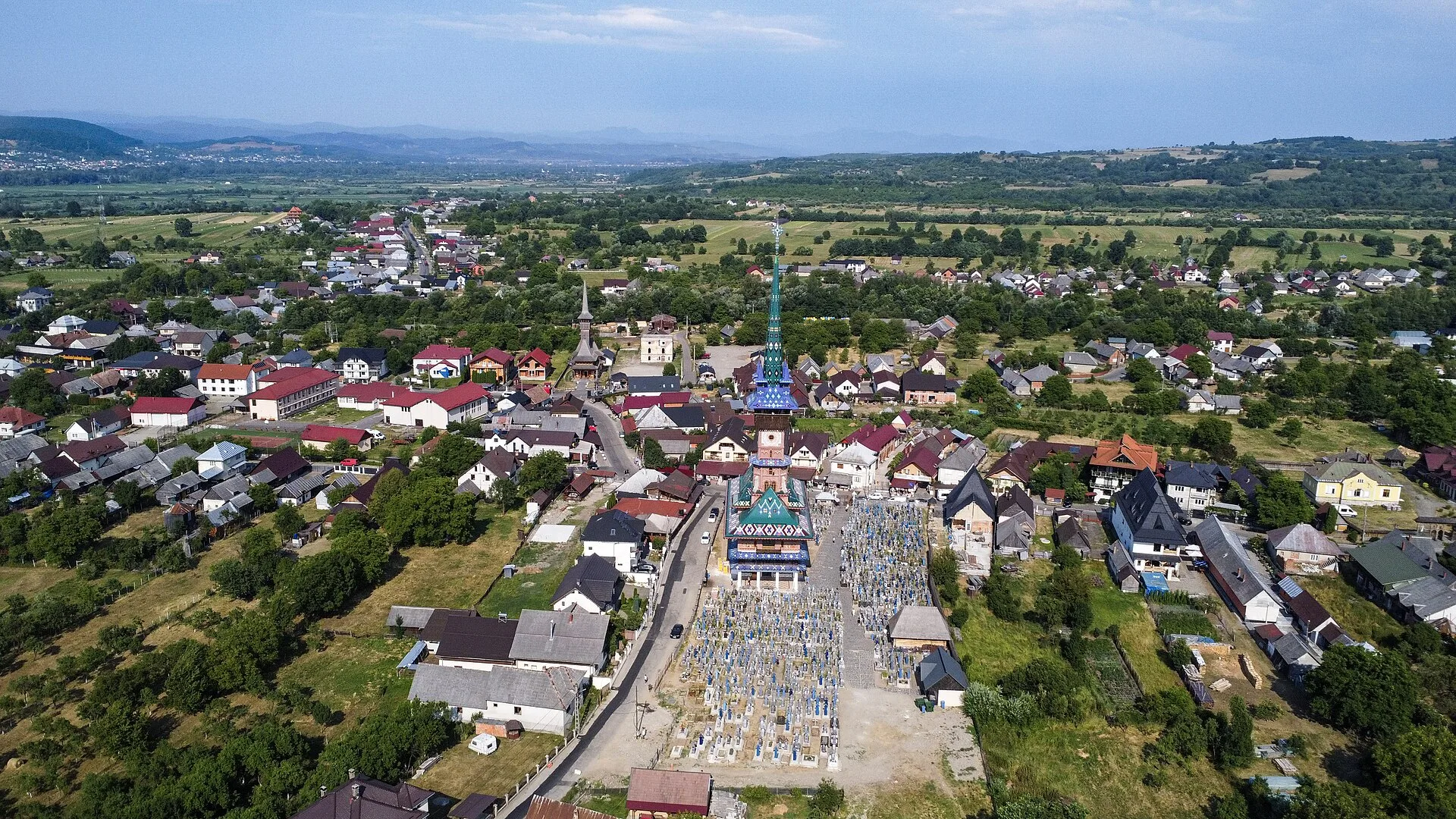
Foto: Curcan ionel, CC BY-SA 4.0, via Wikimedia Commons
Săpânța is the seat of the commune of Săpânța in northern Maramureș County, on national road DN19. The village lands reach the Tisa river, which forms the border with Ukraine here. The village was first recorded in 1373 as "Zapancha" and had 3,031 inhabitants at the 2021 census. It is best known for the Merry Cemetery, and north of the village, on the bank of the Tisa, stands Săpânța-Peri Monastery.
Besides the Merry Cemetery, the List of Historic Monuments records in the village an ensemble of vernacular technical architecture: the nineteenth-century complex of vâltori (LMI code MM-II-a-B-04637). Vâltori are conical log structures in which the river water forms a strong whirlpool; they were used to wash woollen blankets (cergi), rugs (țoluri) and woollen cloth.
Before the Second World War Săpânța had a large Jewish community: at the 1930 census the village had 3,727 inhabitants, 998 of them Jewish. The Spinka Hasidic dynasty originated here. During the war the Jews of Săpânța were deported to Auschwitz by the Horthy-era Hungarian authorities, and the survivors later emigrated. The village's eighteenth-century Jewish cemetery is a historic monument (LMI code MM-II-s-B-04636).
The Stan Ioan Pătraș Memorial House (Săpânța no. 445) is the traditional home of the creator of the Merry Cemetery crosses, a three-room house with an arcaded porch in the style of the Tisa valley. It holds dozens of the craftsman's original works, mainly carved and painted bas-reliefs, an interior furnished as a twentieth-century Maramureș household and, in the courtyard, the workshop where the first crosses were made. It belongs to the Maramureș Museum in Sighetu Marmației and in 2026 was closed for restoration.
Sat Săpânța, comuna Săpânța, județul Maramureș