
Attraction
Roșia Montană Mining Landscape
A UNESCO World Heritage Site since 2021, Roșia Montană preserves the most important known underground Roman gold-mining complex, Alburnus Maior, together with a historic mining village from the 18th to 20th centuries. The site is also on the List of World Heritage in Danger.
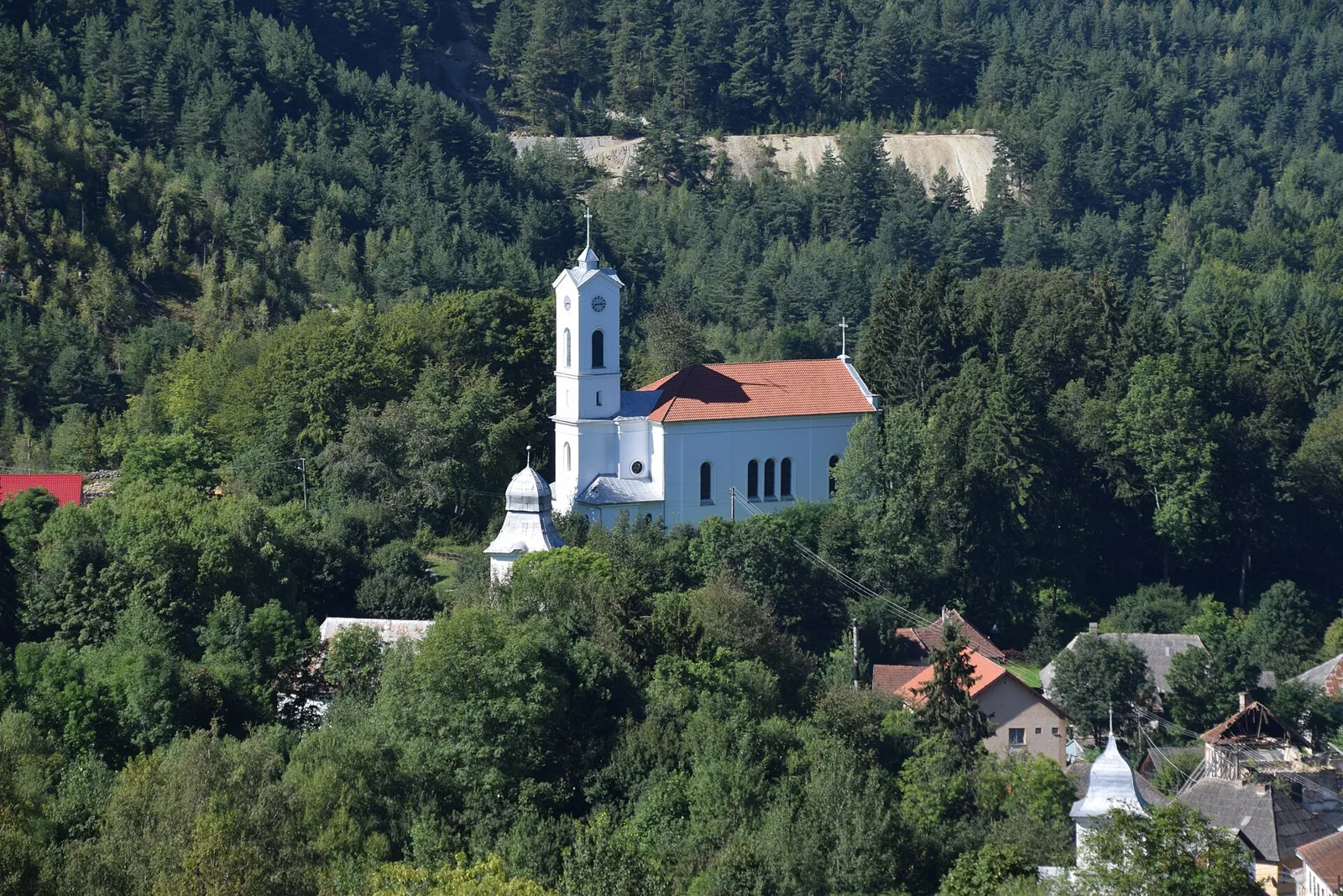
Foto: Strainu, CC BY-SA 3.0 RO, via Wikimedia Commons
Roșia Montană is the main village of the commune of the same name in Alba County, in the Apuseni Mountains, in the Roșia Valley east of the town of Abrud. The mining landscape includes the village and the surrounding massifs, where gold has been mined since Antiquity.
In Roman times the settlement was called Alburnus Maior; it was founded under Emperor Trajan as a mining settlement, with colonists brought from Illyria. According to UNESCO, the Romans mined gold here for about 166 years from AD 106, in four small massifs: Cârnic, Lety, Orlea and Cetate, where Roman galleries of different types, totalling about 7 km, and waterwheels in four underground areas survive. Wax-coated wooden writing tablets with Latin texts were found in the mines in the 18th and 19th centuries. Mining resumed in the Middle Ages and continued through the Habsburg and modern periods, until the state mine closed in 2006. A large open-pit project proposed by the Roșia Montană Gold Corporation was contested for years, including in the 2013 protests.
Today you can see the historic centre of the village, with its central square, dozens of listed 19th and 20th century houses, the Orthodox Church of the Dormition (1741), the Roman Catholic church (1860-1870) and the monument to Simion Balint, a Greek Catholic priest and prefect of the Arieș Legion in the 1848 revolution, who died in Roșia Montană in 1880. From the village a path climbs Cetății Hill, where traces of the Roman mines can be seen, and on Cârnic Hill stands Piatra Corbului, a natural monument; Piatra Despicată, between Cârnic and Cetății hills, is also a natural monument. The Roman galleries open to visitors and the Tăul Mare lake are described separately on the site. Roșia Montană is reached by the county road from Abrud.
The Roșia Montană Mining Landscape was inscribed on the UNESCO World Heritage List in 2021 as a cultural landscape under criteria (ii), (iii) and (iv), and in the same year on the List of World Heritage in Danger. The National List of Historic Monuments includes the Alburnus Maior archaeological site (AB-I-s-A-00065), with the Orlea and Carpeni areas, the Roman funerary enclosure at Hop-Găuri and the Cătălina Monulești gallery, the Cârnic Massif galleries (AB-I-s-A-20329) and the historic centre of the village (AB-II-s-B-00270), with dozens of listed houses.
Did you know that the oldest written document mentioning the name Alburnus Maior is a wax tablet from AD 131, found in the galleries of Roșia Montană itself?
Centrul istoric, sat Roșia Montană, comuna Roșia Montană, județul Alba