
Attraction
Romula-Reșca
The Roman site of Romula-Reșca, located in the commune of Dobrosloveni, Olt County, represents the former Roman city of Romula, the capital of the province of Dacia Inferior, later known as Dacia Malvensis. Covering more than 300 hectares, it is the largest Roman archaeological site south of the Carpathians. The city developed after the Roman conquest of Dacia by Trajan, on the site of an older Dacian settlement called Malva, receiving the status of municipium under Emperor Hadrian and that of colonia under Septimius Severus. Archaeological research has uncovered enclosure walls, baths, necropolises, and one of the richest collections of Latin inscriptions in Romania.
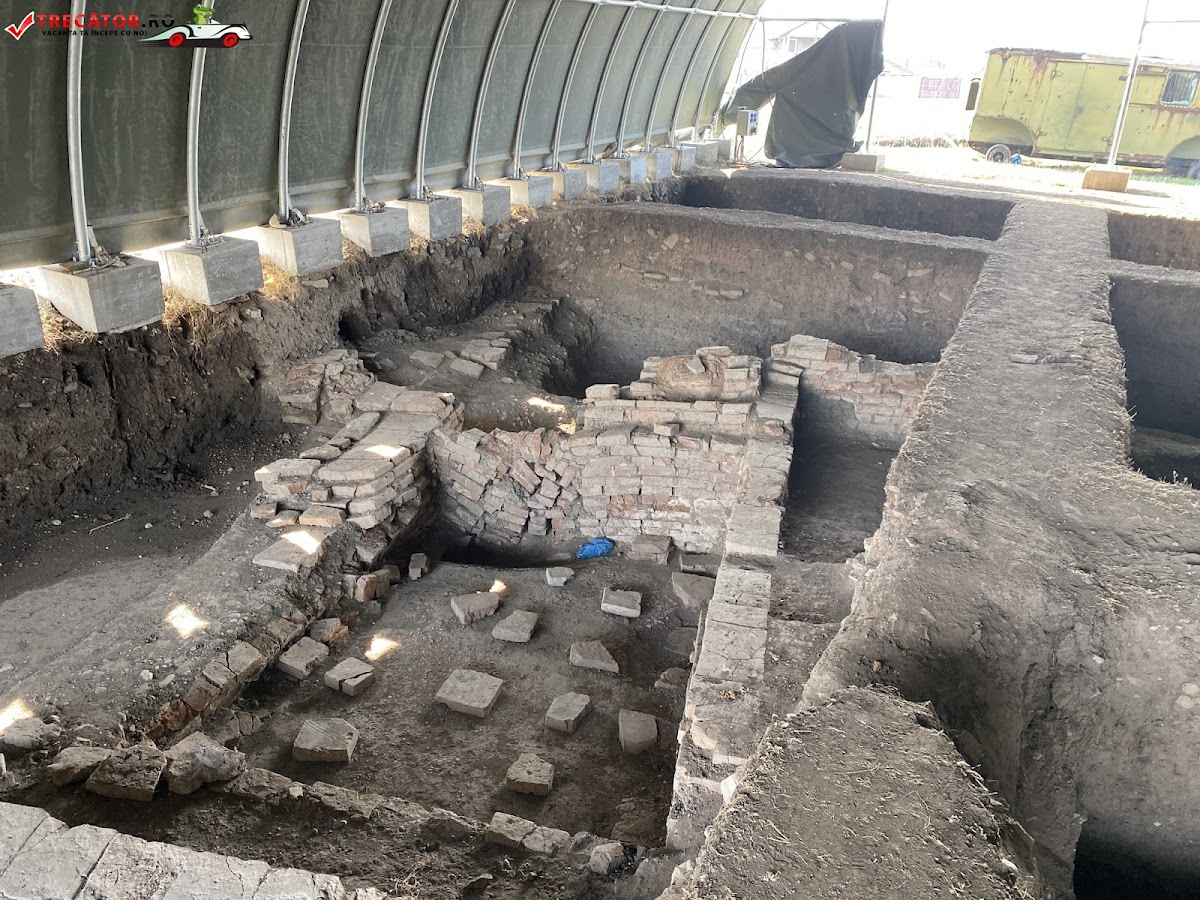
The Roman site of Romula-Reșca is located in the commune of Dobrosloveni, Olt County, and represents one of the most important Roman settlements on the territory of Dacia. With an investigated area of over 300 hectares, Romula is the largest Roman urban centre south of the Carpathians and a key reference site for understanding the Roman period in the Lower Danube region. The city developed on the site of an earlier Dacian settlement called Malva, following the Roman conquest of Dacia by Emperor Trajan during the wars of 101–106 AD, subsequently becoming the capital of the province of Dacia Inferior, later renamed Dacia Malvensis. Romula gradually advanced through the Roman urban hierarchy: it received the rank of municipium under Emperor Hadrian and that of colonia under Septimius Severus. The city was fortified in several stages, with the final enclosure wall, built in brick, erected in 248 AD under Emperor Philip the Arab in response to the threat of invasions. Systematic archaeological research, begun in the twentieth century under the coordination of Professor Dumitru Tudor and continued to the present day by the University of Bucharest together with the Olt County Museum, has brought to light enclosure walls, baths, necropolises, craft workshops, coins, ceramics, and a considerable number of Latin inscriptions. The epigraphic material discovered at Romula constitutes one of the richest collections of Roman inscriptions in Romania. A portion of the finds is on display at the Muzeul Romanațiului in Caracal, and the site has been proposed for inclusion on the UNESCO World Heritage List.
Resca judetul Olt