
Attraction
Râpa Roșie Nature Reserve
A geological and botanical reserve about 4 km north of Sebeș: a steep wall of red clays and sandstones, about 800 m long, carved by water into earth columns, towers and pyramids. It is visible from afar across the Secașul Mare valley.
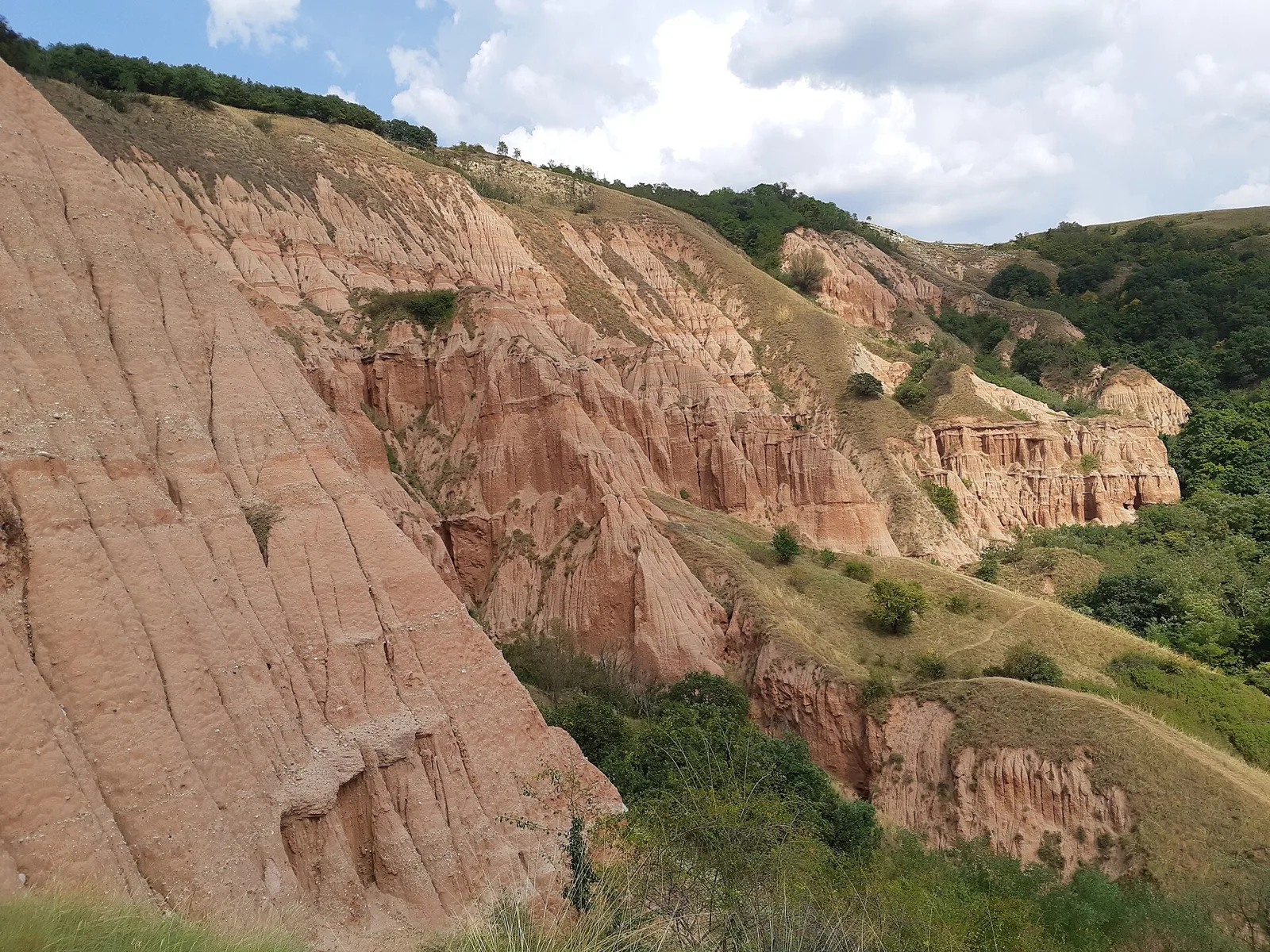
Foto: Accipiter Gentilis Q., CC BY-SA 4.0, via Wikimedia Commons
Râpa Roșie is a protected area of national interest (a geological and botanical reserve) within the municipality of Sebeș, about 4 km north of the town. It lies at the south-western tip of the Secaș Plateau, on the right bank of the Secașul Mare, and stretches for about 800 m.
The ravine was formed by a torrent eroding Lower Miocene sedimentary deposits (Oligocene according to some geologists): layers of red clay alternating with grey and red sandstones that easily crumble into sand. Runoff, rock falls and landslides have cut deep gullies and left columns, towers, obelisks and earth pyramids, also called "hooded pyramids". Geographers call this kind of relief "badlands".
The almost vertical wall, shaped like an organ, can be seen from far away. Rare plants grow on the grassy ledges and in the torrent bed: the endemic carnation Dianthus serotinus var. demissorum, Salvia nutans, Salvia transsilvanica, the endemic Onosma heterophyllum, downy oaks and, in the small wood in front of the ravine, the Mediterranean fern Asplenium adiantum-nigrum. The wall is best viewed from its base or from the surrounding hills; climbing on the crumbling slopes is not advisable.
The reserve is a protected area of national interest, in IUCN category III (natural monument).
Did you know that the term "badlands", used for the relief at Râpa Roșie, was first applied to similar formations in South Dakota, in the United States?
La circa 4 km nord de Sebeș, pe malul drept al Secașului Mare, municipiul Sebeș, județul Alba