
Attraction
Cheile Dobrogei Nature Reserve
Cheile Dobrogei Nature Reserve is one of the oldest geological formations in Romania, sheltering Precambrian green schists approximately 2 billion years old and Jurassic reef limestones dating back 200 million years, former coral reefs of the Tethys Sea. The gorge, carved by the Vistorna stream over a length of nearly 2 km, with walls reaching up to 25 m in height, is part of a protected area of 10,916 hectares that includes three distinct nature reserves: Gura Dobrogei, Peștera La Adam and Peștera Gura Dobrogei.
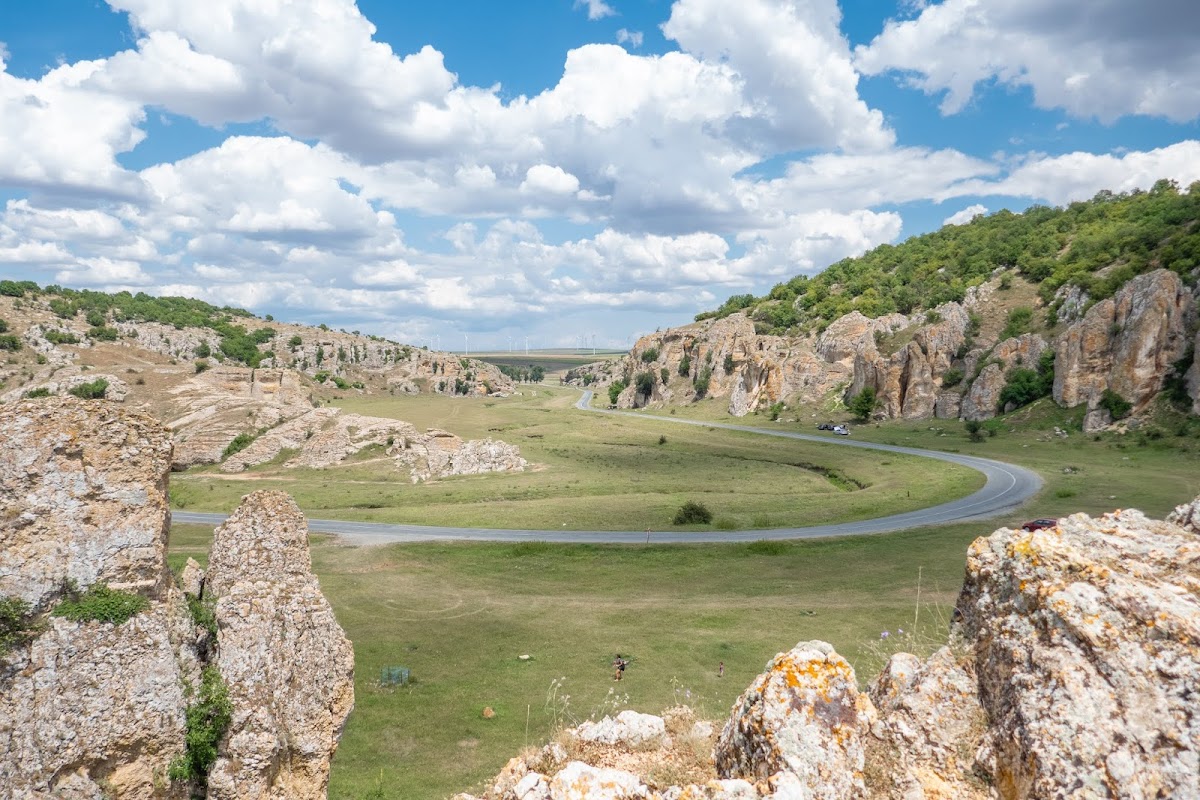
Cheile Dobrogei Nature Reserve is located in the Podișul Casimcei, in the north-central part of Constanța County, on the territory of several communes, including Mihail Kogălniceanu, Cogealac and Grădina. It was declared a Special Avifaunistic Protection Area by Government Decision no. 1284 of 24 October 2007 and forms part of the Natura 2000 network, with a total area of 10,916.8 hectares. Composed predominantly of Jurassic reef limestones — former coral reefs of the Tethys Sea — and Precambrian green schists approximately 2 billion years old, it represents one of the oldest geological formations exposed at the earth's surface in Romania. The gorge itself is carved by the Vistorna stream, a tributary of the Casimcea, over a length of nearly 2 km, with rocky walls reaching 25 m in height, at a mean altitude of 86 m. The protected area includes three distinct nature reserves. Peștera La Adam, covering an area of 5 hectares, houses the most important Pleistocene palaeontological site in Romania: a molar of Homo sapiens fossilis estimated at 100,000 years old, knapped stones interpreted as an altar dedicated to the god Mithras, and 80 species of Jurassic fossils. Peștera Gura Dobrogei (Liliecilor), with a total gallery length of 500 m, has yielded Neolithic tools and pottery as well as Iron Age artefacts, and still shelters significant bat colonies today. The flora comprises approximately 565 rare species characteristic of the Dobrogean calcareous steppe, while the fauna includes the Caspian whipsnake (Coluber caspius), the horned viper and numerous endemic reptile species. In the immediate vicinity there is also a natural amphitheatre bearing rock inscriptions in Greek, dated to the 2nd–3rd centuries AD. The reserve is worth visiting in any season for its unique geological character and its biological and archaeological diversity.
Gura Dobrogei judetul Constanta