
Attraction
Alba Carolina Fortress
The Alba Carolina Fortress in Alba Iulia is considered the largest bastion fortress in Romania. Built between 1715 and 1738 in the Vauban style, on the orders of the Habsburg Empire, it holds two millennia of history: the Roman fort of the 13th Legion Gemina at Apulum, the medieval citadel of Bălgrad and the Great Union of 1918, voted within its walls.
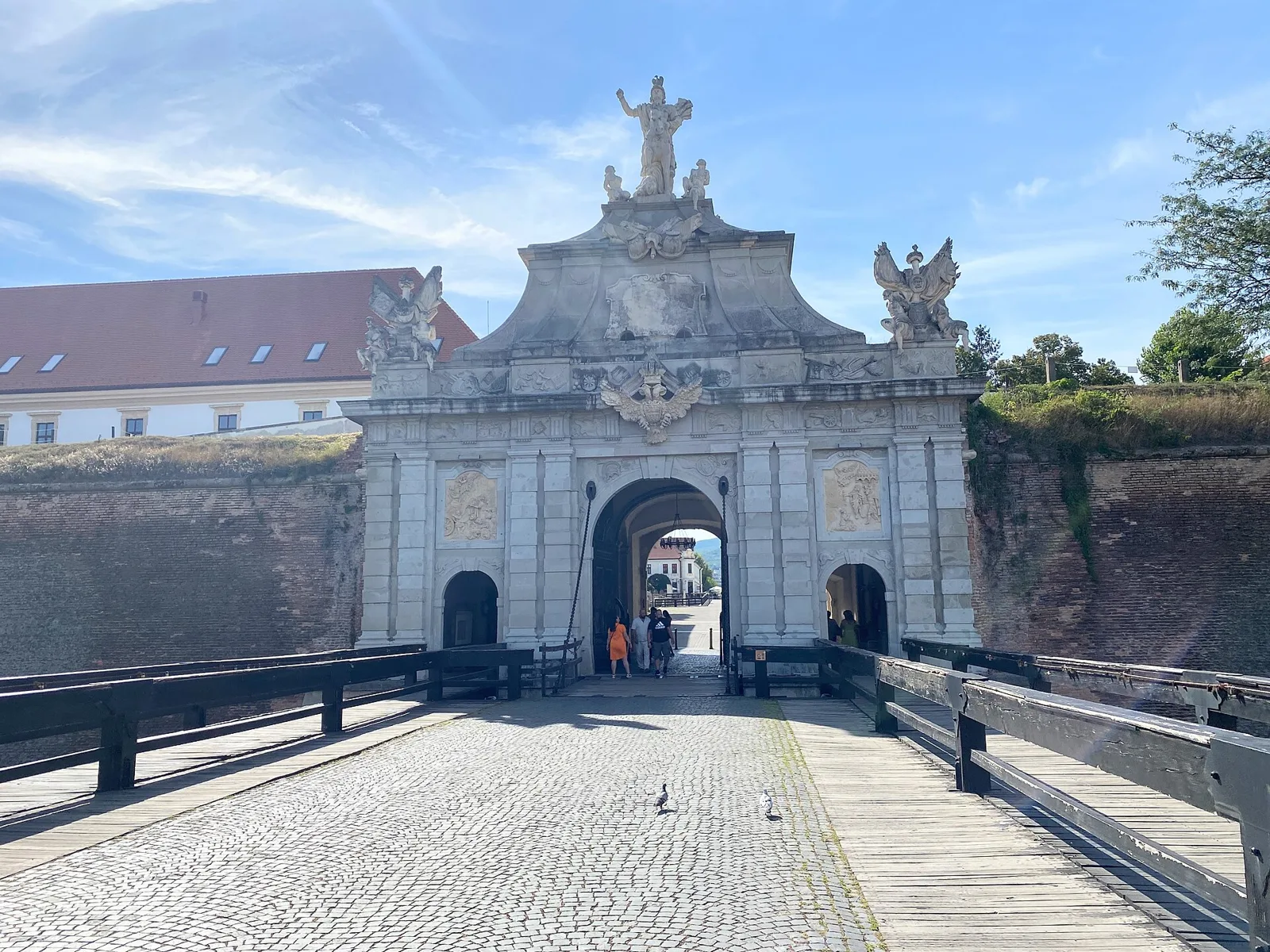
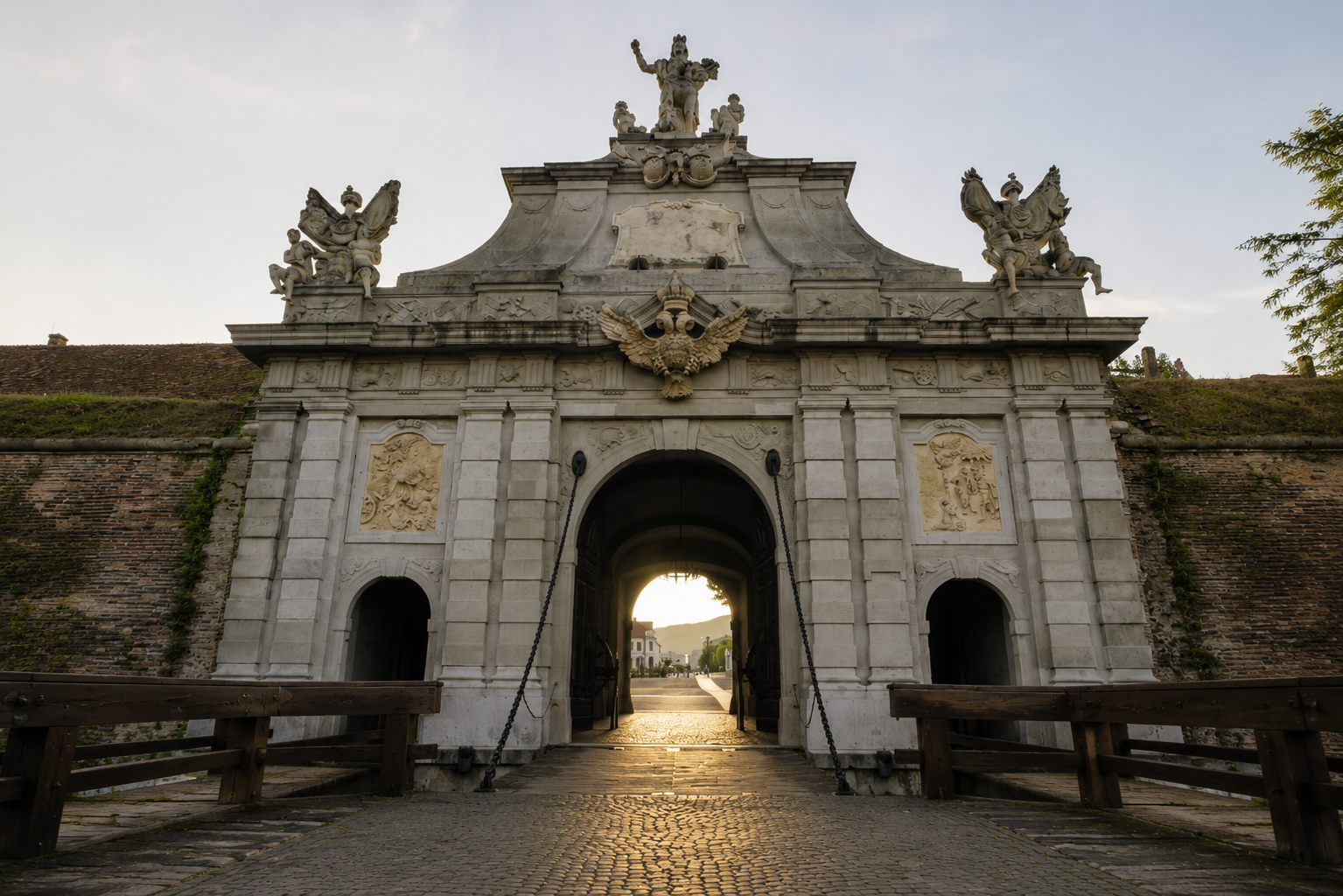
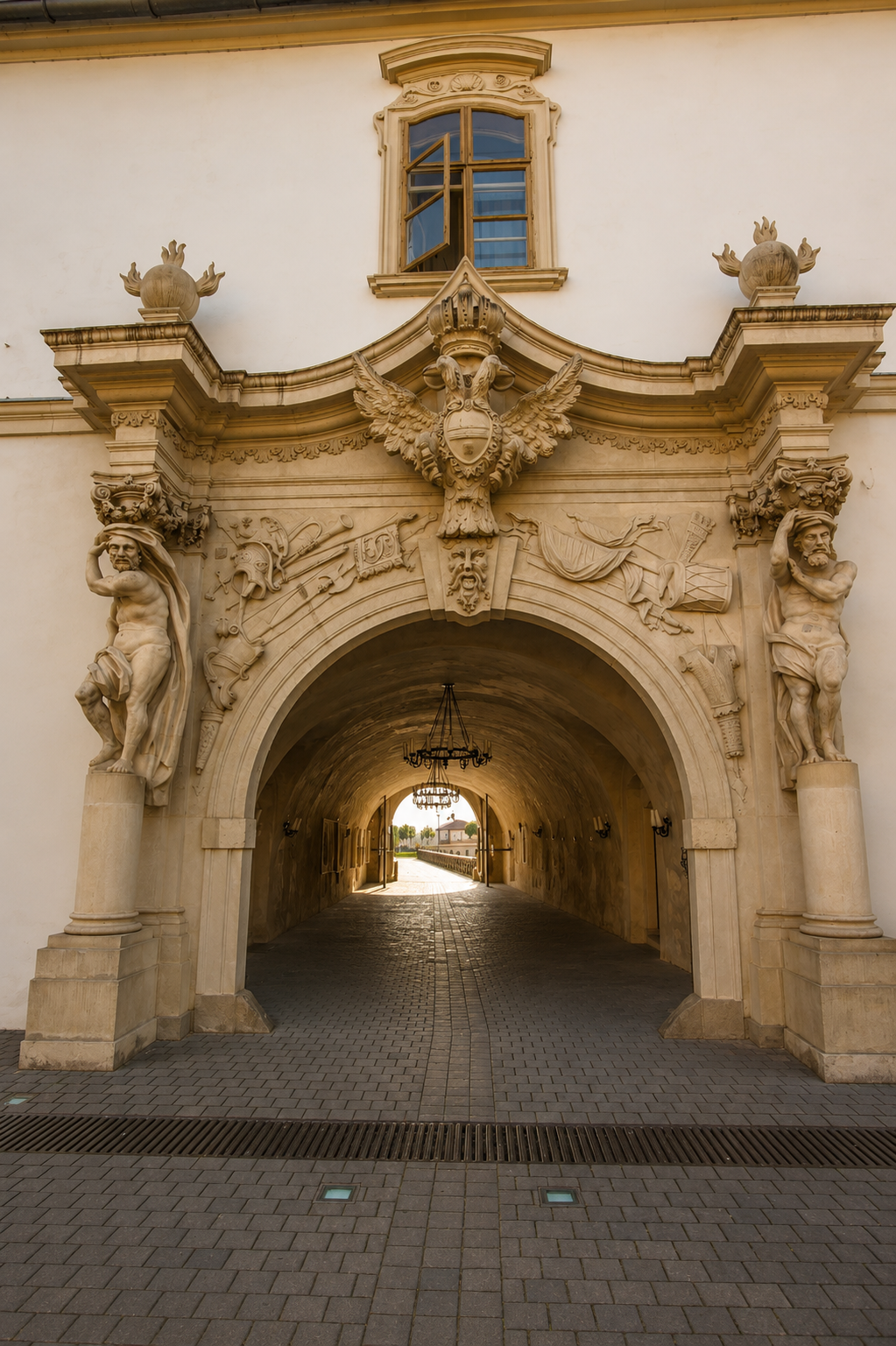
Foto: -wuppertaler, CC BY 4.0, via Wikimedia Commons
Alba Carolina Fortress is the Vauban-style bastion fortress of Alba Iulia, a category A historical monument (LMI code AB-II-a-A-00088). It was built between 1715 and 1738 by the Habsburg Empire, on the initiative of Prince Eugene of Savoy, to designs by the Italian architect Giovanni Morando Visconti, who died of plague in Alba Iulia in 1717 and is buried in the Roman Catholic Cathedral inside the fortress. The foundation stone was laid on 4 November 1715.
The fortress is star-shaped, with seven bastions, defensive ditches and six gates on an east-west axis. The gates are decorated with Baroque statues and reliefs inspired by the deeds of ancient heroes and by the Austro-Turkish wars, made by a Viennese team led by the sculptor Johann König. In 1849 the fortress was besieged for three months by Hungarian revolutionary troops under General Bem.
Alba Carolina is linked to the Great Union: on 1 December 1918, in the Union Hall inside the fortress, delegates from across Transylvania voted for union with Romania. In the Coronation Cathedral, built in 1921-1922, King Ferdinand I and Queen Marie were crowned on 15 October 1922. The fortress also holds the Roman Catholic Cathedral of Saint Michael, built in the 13th century, with the tomb attributed to John Hunyadi, and the National Museum of the Union, with more than 200,000 objects.
Did you know that more than 20,000 Romanian serfs from all over Transylvania worked on the fortress in two-week shifts, and that the dressed stone was brought from Ighiu and the rough stone from Șard?
Cetatea Alba Carolina, Alba Iulia, județul Alba