
Attraction
Platoul Meledic
Platoul Meledic is a natural, speleological and zoological nature reserve covering an area of 67.5 hectares, situated at approximately 600 m altitude, within the communes of Mânzălești and Lopătari, Buzău County, inside the UNESCO Geopark Ținutul Buzăului. Its attractions include Peștera 6S — the second longest salt cave in the world, at 3,190 m, discovered in 1980 — Lacul Mare, a freshwater lake set within a salt massif, and an open-air collection of wooden sculptures. Alexandru Vlahuță dedicated an entire chapter to it in "România pitorească".
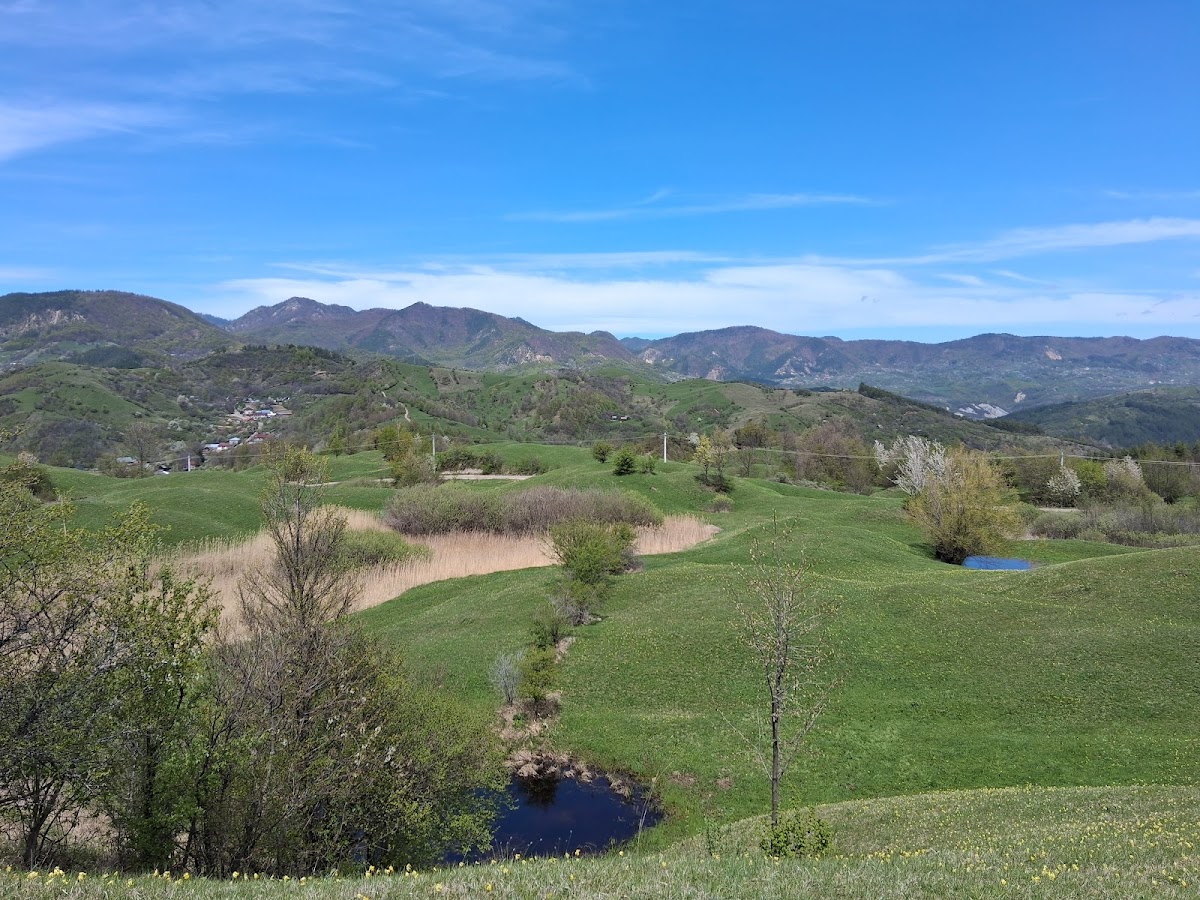
Platoul salin Meledic is the best known and most accessible of Romania's salt domes, located approximately 50 km from the city of Buzău, in the subcarpathian zone of the county. The dissolution of salt by infiltrating water produces spectacular and constantly changing landforms — salt canyons, sinkholes, uvalas and active collapses that permanently alter the terrain's morphology. Within a radius of just five kilometres lie three natural attractions of remarkable beauty: a spur nearly ten metres tall formed from volcanic ash, a freshwater lake set between salt slopes, and a chain of caves formed within the salt layers. The caves (saline endokarst) form a complex ensemble comprising 47 large cavities. The most significant, Peștera 6S, discovered in 1980, is the second longest salt cave in the world, at 3,190 m. For safety reasons, access to the interior is prohibited. Lacul Mare — known to locals as "Lacul fără Fund" (the Bottomless Lake) — covers an area of one hectare and reaches a depth of seven metres, containing freshwater despite being located on a pure salt massif. The paradox has a scientific explanation: rainfall input and the waterproofing of the lake bed by alluvial deposits have severed the connection with the salt massif, causing the water to become fresh. The landscape is dotted with wooden sculptures created by artists from Buzău County, placed in the meadow surrounding Lacul Mare. Alexandru Vlahuță dedicated an entire chapter to it in "România pitorească", describing the place as follows: "We are at Meledic, one of the widest openings in the Carpații Buzăului... flowers surround us, the stars tremble in the lake, the waters of the Slănic murmur softly down the valley." It is said that Queen Maria wished to build a castle at Meledic, a project that was never realised. The plateau is part of the UNESCO Geopark Ținutul Buzăului and is worth visiting in any season, with spring and autumn being the most attractive periods, when the dissolution of salt generates phenomena visible to the naked eye.
Meledic judetul Buzau