
Attraction
Tuzla Beach
Tuzla Beach lies in Tuzla commune, Constanța County, about 25 km south of Constanța, between Eforie Sud and Costinești. It runs for roughly 2 kilometres beneath a high earthen cliff covered in vegetation, reached by footpaths. It is known for the turquoise colour of its water, uncommon on the Romanian coast, and for the absence of commercial infrastructure. Nearby stands the Tuzla Lighthouse, the oldest on the Black Sea coast, built in 1900.
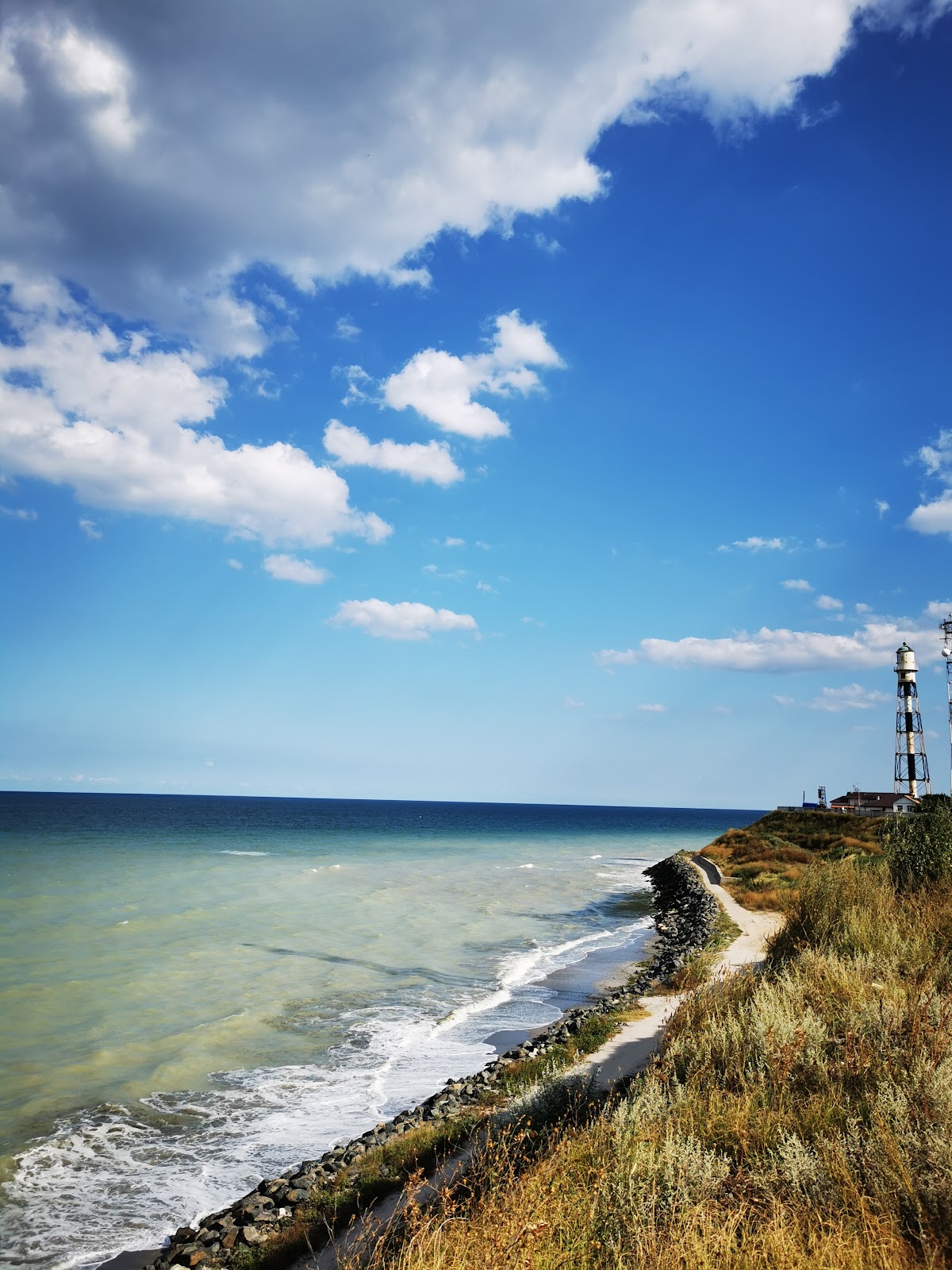
Tuzla Beach lies in Tuzla commune, Constanța County, roughly 25 kilometres south of the city of Constanța, between the resorts of Eforie Sud and Costinești. The village's name comes from the Turkish "tuz," meaning salt, a reference to the area's former salt resources, dating from the Ottoman administration of Dobruja.
The beach runs for about two kilometres and lies beneath a high earthen cliff covered in dense vegetation. Access is by footpaths descending from the plateau, some only roughly maintained. The cliff edge is prone to collapse, and signs warn against parking near it.
What has made the beach known in recent years is the colour of the water, a turquoise rarely seen on the Romanian coast. The beach profile is narrow, with fine sand in some sectors and sand mixed with pebbles and shells in others. The waves bring shells ashore continuously.
The water depth is not uniform. In the southern part, where the Anto Beach and Vorgola Beach sectors lie, the sand is finer and the water shallower, suitable for families with children. Toward the north, the sand grows coarser and the depth increases abruptly, making that stretch unsuitable for children. Lifeguards do not cover the whole length of the bay at all times, so swimming calls for caution. The northern end holds Cochilia Beach, the best-known sector, minimally developed.
Facilities are sparse: a few rustic bars, patches of sunbeds and reed parasols, alongside long stretches of open beach. The legal status of the temporary structures on the beach is unsettled, after the Constanța Tribunal suspended enforcement of a Tuzla town hall order requiring their demolition; as a result, the facilities may or may not be present from one season to the next. Camping on the beach and driving vehicles onto the sand are prohibited and subject to fines.
The area offers more than the beach. The commune is watched over by the Tuzla Lighthouse, the oldest on the Romanian Black Sea coast, built in 1900 during the reign of King Carol I and brought into service in 1901. The site was chosen for its maximum visibility across the southern stretch of the coast. The engineer Anghel Saligny contributed to its design, and construction was carried out by the French firm Barbier, Bénard & Turenne. The lighthouse ran on a petroleum installation until it was electrified, and some 200 steps lead to its top. On the beach and along the cliff stand pillboxes from the Second World War, massive concrete blocks raised for coastal defence. Near the Străjărel lighthouse, a concrete embankment follows the line of the shore.
The waters off Cape Tuzla fall within a Natura 2000 site, with sensitive marine habitats. Collecting stones, live shells, plants, or marine life is prohibited, and open fires on the beach are not permitted.
Tuzla Beach is worth visiting for the contrast between the high green cliff and the turquoise water below, a combination absent from the established resorts of the coast, and for the chance to see, within the same stretch, the oldest lighthouse on the Black Sea and wartime pillboxes still standing in the sand.
Tuzla judetul Constanta