
Attraction
2 Mai Beach
2 Mai Beach lies in the village of the same name, Limanu commune, Constanța County, 6 km from Vama Veche and 5 km from Mangalia. The village was founded in 1887 by decree of Mihail Kogălniceanu, and takes its name from 2 May 1864. Under communism, the beach was the refuge of Romania's intelligentsia and the only place in the country where nudism was practised without interruption from 1948. The shipyard built in the 1970s diverted the currents and narrowed the beach, which nonetheless remains one of the least commercialized on the coast.
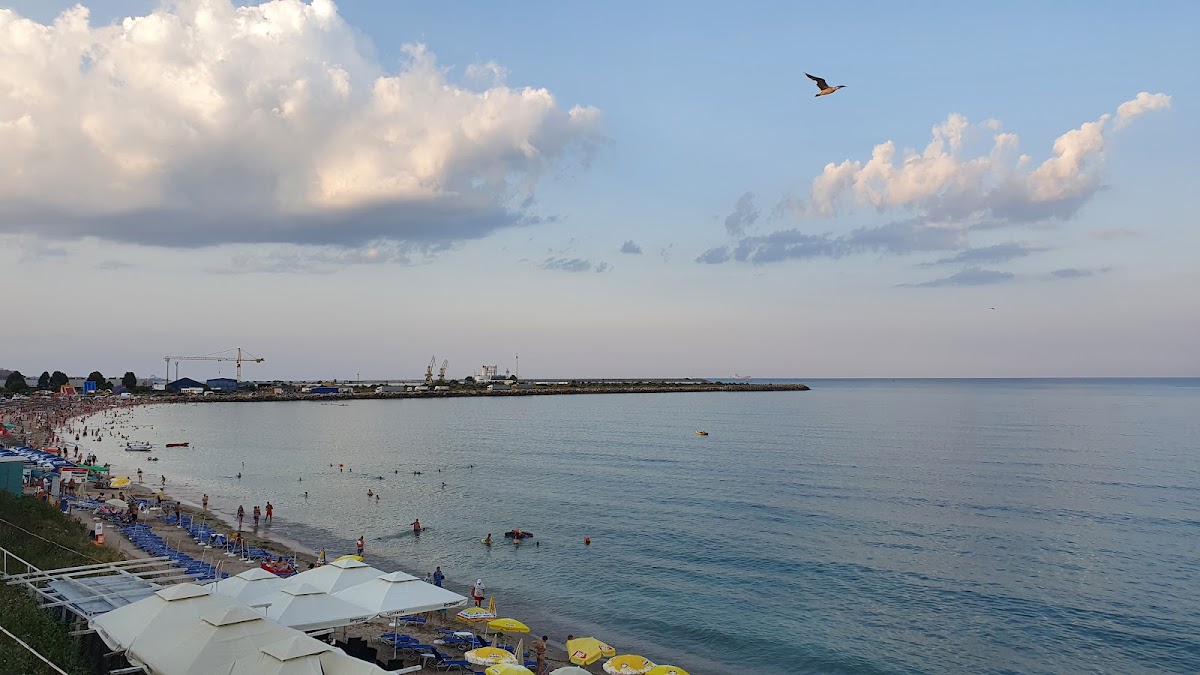
2 Mai Beach lies in the village of 2 Mai, Limanu commune, Constanța County, on the southern stretch of the Romanian coast, 6 kilometres from Vama Veche, 5 from Mangalia, and 53 from Constanța. The beach is bounded to the north by the Mangalia port breakwater and continues south along an undeveloped stretch of shore that joins the beach at Vama Veche. The sand is fine, the slope gentle, and the water deepens gradually.
The village was founded in 1887 by decree of Mihail Kogălniceanu, nine years after Dobruja was joined to Romania. Its name, then written "Două Mai," marks 2 May 1864, the day Alexandru Ioan Cuza dissolved the Legislative Assembly of the United Principalities to push through his reforms. A local legend holds instead that Kogălniceanu, passing through and learning the settlement had no patron saint's day, asked what day it was; the answer, "the 2nd of May," became the village's name. A third version links the name to two peasant tools called "maiuri."
Before modern administration reached the area, it held the huts and dugouts of Greek fishermen, Romanian shepherds, and Tatar horse breeders. The first settlers brought officially were Russian Skoptsy of the Raskol sect, persecuted in the Tsarist Empire, brought from Bucharest, Iași, and Galați. From around 1900, Lipovan families settled here, and in the 1920s a few families from Argeș. At the 2002 census the village had 2,248 inhabitants: 1,847 Romanians, 289 Lipovan Russians, 97 Tatars, 6 Turks, and 5 Hungarians. Locals say the village's pride lies in the sea, the sun, the sand, the mosque, the Old Rite Lipovan church, and Limanu Cave.
The beach's reputation, however, was made during the communist decades. From the summer of 1948, nudism was practised here without interruption, at a time when nothing of the sort was possible anywhere else in Romania. The beach was vast and nearly empty: it ran from the Mangalia end of the village for five or six kilometres to Vama Veche, and from an unmarked point onward the nudists began. Among the founders of this holiday community were N. Steinhardt and the Indologist Sergiu Al. George. Over the years they were joined by Alexandru Paleologu, Marga Barbu, Olga Tudorache, Gheorghe Dinică, Stela Popescu, Iurie Darie, Alexandru Arșinel, Dorina Lazăr. Whoever came to 2 Mai lived as the villagers did: ate the same food, washed in the yard from a barrel, slept in rooms the hosts used the rest of the year. That mode of tourism, with parties and late conversations in the courtyards, survives in part today.
In the mid-1970s the regime answered. Ceaușescu began building a shipyard right beside the village, in part to strike at the community of "doimaiști," who could then reach it only by a fifteen-kilometre detour through Limanu commune. The shipyard also had a lasting physical consequence: it diverted the sea currents and narrowed the beach, once far wider. The road bridge completed in 1989 opened access again, this time to everyone.
Notable archaeological finds have been made within the village perimeter. In 1961 a monumental tomb of the 4th century BC was identified, originally covered by a burial mound, comprising an access corridor 1.10 metres wide, its side walls nearly two metres high, and an almost square chamber of 3.10 by 3 metres. A similar tomb was found in 1985, west of the village, on the lakeshore.
Today, 2 Mai remains the quiet alternative to Vama Veche. There are no nightclubs or showy terraces, and the maritime dune vegetation, with halophyte species adapted to saline conditions, survives on the undeveloped stretches. Over the past decade, however, the village has changed: many traditional households have been torn down, and villas have risen along the lanes. Nearby lie Limanu Cave, Hagieni Forest, Lake Mangalia, the Albești fortress, and Micul Golf.
2 Mai Beach is worth visiting because it is one of the few places on the Romanian coast where geography bears the marks of politics: a beach deliberately narrowed, a village colonized by a Russian sect, a community of intellectuals that held out here for forty years, and sand that concrete has not yet covered.
2 Mai judetul Constanta