
Attraction
Pietroasele – The Hen with the Golden Chicks
The commemorative monument in Pietroasa Mică, Buzău County, marks the exact spot where, in the spring of 1837, two stonemasons — Ion Lemnaru and Stan Avram — discovered "The Hen with the Golden Chicks": a treasure of 22 pieces of pure gold with a total weight of nearly 20 kg, belonging to the Visigoths of the 4th century AD. Before the discovery of Tutankhamun's tomb, it was considered the most important ancient treasure in the world. The original is housed at the National History Museum in Bucharest; the site of the discovery is open to visitors.
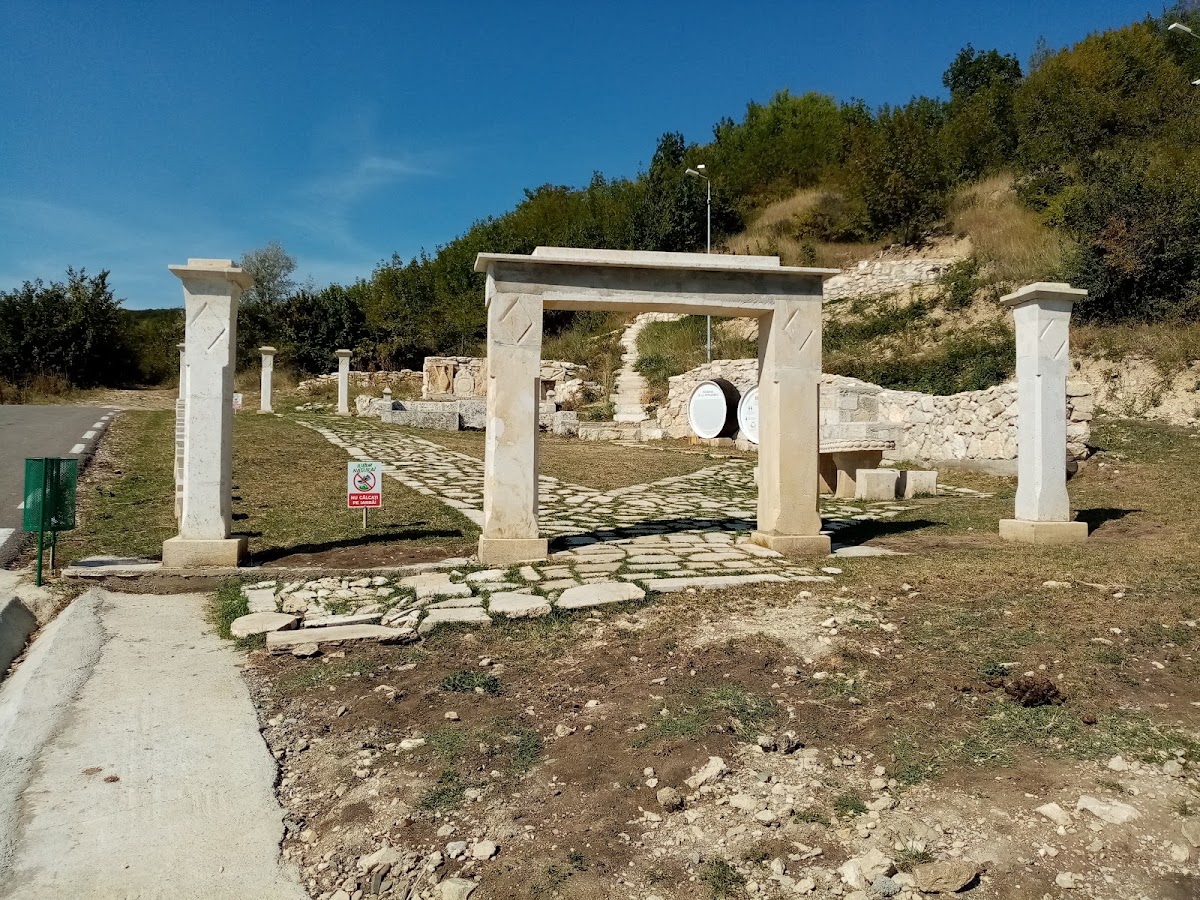
In the spring of 1837, in an area known as "Poiana Crudului" on the sandstone hills of Pietroasa Mică, Buzău County, two local stonemasons — Ion Lemnaru and Stan Avram — struck their pickaxes upon one of the most spectacular archaeological finds in Romanian history: a treasure consisting of 22 solid gold pieces with a total weight of approximately 19.82 kg. The name "The Hen with the Golden Chicks" emerged during the investigation that followed — Ion Lemnaru had described how the pieces were stacked one upon another, covered by the large fibula, evoking the image of a hen sheltering her chicks. The two men kept the hoard hidden for a year, eventually selling it to the Albanian entrepreneur Anastase Verusi for 4,000 piastres. He deformed most of the objects and cut the large tray with an axe before being reported to the authorities in 1838. The treasure has been attributed to the Visigoths of the 4th century AD, and is likely connected to the ruler Athanaric. It includes pieces of exceptional artistic refinement: a large eagle-shaped fibula, smaller fibulae, a tray, a pitcher, a patera, polygonal baskets, and a unique torc bearing a runic inscription — the only piece with an engraved text. The fate of the treasure has been as dramatic as its discovery: it travelled to Paris, London, and Vienna, was sent to Moscow in 1917 to be kept safe from the German army, and was not returned by the Bolsheviks until 1956. Today, the original is on display at the National History Museum in Bucharest, while a faithful replica can be seen at the Buzău County Museum. The site of the discovery, marked by a commemorative monument with stone gates and information panels, can be visited in Pietroasa Mică — accessible via DJ203C from DN1B. It is well worth a visit, as it is a truly historic place whose story has captivated generations of researchers and has unfolded across two centuries of remarkable adventures.
Pietroasele judetul Buzau