
Attraction
Council Square (Piața Sfatului)
Council Square is Brașov's historic center, covering about 12,000 sqm, functioning as a commercial and administrative hub since the 15th century. The dominant building, the Council House, with a 58-meter tower built between 1521 and 1528, houses the Brașov County History Museum, open to the public since 1950. The architectural ensemble, including the Baroque and Renaissance facades built by the Saxon community, is one of the most cohesive surviving examples of medieval urban planning in Romania.
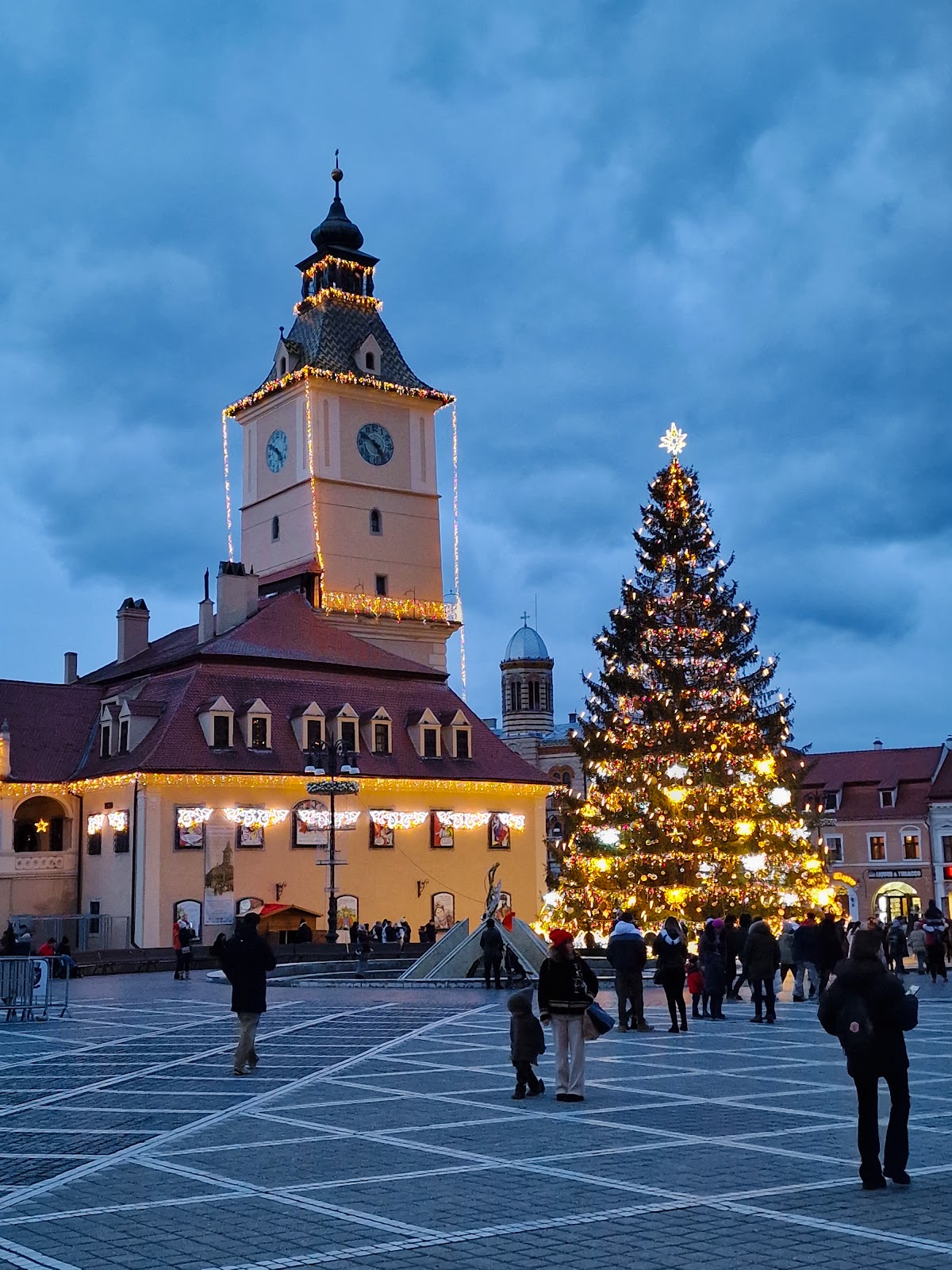
Council Square is Brașov's historic center, one of the best-preserved medieval squares in Romania, covering about 12,000 square meters. The space has served as the city's commercial and administrative hub since the 15th century, when Brașov was known by its German name, Kronstadt. The first documented reference to a building on the site of today's Council House dates to 23 December 1420, through an agreement between the Furriers' Guild and the Bârsa District Assembly; the actual construction of the tower and the building, in its basic structural form, took place between 1521 and 1528.
The building dominating the square is the Council House, notable for its central tower, seven stories tall and 58 meters high, standing on the eastern side, the oldest part of the structure. In the 16th century, the tower was crowned with four turrets, a sign of the city's right to pronounce capital sentences ("Jus Gladii"). The Council House served as the administrative seat, medieval court, and, for a time, a prison; among other cases, it tried the leaders of the 1689 uprising against the Austrians. Over the centuries, the building was damaged by earthquakes, lightning, and fires — most devastatingly the 1689 fire — and narrowly escaped demolition twice, most recently during the communist era. Today it houses the Brașov County History Museum, open to the public since 1950, with a collection of over 4,500 items, including the inscription that gave the city its first name (Cumidava) and a silver lamp specially commissioned by Constantin Brâncoveanu.
The square is lined with 17th-18th century buildings, built in Baroque and Renaissance styles, reflecting the strong influence of the Saxon community that dominated the city's economic life for centuries. Their ground floors once housed commercial galleries — the shops of Saxon merchants — documented in 16th-century sources. Council Square is worth visiting for its exceptional density of preserved medieval monuments within a compact area, and for its direct documentation of Saxon urban architecture in Transylvania.
Piața Sfatului Brașov