
Attraction
Peștera Vântului
Peștera Vântului is the longest cave in Romania, located in the Munții Pădurea Craiului, near the village of Șuncuiuș, Bihor County. With a mapped network of galleries exceeding 50 kilometres, developed across multiple levels in Jurassic limestone, the cave owes its name to the strong air currents that circulate through its passages. Only a limited section of a few hundred metres has been set up as a speleotourism route, accessible exclusively with a specialist guide.
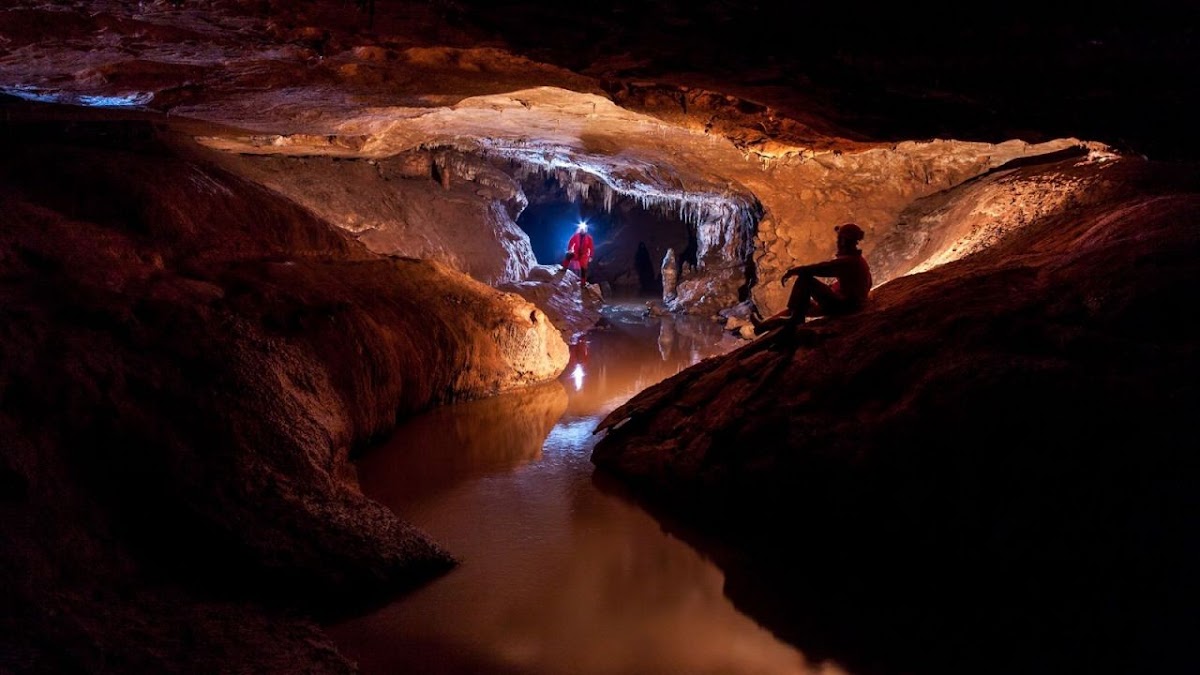
Peștera Vântului is the longest cave in Romania, with a total mapped length of over 50 kilometres of galleries. It is located in the Munții Pădurea Craiului, near the village of Șuncuiuș, Bihor County, on the left slope of the Crișul Repede valley. The cavity formed in Jurassic limestone through the gradual dissolution of the rock by underground waters over millions of years, resulting in a complex labyrinthine system organised across multiple superimposed levels. The cave's name comes from the strong air currents that circulate through its galleries — a phenomenon caused by pressure differences between the various entrances and sections of the system, noticeable from the very entrance. The natural entrance, located approximately 2 km south-east of Șuncuiuș, was very narrow and difficult to access, which is why an artificial entrance was subsequently constructed at the level of the active gallery. The cave was discovered in 1957 by engineer Bagameri Bela, who initially explored around 500 metres; in the following decades, through systematic speleological expeditions, the mapped length grew progressively, exceeding 15 kilometres as early as 1967 and reaching over 50 kilometres today, with exploration still ongoing. The internal temperature remains constant throughout the year, at around 11.8°C. The cave fauna includes bat colonies as well as a wide variety of invertebrates adapted to the subterranean environment, among them snails, spiders, and myriapods. From a speleological standpoint, the cave displays almost all known endokarst formations — stalactites, stalagmites, columns, wall flowstones, and crystals — with one of the most impressive features being a large stalactite in the visitable section. As it is a cave of great complexity and sensitivity, access is permitted only along a designated speleotourism route of a few hundred metres, exclusively in the presence of a specialist guide and by prior arrangement.
Sudrigiu judetul Bihor