
Attraction
Peștera Urșilor
Peștera Urșilor is one of the best-known and most spectacular show caves in Romania, located in the village of Chișcău, Pietroasa commune, Bihor County, in the Munții Apuseni, at an altitude of approximately 482 m. Discovered in 1975 as a result of a dynamite blast at the local limestone quarry and opened to the public in 1980, the cave owes its name to the numerous cave bear fossils (Ursus spelaeus) found inside. The galleries developed for visitors feature well-preserved calcite formations, at a constant temperature of approximately 10°C.
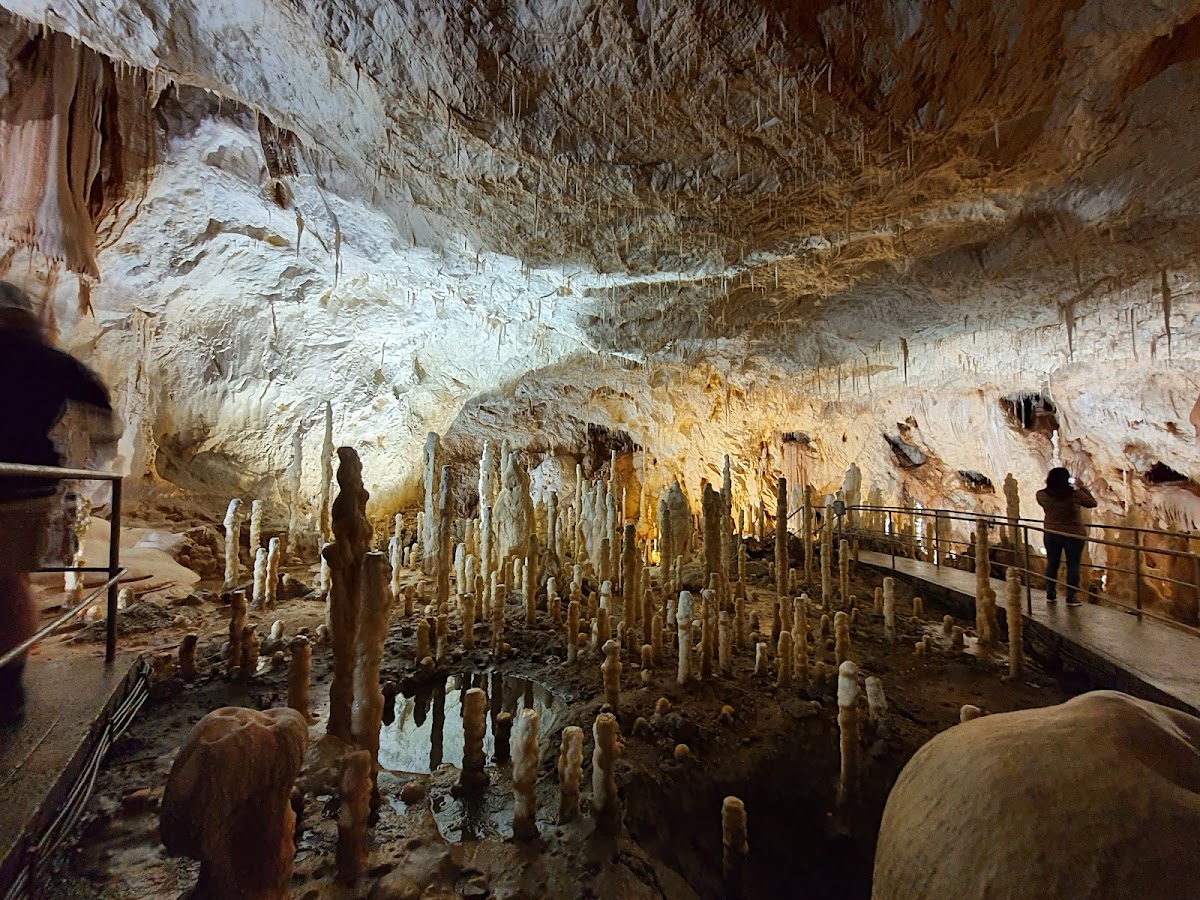
Peștera Urșilor is one of the most important karstic cavities and tourist attractions in the Munții Apuseni, located in the village of Chișcău, Pietroasa commune, Bihor County, at an altitude of approximately 482 m. It was discovered accidentally on 17 September 1975, when the underground void was opened by a dynamite blast carried out during limestone extraction works at the local quarry; the first person to descend into the cave was miner Traian Curta from Chișcău. After five years of research and development work, coordinated by the "Emil Racoviță" Institute of Speleology, the cave was opened to the public on 14 July 1980. The total length of the explored galleries exceeds 1,500 m, spread across two levels; the upper level, nearly 500 m long, has been fitted with lighting and prepared for the tourist circuit, while the lower level is designated a scientific reserve with restricted access. The cave's name derives from the numerous fossil remains of cave bears (Ursus spelaeus) — a species that became extinct approximately 15,000 years ago — discovered inside, including several complete skeletons; fossils of chamois, ibex, cave lion and cave hyena have also been identified. The constant interior temperature of approximately 10°C and high humidity have favoured the preservation of both formations and fossils. From a speleological standpoint, the cave features a great variety of secondary calcite formations — stalactites, stalagmites, columns, draperies and domes — distributed throughout several galleries and chambers, among them Galeria Urșilor, Galeria Emil Racoviță and Galeria Lumânărilor, which contain the most spectacular concretions. Visits are guided and organised in structured tour groups; at the entrance, the cave has a pavilion housing a speleological museum.
Chiscau judetul Bihor