
Attraction
Ialomiței Cave and Monastery
Ialomiței Cave, located in the Bucegi Mountains, in the commune of Moroeni, Dâmbovița County, at approximately 1,600 metres altitude, is one of the most visited caves in the massif. At its very entrance stands Ialomiței Monastery, founded in the 16th century by the voivode Mihnea cel Rău. The combination of a karst phenomenon and a monastic tradition spanning more than five centuries makes this site a destination of dual value — geological and spiritual.
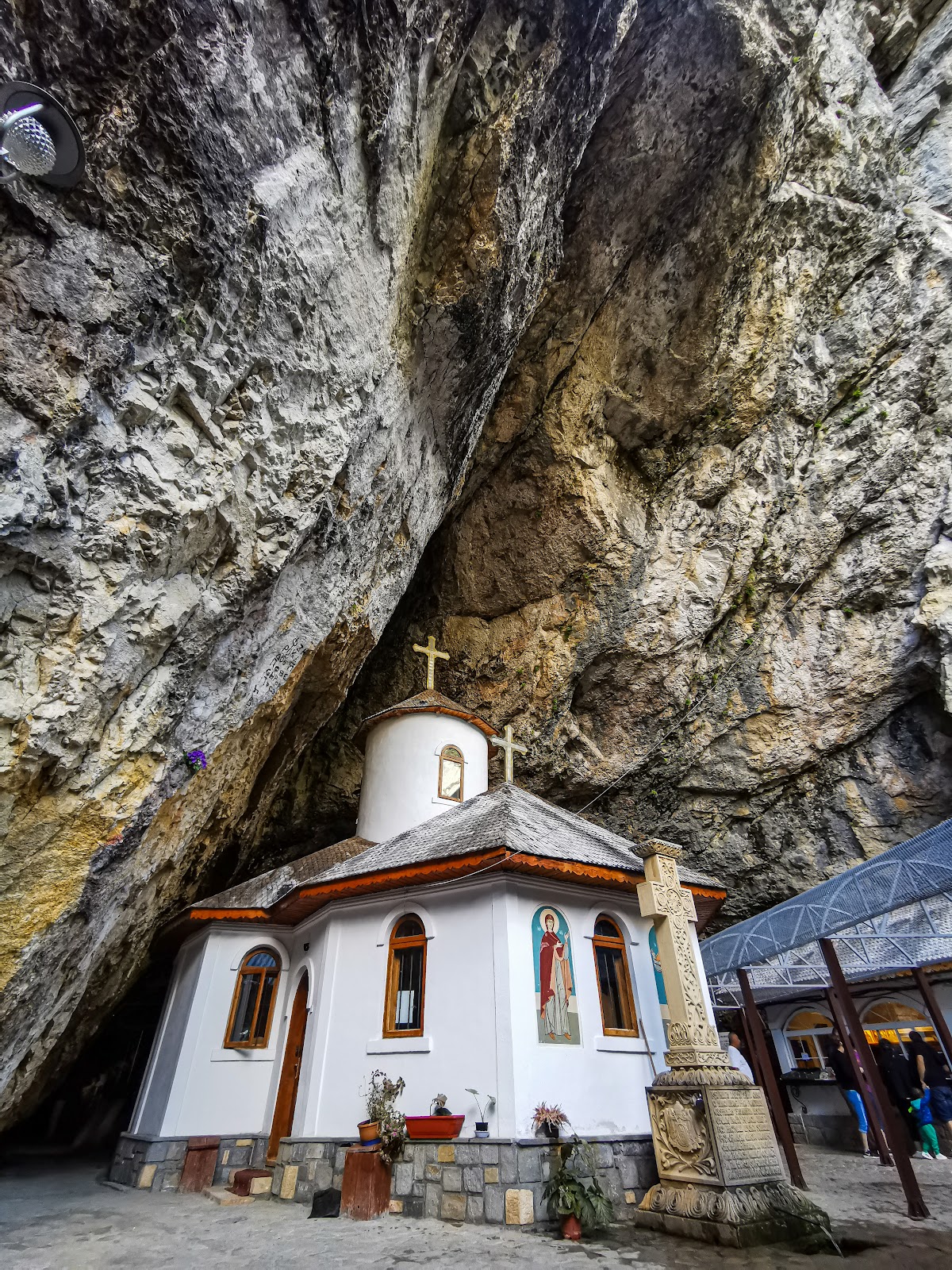
Ialomiței Cave is located in the Bucegi Mountains, on the right slope of the Cheile Ialomiței gorge, on Muntele Bătrâna, in the commune of Moroeni, Dâmbovița County, at an altitude of approximately 1,600 metres. Formed in the Jurassic limestone of the mountain, the cave extends on a single level over a length of approximately 480 metres, of which around 400 metres are accessible to visitors, up to the point known as "the Altar". It has a mixed layout of galleries and chambers, is traversed by a stream, and its semi-elliptical entrance opens onto a terrace above the valley floor. Restored in 2015, it is today one of the most highly regarded tourist attractions in the Bucegi Mountains. At the very entrance to the cave stands Ialomiței Monastery, one of the oldest and most important monastic establishments in the mountain zone of Muntenia. According to tradition, the first church — a wooden hermitage — was built at the beginning of the 16th century (1508–1509) by the voivode of Țara Românească, Mihnea cel Rău, son of Vlad Țepeș, as an act of thanksgiving after reportedly taking refuge from the Turks inside the cave, in the grotto still known today as "a lui Mihnea Vodă". The hermitic life in these surroundings is even older, however, with the first hermits attested as early as the 15th century. Near the entrance, "Piatra Altarului" (the Altar Stone) is preserved — tradition holds that it was the table on which the monks celebrated religious services. Over the centuries, the monastic complex was destroyed several times by fire — in 1818, 1940, and 1961 — with the current stone church having been built in 1994. The monastery, dedicated to the Holy Apostles Peter and Paul, is home to a community of monks and includes several chapels, as well as its own small hydroelectric plant that provides electricity, given its remote mountain location. The names of both the cave and the monastery derive from the river Ialomița, whose headwaters lie approximately 10 kilometres away, in the glacial cirque of Obârșia Ialomiței. Through the combination of a remarkable karst phenomenon and a spiritual tradition of more than five centuries, the complex remains one of the most fascinating places in the heart of the Bucegi Mountains.
Aleea Peștera Ialomiței, 137313 Moroeni