
Attraction
Muierilor Cave (Women's Cave)
Muierilor Cave, in Baia de Fier commune, Gorj County, on the southern edge of the Parâng massif, is one of the best-known caves in Romania and the first to be electrified in the country. Carved by the Galbenul River into Mesozoic limestone, it holds varied calcite formations, bat colonies and a veritable "cemetery" of cave bears. A skull of an early modern human, tens of thousands of years old, was found here. It is worth visiting for the richness of its formations and its exceptional palaeontological value.
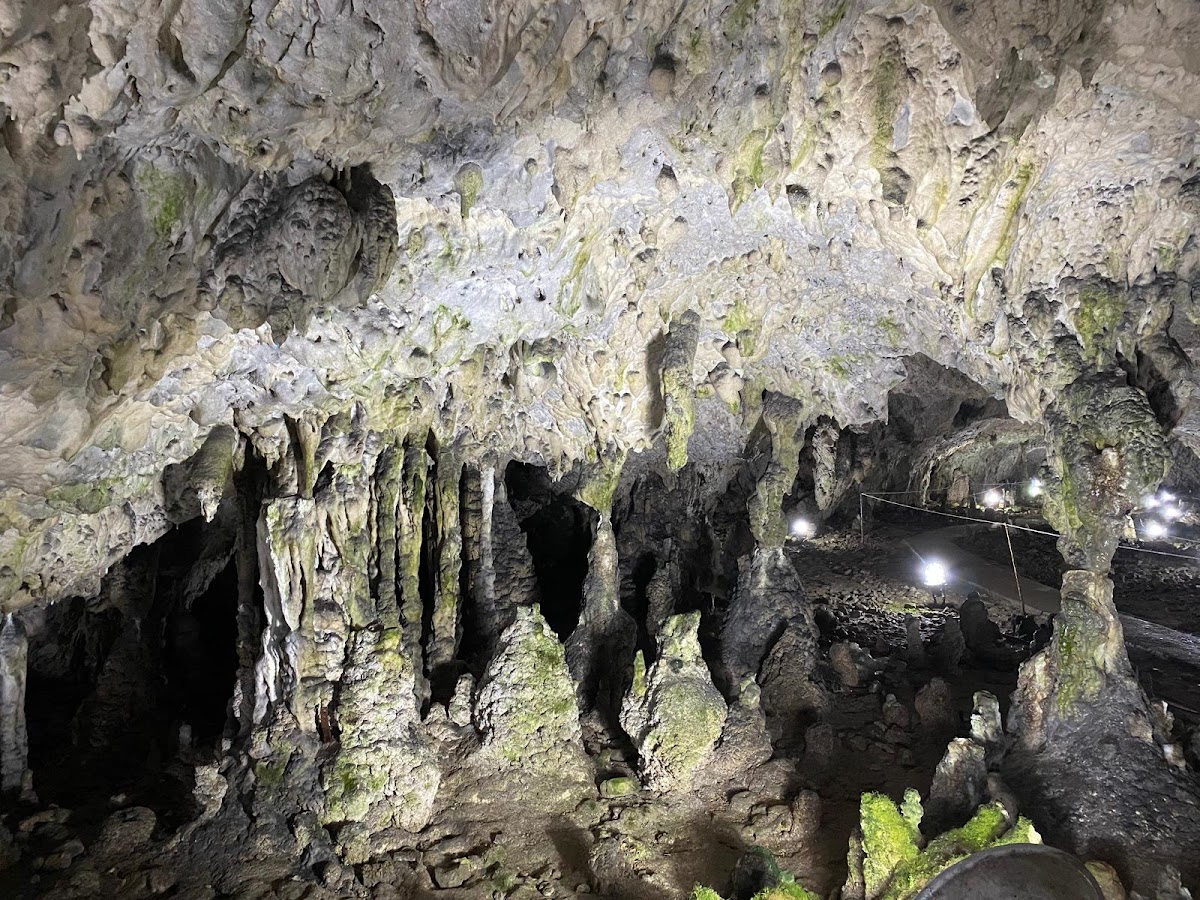
Muierilor Cave (the Women's Cave) lies in Baia de Fier commune, Gorj County, on the southern edge of the Parâng massif, in the Getic Depression of Oltenia, at an altitude of about 700 m. The cave was carved into Mesozoic limestone by the Galbenul River and is arranged on four levels, the lowest being hydrologically active and protected as a speleological reserve. Its name comes from ancient times, when, during wars, women, children and the elderly took shelter here while the men went off to fight.
The cave is renowned for its varied calcite formations — stalactites, stalagmites, columns and draperies — making up spectacular chambers such as the Small Dome, the Altar Hall, the Great Chandelier and the Bloodied Rock, named after its iron-oxide flows. Its high galleries host important bat colonies, several of whose species are protected at European level. In the Bears' Gallery, a true cemetery of cave bear skeletons (Ursus spelaeus) was found, alongside cave lions, hyenas, wolves and foxes.
The cave's most valuable discovery, however, is the skull of a woman belonging to early modern humans (Homo sapiens), dated to about 35,000–40,000 years ago and uncovered in 1952 — one of the oldest traces of modern humans in Europe. Declared a speleological reserve as early as 1955 and included on Romania's UNESCO tentative list, Muierilor Cave was the first electrified cave in Romania. The interior temperature is constant, at about 9–10 °C throughout the year. The cave is worth visiting for the diversity and density of its speleothem formations, its protected cave fauna and its exceptional palaeontological and anthropological importance.
Baia de Fier judetul Gorj