
Attraction
Cioclovina Cave
Cioclovina Cave, hidden in the heart of the Munții Șureanu, in Hunedoara County, is one of the most important paleontological and archaeological sites in Romania. A human skull approximately 30,000 years old was discovered here — the oldest nearly complete skull of a modern human found in the country — alongside a treasure of Iron Age ornaments and numerous cave bear fossils. It is part of the Parcul Natural Grădiștea Muncelului-Cioclovina.
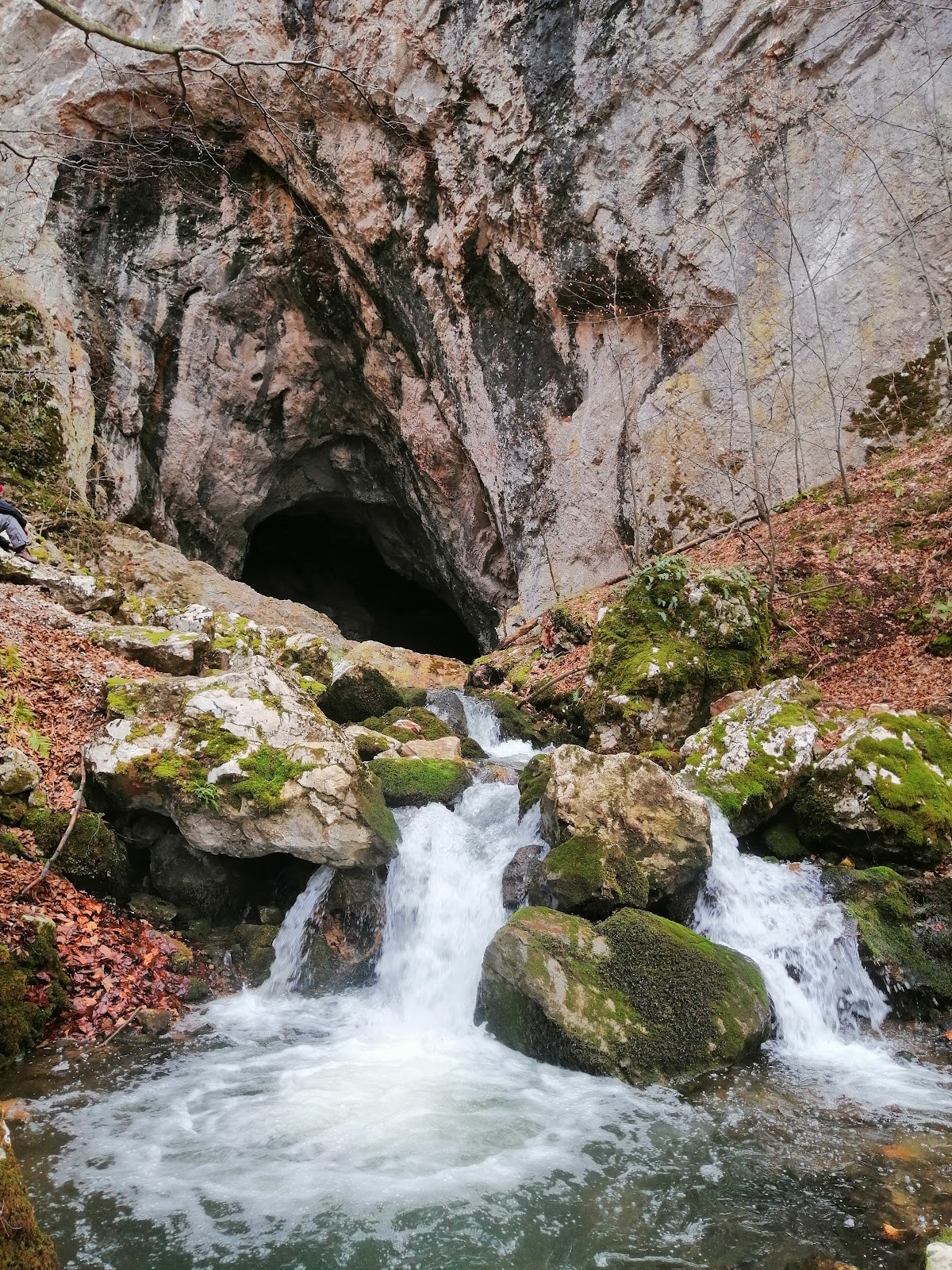
Cioclovina Cave is located in the Munții Șureanu, within the commune of Boșorod in Hunedoara County, in the land of the ancient Dacian fortresses, and forms part of the Parcul Natural Grădiștea Muncelului-Cioclovina. It belongs to the Ponorici-Cioclovina karst system, carved by water through a limestone massif, whose galleries total approximately 8 kilometres. The system consists of two caverns: Cioclovina Uscată, a fossil-level passage in which the major scientific discoveries were made, and Cioclovina cu Apă, the lower gallery through which an underground river flows. The cave is renowned for its exceptional paleontological and archaeological significance. In the late 1930s, during the extraction of guano-phosphate deposits — Cioclovina Uscată being the second cave in the world to be exploited in this way — a human skull more than 30,000 years old was discovered: the oldest nearly complete skull of Homo sapiens fosilis found in Romania, attributed to the Cro-Magnon type. Fracture marks preserved on the skull led researchers to regard it as a possible record of one of the oldest documented acts of homicide in human history. Numerous fossils of Pleistocene fauna were also identified here, including bones of the cave bear (Ursus spelaeus) and the cave lion, as well as evidence of human habitation dating back more than 26,000 years. In one of the galleries, a significant treasure from the Early Iron Age (the Hallstatt period) was also discovered, comprising thousands of objects made of bronze, amber, glass and faience — an exceptional testament to the antiquity and cultural richness of the area. Owing to these discoveries, the cave is regarded as a true scientific sanctuary. Public access to the caves is restricted, as they are protected as speleological heritage.
Boita judetul Hunedoara