
Attraction
Munții Măcinului National Park
Munții Măcinului National Park is the only national park in Romania located outside the Carpathian Mountains and the oldest mountain massif on the country's territory. The Măcin Mountains were formed 300–400 million years ago through the Hercynian orogeny, initially reaching an altitude of around 3,000 m — three times the height of the Carpathians at the time of their own formation. On just 0.05% of Romania's surface area, the park shelters approximately 50% of the country's flora and 50% of its national avifauna — a concentration of biodiversity unparalleled in temperate Europe.
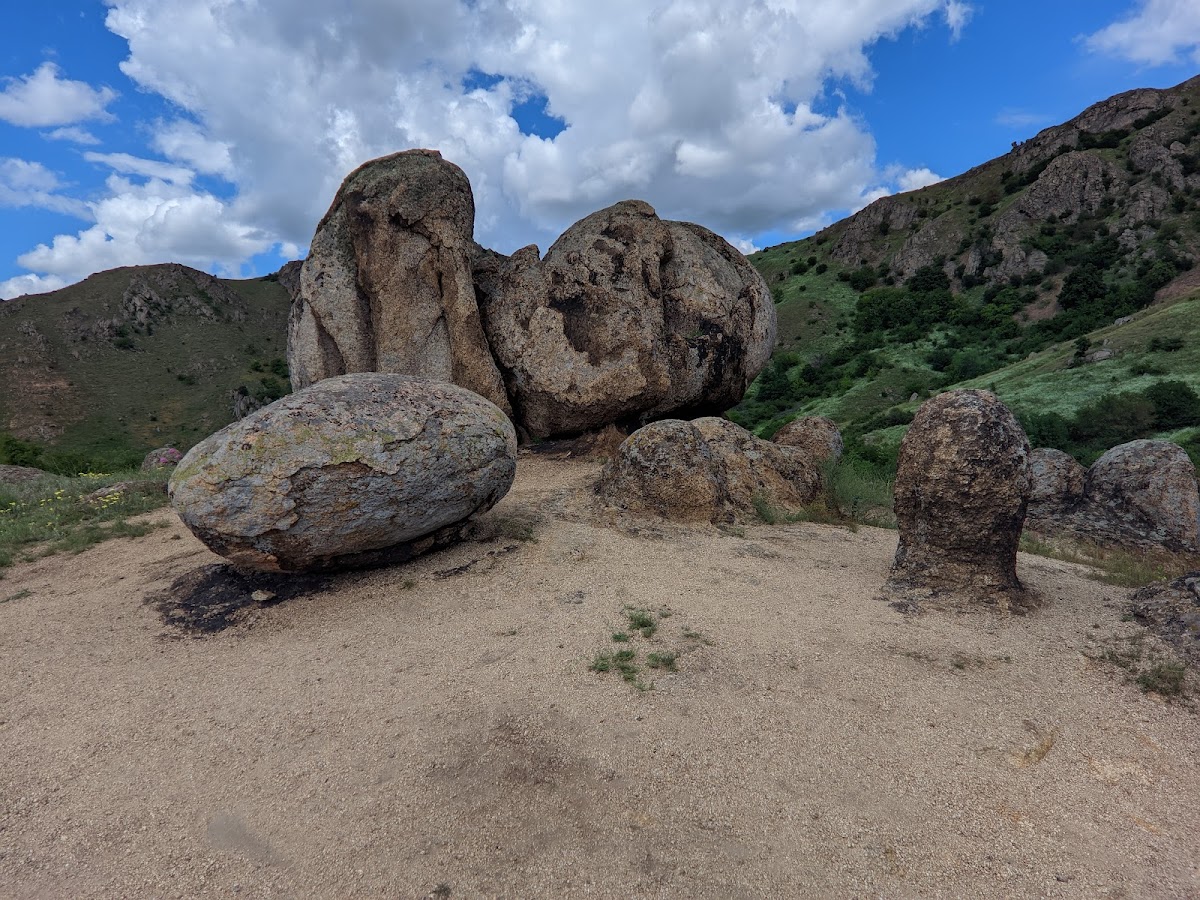
Munții Măcinului National Park is the oldest geological formation on Romanian territory and the only national park outside the Carpathians, declared as such in 2000, covering an area of 11,321 hectares in the north-west of Tulcea County. The Măcin Mountains were formed 300–400 million years ago through the Hercynian orogeny — compared to the young Carpathians, which formed 65 million years ago — and initially reached approximately 3,000 m in altitude, forming part of a mountain chain that crossed Europe from west to east. Hundreds of millions of years of erosion have reduced them to their current form of a ruiniform residual massif, with the highest peak, Țuțuiatu, at 467 m — the greatest altitude in Dobrogea. The Pricopanului ridge is the most spectacular area, with crenellated ridges and megalithic granite formations rising from the steppe grasslands like natural fortresses. What makes the Măcin Mountains truly extraordinary is not their altitude, but their biodiversity: on 0.05% of Romania's surface area, the park concentrates approximately 50% of the national flora — around 1,900 plant species — and 50% of the country's avifauna. Of the nearly 2,000 plant species, over 70 are protected as rare or vulnerable, and 27 are endemic, existing exclusively in this area. Among the rarities are the Dobrogean bellflower, the Mediterranean fern, the dwarf pink, and the Romanian peony. The Dobrogean beech forest in the Valea Fagilor Reserve — a narrow, humid valley at 350–400 m altitude, with columnar-trunked beech trees up to 1 m in diameter and 30 m in height — is unique in the world. During the autumn migration, over 10,000 diurnal raptors pass over the massif — the greatest diversity of birds of prey on passage in Romania. The fauna includes the Dobrogean whipsnake, the largest snake in Romania, the Dobrogean tortoise, the Carpathian scorpion, and the Romanian hamster — some of which are unique to Europe. The park has 11 tourist trails suitable for hiking, horse riding, or cycling, with a visitor centre in the village of Greci.
Macin judetul Tulcea