
Attraction
"Romulus Vuia" National Ethnographic Park
The "Romulus Vuia" National Ethnographic Park, the open-air branch of the Ethnographic Museum of Transylvania, is the first open-air museum in Romania, founded on 1 June 1929 on Hoia hill in north-western Cluj. Peasant farmsteads, technical installations and wooden churches brought from across Transylvania are set out over about 16 hectares.
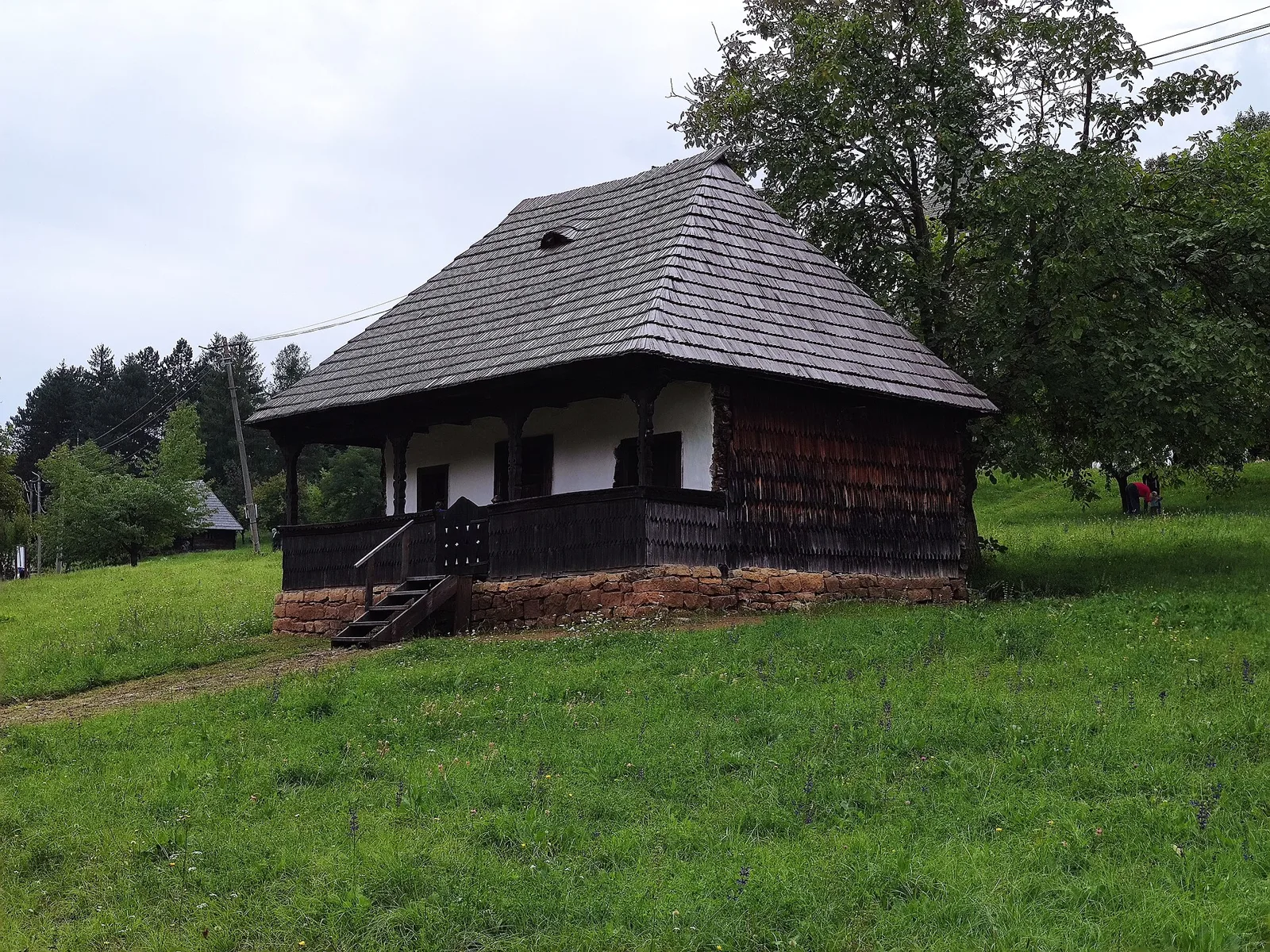
Foto: Marcmiquel, CC BY-SA 4.0, via Wikimedia Commons
The "Romulus Vuia" National Ethnographic Park is the open-air branch of the Ethnographic Museum of Transylvania. It lies on Hoia hill, on Tăietura Turcului Street, in north-western Cluj-Napoca, well away from the museum's city-centre seat (the Reduta Palace).
The park was founded on 1 June 1929 as a branch of the Ethnographic Museum of Transylvania by decision of the Ministry of Religious Affairs and Arts, and it is the first open-air museum in Romania. It was recognised by law in 1932. Its founder, the ethnographer Romulus Vuia, wanted some farmsteads to be lived in by peasants carrying on traditional occupations; the original area was 75 hectares. Between 1929 and 1940 the house from Vidra, a sheepfold from Poiana Sibiului, the roadside cross from Lupșa, the farmstead from Telciu and a barn from Stana were brought here. During the Second World War most buildings were destroyed; by 1945 only the Vidra house and the Gaudeamus restaurant remained. In 1956 Teodor Onișor and Valer Butură redrew the thematic plan, from which the technical sector and the regional farmsteads sector were built.
Today the park covers about 16 hectares, with the buildings laid out like a scattered village. The technical sector has peasant installations and workshops from the 18th to the 20th centuries: woodworking and ironworking, gold mining, wool, clay and stone working, mills and oil presses. The farmstead sector shows peasant houses from the 17th to the 20th centuries from areas such as the Apuseni Mountains, Maramureș, Oaș, Năsăud, the Transylvanian Plain, Bran and Gurghiu, fully furnished. The park also has wooden churches, including the one from Petrindu (Sălaj), from the early 18th century, painted by Dimitrie Ispas. The main entrance is from Tăietura Turcului Street; bus 37 runs from Mihai Viteazul Square to the Tetarom Industrial Park, close to the museum.
The park is a historic monument, code CJ-II-a-B-07461 ("Open-air branch of the Ethnographic Museum of Transylvania"). It is run by the Ethnographic Museum of Transylvania, an institution of Cluj County Council.
Did you know that in 1930 a whole sheepfold was brought to the park from Poiana Sibiului, together with its shepherd and 75 sheep? It was part of Romulus Vuia's idea that the museum should be a living village, not just a display of buildings.
Strada Tăietura Turcului, Dealul Hoia, Cluj-Napoca, județul Cluj