
Attraction
Central Park, Cluj-Napoca
The "Simion Bărnuțiu" Central Park, also called the Big Park by locals, is one of the main green spaces in central Cluj, dating back to the 1820s-1830s, between the Someșul Mic river and Cardinal Iuliu Hossu Street. It has a lake with an island, the Casino building, a bandstand, statues and shaded alleys.
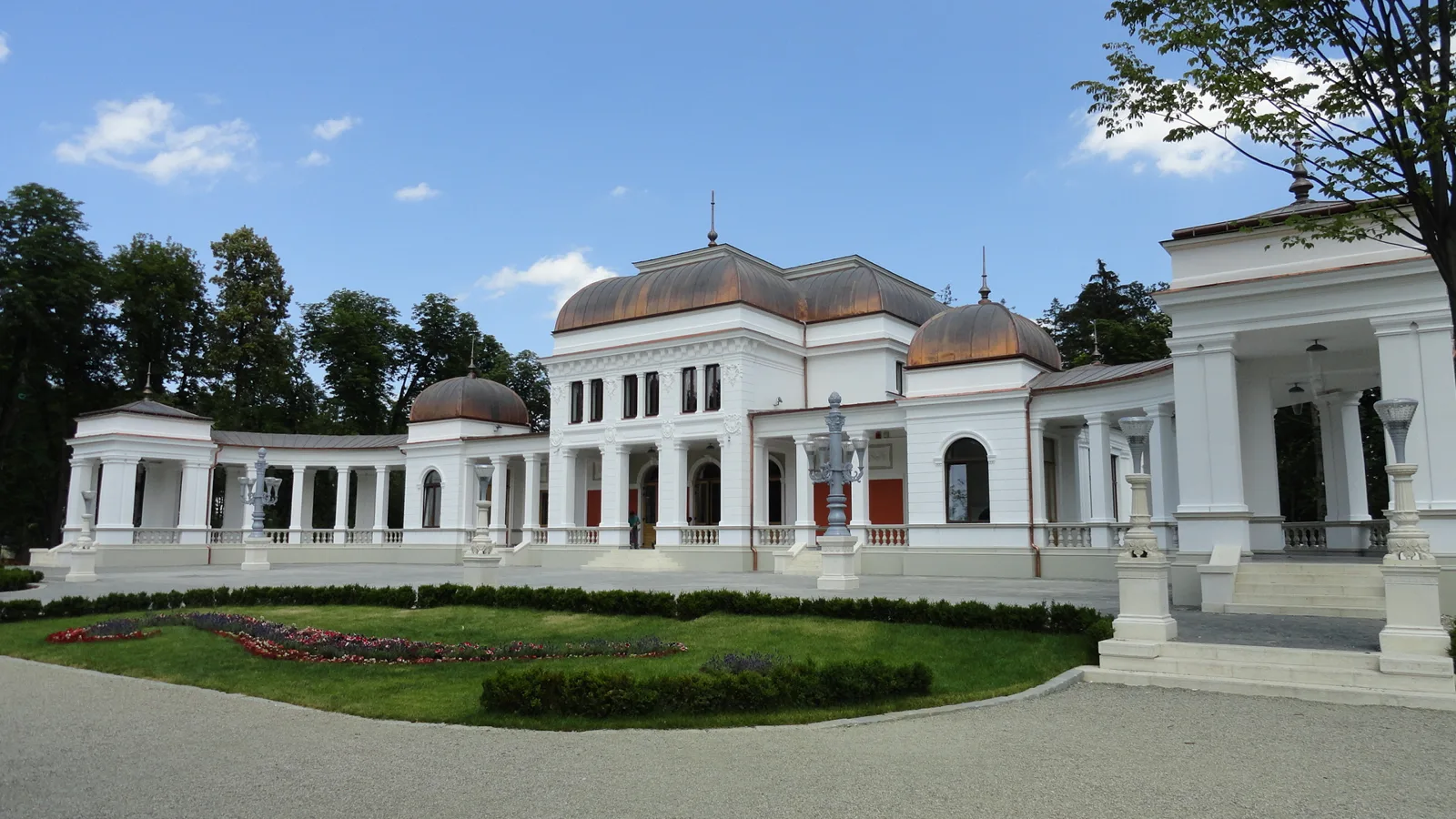
Foto: Fmvh, CC BY-SA 3.0, via Wikimedia Commons
The "Simion Bărnuțiu" Central Park, also known as the Big Park (Sétatér in Hungarian), lies in central Cluj-Napoca, west of the historic centre. It is bordered by Cluj Arena to the west, the Hungarian State Theatre to the east, the Someșul Mic river to the north and Cardinal Iuliu Hossu Street to the south.
The park's history begins in 1827, when the Women's Charitable Association rented the then undeveloped land to create a place for recreation. The park opened to the public in the early 1830s under the name Népkert (People's Garden), and on 1 May 1838 its care passed to a city committee. From 1865 the Park Association laid out the alleys, dug the lake and built the music pavilion. The Skating Association rented the lake in 1871. The skating pavilion and the kiosk were built in 1896-1897 to designs by the Cluj architect Lajos Pákey.
Today the park has the lake with its island, the skating pavilion, the Casino building, used as a cultural centre (Casino, Urban Culture Centre), the bandstand, the artesian fountain and statues of figures such as George Coșbuc, Liviu Rebreanu, Octavian Goga, Antonin Ciolan, Sigismund Toduță and Nicolae Bretan. It is a few minutes' walk from Unirii Square; the "Parcul Central" tram stop is on Emil Isac Street, at the eastern entrance.
Central Park is a historic monument, code CJ-II-s-B-07243, and the former exhibition building (painting workshops, 1940), the artesian fountain, the bandstand, the skating pavilion and the kiosk have their own codes (CJ-II-m-B-07243.01-05).
Did you know that from 1935 to 1957, with a break in 1940-1945, the Casino building in the park housed the Ethnographic Museum of Transylvania? Its third permanent exhibition opened here in 1937, in the presence of King Carol II.
Parcul Central, între strada Emil Isac și Cluj Arena, Cluj-Napoca, județul Cluj