
Attraction
CEC Palace
Built between 1897 and 1900 to designs by the French architect Paul Gottereau, with construction overseen by the Romanian architect Ion Socolescu, the CEC Palace is one of the most striking eclectic buildings on Calea Victoriei. Raised on the site of the former Saint John the Great monastery, it is crowned by a large glass-and-metal dome. It is worth visiting for its monumental façade, the murals of the Great Hall and the CEC Museum, set up in 2005 inside an interior preserved almost unchanged since 1900.
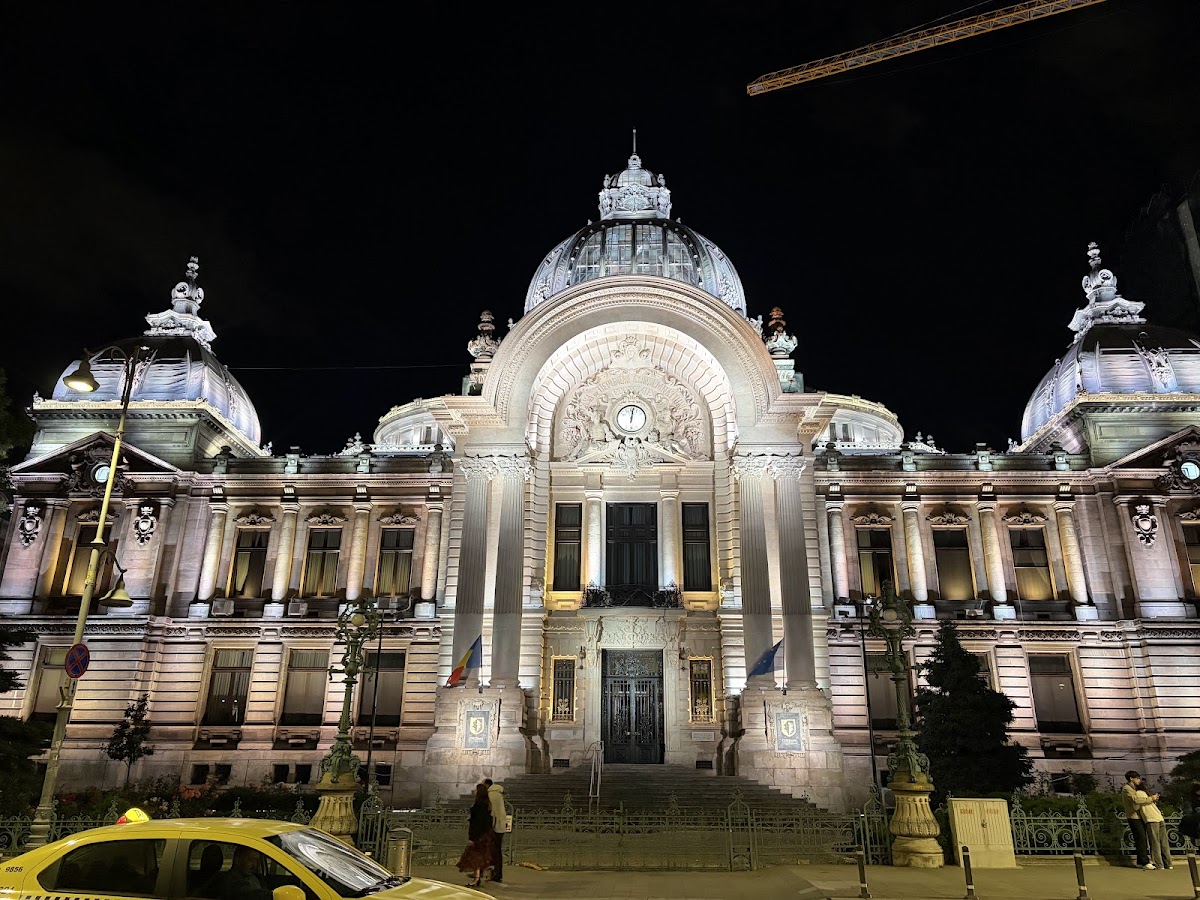
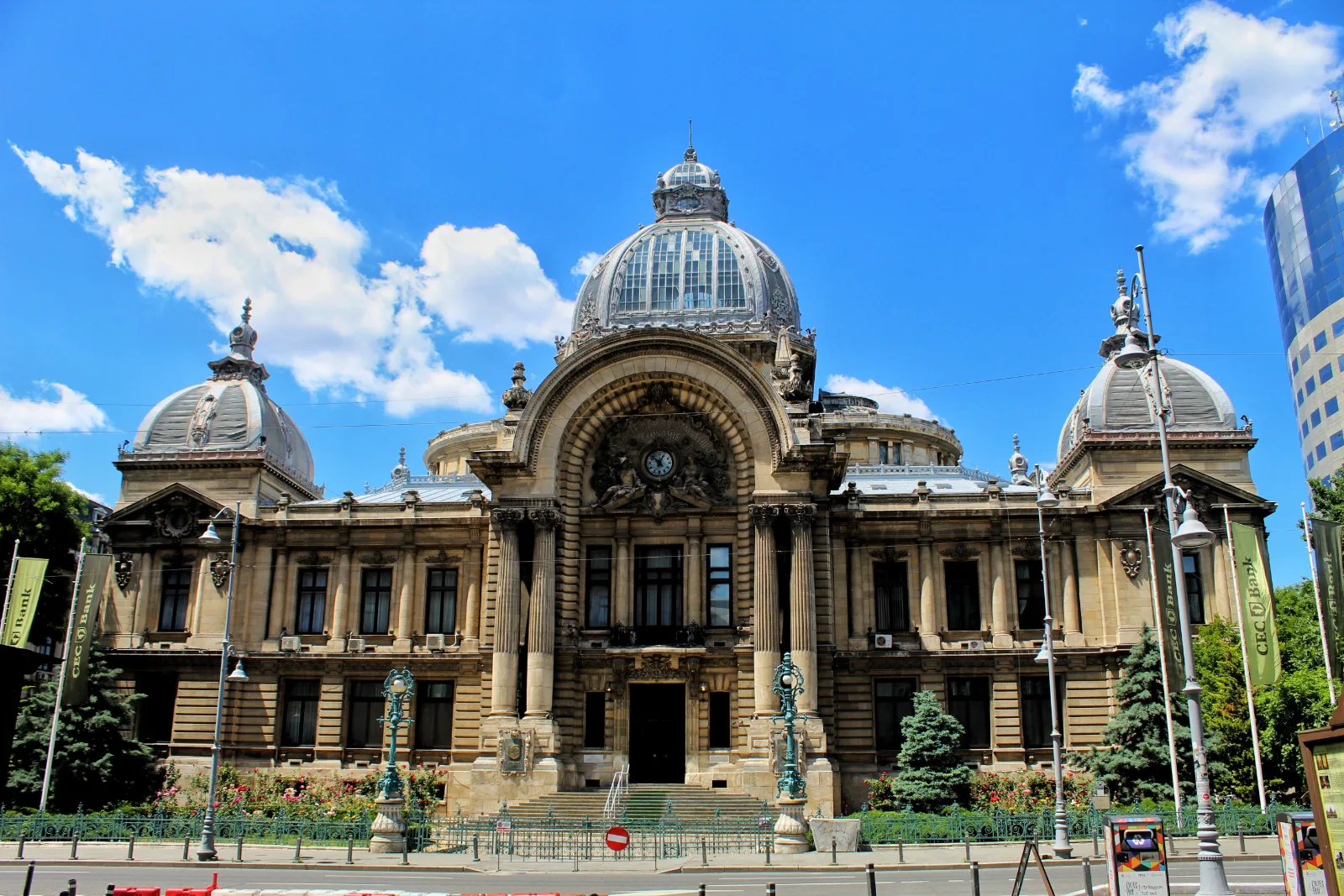
The CEC Palace is one of the most representative eclectic buildings on Bucharest's Calea Victoriei, raised between 1897 and 1900 as the headquarters of the Casa de Depuneri, Consemnațiuni și Economie, a public savings institution founded in 1864 on the initiative of Alexandru Ioan Cuza. It stands on the site of the former Saint John the Great monastery and inn, demolished in 1875. The cornerstone was laid in 1897 in the presence of King Carol I and Queen Elisabeta.
The building was designed by the French architect Paul Gottereau, a graduate of the École des Beaux-Arts in Paris, while construction was supervised by the Romanian architect Ion Socolescu. It reflects late-19th-century French academic eclecticism with Renaissance influences. The main entrance features a semicircular pediment carried on composite columns, the four corner pavilions are topped by Renaissance-style cupolas, and the whole composition culminates in a large central glass-and-metal dome. Façades and interiors use Dobrogea stone and marble.
The interior has remained almost unchanged since its opening. The Great Hall holds murals by Mihail Simonidi and, since 2005, houses the CEC Museum, displaying historic banking documents, interwar safes and items from the bank's "Tezaur" collection. The palace came through the 1940 and 1977 earthquakes and World War II bombing without structural damage, making it one of the few period buildings preserved intact. It is worth visiting for its exceptional architecture and authentic interior, accessible on guided tours.
Calea Victoriei 13 Bucuresti