
Attraction
Historic Centre of Turda
Turda's historic centre, around Piața Republicii, brings together the Gothic Roman Catholic church (1498-1504), where the founding of the Unitarian Church was proclaimed in 1568, the Old Turda Reformed Church, the Princely Palace (now the History Museum) and 18th-19th century buildings. Dozens of Transylvanian Diets met here, including that of 1568.
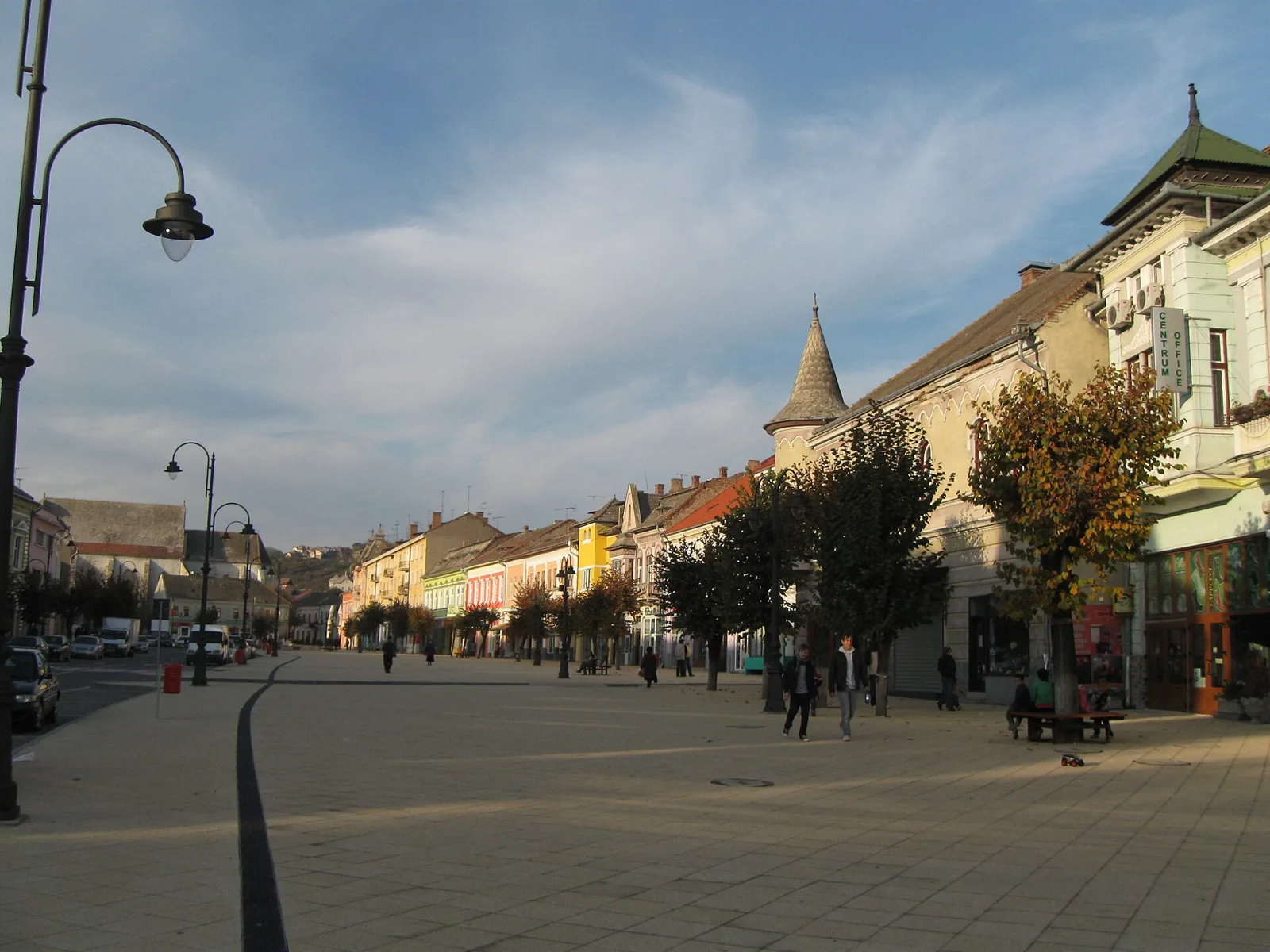
Foto: Burghiu, CC BY-SA 3.0, via Wikimedia Commons
Turda is a city in Cluj County, about 30 km south-east of Cluj-Napoca, with 43,319 inhabitants in 2021. Its historic centre extends around Piața Republicii and Piața 1 Decembrie 1918, where the medieval settlements of Old Turda and New Turda merged in the 14th-15th centuries. The Roman town of Potaissa also stood here, at the foot of Dealul Cetății.
In the Middle Ages Turda was a centre of salt mining and a meeting place of the Transylvanian Estates: 127 Diets were held here in total. In January 1568 the Diet assembled at Turda under Prince John Sigismund Zápolya adopted the Edict of Turda, one of the first acts of religious freedom in Europe, which did not, however, include the Orthodox. Between 1925 and 1950 Turda was the seat of Turda County.
On foot you can see: the Roman Catholic church at 54 Piața Republicii, Gothic, built between 1498 and 1504 and remodelled in Baroque style after 1721, where a trilingual plaque recalls the proclamation of the Unitarian Church in 1568; the Old Turda Reformed Church (1 B.P. Hașdeu Street), from the 15th century, enclosed between 1445 and 1455 by a fortification of which a wall section about 25 m long with the south-west bastion survives; the Princely Palace (2 B.P. Hașdeu Street), now the Turda History Museum; and the Old Prefecture on Piața 1 Decembrie 1918 (1884-1886). The Roman fortress on Dealul Cetății is about 1 km west of the centre.
The 18th-19th century central urban ensemble is a listed historic monument (LMI CJ-II-s-B-07797). The Roman Catholic church (CJ-II-m-A-07800), the Old Turda Reformed Church (CJ-II-m-A-07793) and the Princely Palace (CJ-II-m-A-07794) are monuments of national importance; the fortification ruins (CJ-II-m-B-07795) and the Old Prefecture (CJ-II-m-B-07788) are of local importance.
Did you know that large stone slabs brought from the Roman fortress of Potaissa were used to build the Roman Catholic church on Piața Republicii? Many of the stones of the medieval fortification around the Old Turda Reformed Church also came from the fortress.
Piața Republicii și Piața 1 Decembrie 1918, Turda, județul Cluj