
Attraction
Church of St Paraskeva in Târgu Frumos
The Church of St Paraskeva, also known as the Princely Church, stands at 5 Strada Petru Rareș in Târgu Frumos and was founded by Prince Petru Rareș around 1541. It is the oldest building in the town, and Ion Creangă was ordained deacon here in 1859.
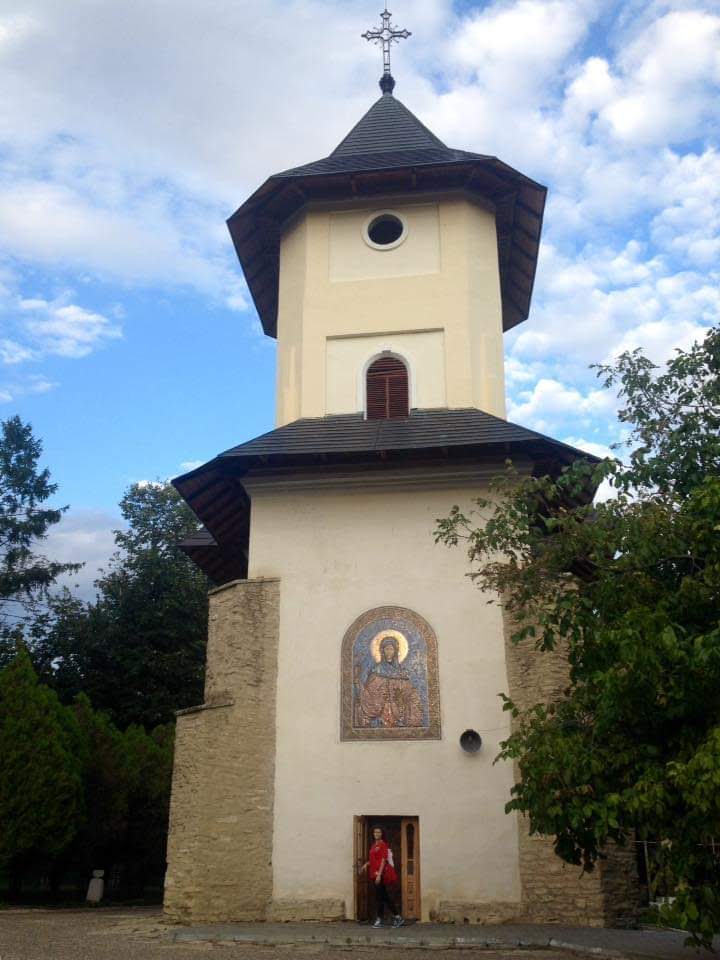
The Church of St Paraskeva stands at 5 Strada Petru Rareș in Târgu Frumos, a town on the banks of the Bahluieț, on the DN28 Iași-Roman road and the Pașcani-Iași railway. Târgu Frumos is first recorded on 5 October 1448 and until 1834 was the seat of Cârligătura district. In the sixteenth century it had a princely court whose walls, next to the church, were still visible in the eighteenth century; in "Descriptio Moldaviae" Dimitrie Cantemir described a small market town "with a princely stone palace, over which a pârcălab is placed".
The church, also called the Princely Church (Biserica Domnească), was founded by Petru Rareș around 1541 and is the oldest building in the town. The exact year is unknown, because the foundation inscription was probably destroyed or covered when the bell tower above the porch was built in the eighteenth century. The founder is named in two lists of benefactors: one painted in the altar, now illegible, and one painted on wood in 1815, rediscovered in the heritage store of Golia Monastery. An archaeological survey in 1994 found graves with coins from the fifteenth and sixteenth centuries, which led to the hypothesis that an older church stood on the same site. On 26 December 1859 Ion Creangă was ordained deacon in this church.
The church is built of brick on a stone foundation, with a nave plan, a semicircular altar apse and a bell tower over the outer narthex; its south-west and north-west corners are supported by tall stepped buttresses. It was repaired several times (around 1863, 1869, 1880, 1906 and 1970) and restored in the first decade of the twenty-first century, when the roof was rebuilt higher with copper sheeting and the tower was raised. The ensemble, made up of the church and the sixteenth-century enclosure wall, is a historic monument, LMI code IS-II-m-B-04263.
The town has several other historic monuments of local importance: the Church of St Nicholas (1801), the former girls' school (1842-1859), the railway station (1870), the Mausoleum of Romanian Heroes of the First World War in the cemetery, and the memorial house of the critic Garabet Ibrăileanu on Strada Cuza Vodă. The town's Lipovan Russian community has two churches of its own.
Strada Petru Rareș 5, Târgu Frumos, județul Iași